To address complex and emerging climate challenges in British Columbia, researchers and experts need time for broad contemplation, deep inquiry, and interdisciplinary cooperation. This past fall, the Pacific Institute for Climate Solutions (PICS) supported opportunities to seed new thinking and collaboration.
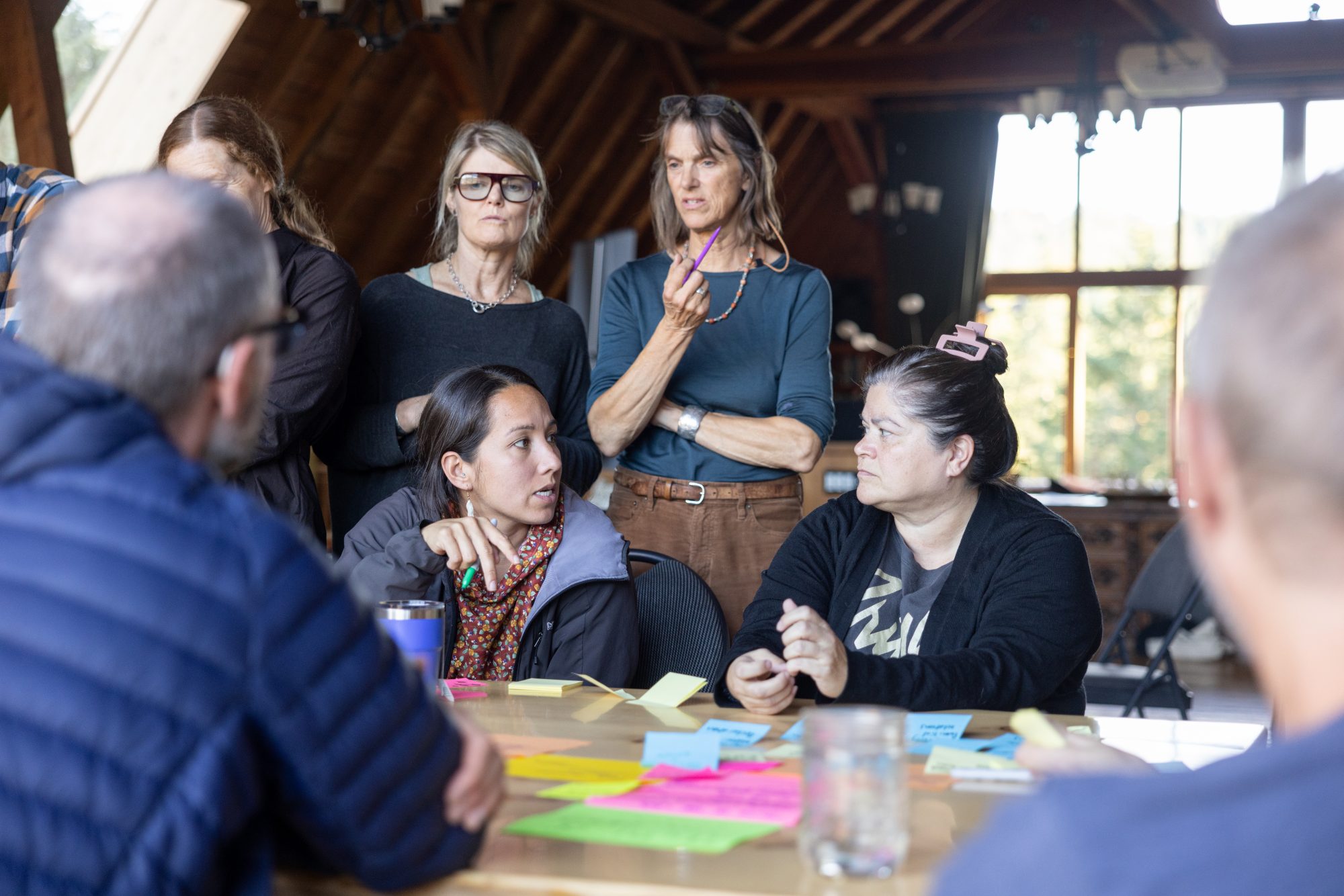
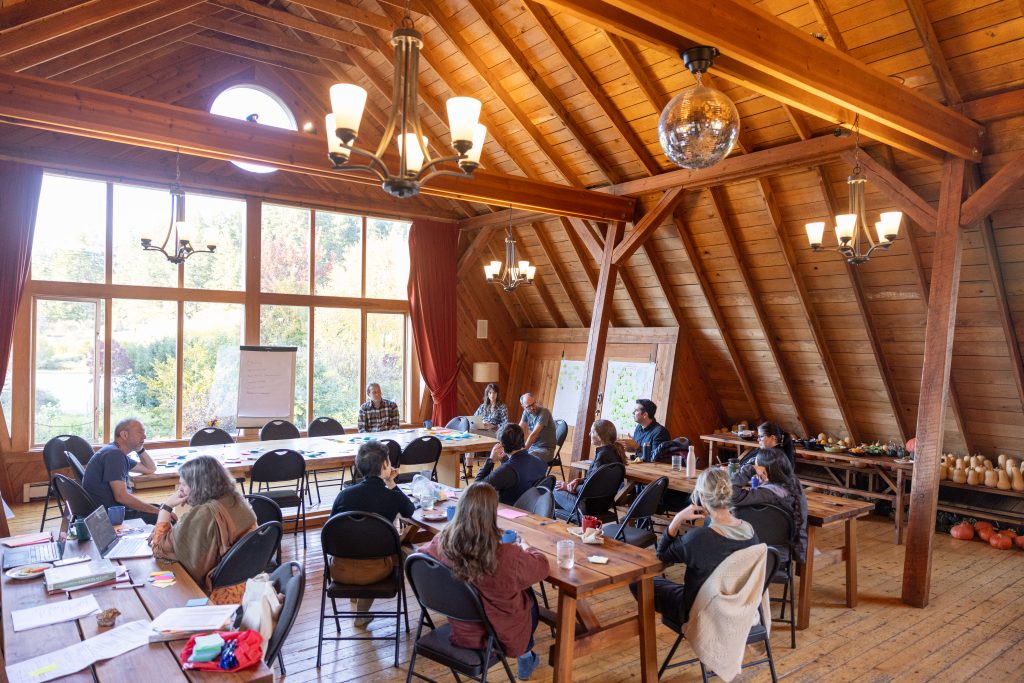
In October, PICS hosted two dialogue retreats in the first round of its Climate Foresight program. Led by interdisciplinary teams, the dialogues brought together researchers, knowledge holders, and practical experts for intensive brainstorming and learning from one another as they contemplated transformative solutions. The dialogues initiated the first two projects supported under the Climate Foresight program.
The Shared Watershed Pathways Dialogue convened a diverse and deeply interdisciplinary group of leaders with roles in Indigenous governance, provincial government, climate modeling, environmental and social science, and community organizing. The group considered the future of B.C. watersheds in an era of rapid global change. As watersheds face intense pressure from climate impacts on top of industrial development and extraction, visions for future watersheds are often polarized between unchecked resource exploitation and prohibitionary or “fortress” conservation — but neither of these approaches offer viable pathways to support ecological and community wellbeing in the face of rapid economic and climate changes.
Led by Dr. Jonathan Moore and Dr. Nigel Sainsbury of Simon Fraser University (SFU), and Dr. Tara Martin of the University of British Columbia (UBC), the dialogue developed a novel approach to envisioning future pathways for thriving watersheds in uncertain futures. This approach foregrounds plural environmental social, economic, and cultural values, and aims to inform applied decision-making and community planning.
The conversation opened by setting a foundation in Indigenous legal and relational frameworks in which salmon abundance is an inseparable part of human and environmental health. The group worked to identify a range of governance approaches, values, and economic models that could form the building blocks of diverse watershed futures in B.C., and to translate these into several contrasting future scenarios. They also scoped what each scenario would mean for biodiversity, governance, equity, and wellbeing at the watershed scale, using lenses from health, economics, policy, and earth systems science. The mapping exercises surfaced recurring core values: sovereignty, reciprocity, solidarity, intimacy with place, responsibility for future generations, and the community distribution of abundance. Further work will refine these scenarios to support decision-making and collaborative planning for thriving watersheds.
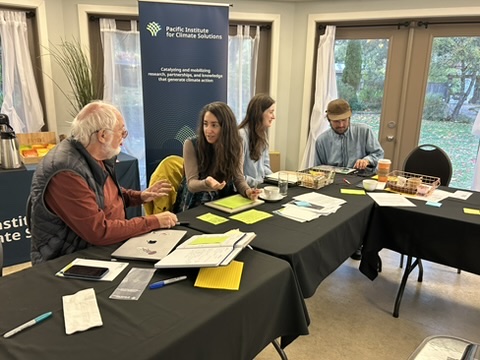
The dialogue on Planning for Collective Ownership of Climate Transition Infrastructure in British Columbia, led by Dr. Holly Caggiano and Dr. Alex Tavasoli of UBC, and Ana Guerra Marin of Iron and Earth,convened scholars and practitioners in renewable energy, energy cooperatives, Indigenous and rural community planning, and land trusts.
The dialogue explored how collective ownership and community governance models could reshape B.C.’s energy transition, and to map a research agenda to advance these models.
Collective ownership models—including workers’ and owners’ cooperatives, land trusts, Indigenous community ownership, and many other approaches—differ significantly from the dominant, market-based approaches. Grounded in solidarity and democratic control, collective ownership models can centre community priorities and generate forms of collective wealth beyond economic return. The dialogue explored the potential for these models to support the building of climate transition infrastructure, which includes energy generation and transmission, carbon sequestration and storage, and other forms of climate-positive public infrastructure that can deliver community benefits.
Participants in the dialogue examined the enablers for and barriers to community and collective ownership of climate infrastructure, while sharing lessons from existing co-ops, community energy projects, and land trusts. Key insights included the importance of right-sizing technologies to local contexts and detailing ways that community ownership models can complement private and public ownership models to serve distinct functions.
Participants learned from existing research and the firsthand experience of energy cooperative practitioners that collective ownership models can be powerful vehicles for enabling infrastructure where markets would not or have not delivered.
They also explored persistent challenges—such as the lack of seed capital, enabling policy frameworks, and institutional support for co-ops—as well as tensions between local autonomy and centralized systems.
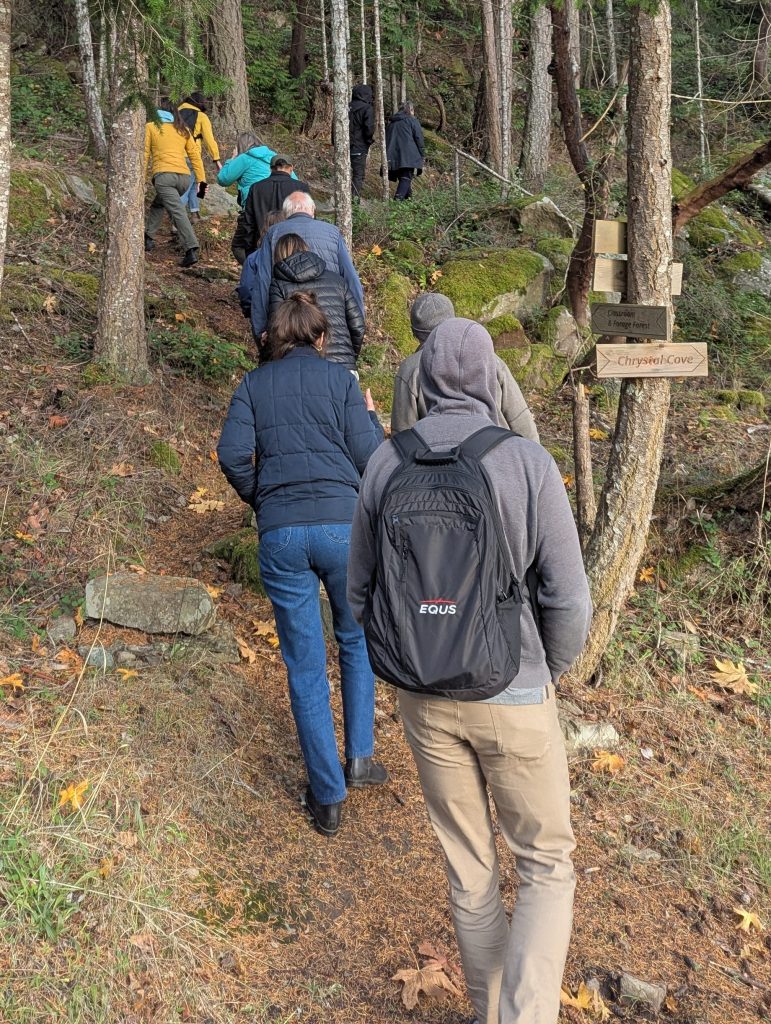
Both dialogues generated enthusiasm and new relationships to carry work forward in these two critical areas. Beyond the workshop sessions, participants connected through social activities, shared meals showcasing local food, and excursions in the spectacular island settings.
Participants shared that the opportunity to step out of their everyday routines and immerse in collaborative work in a retreat setting greatly contributed to innovative ideas.
Stay tuned for deep dives into each dialogue’s work, and for PICS’ next call for proposals to the Climate Foresight program in February.