By Michael Vegh
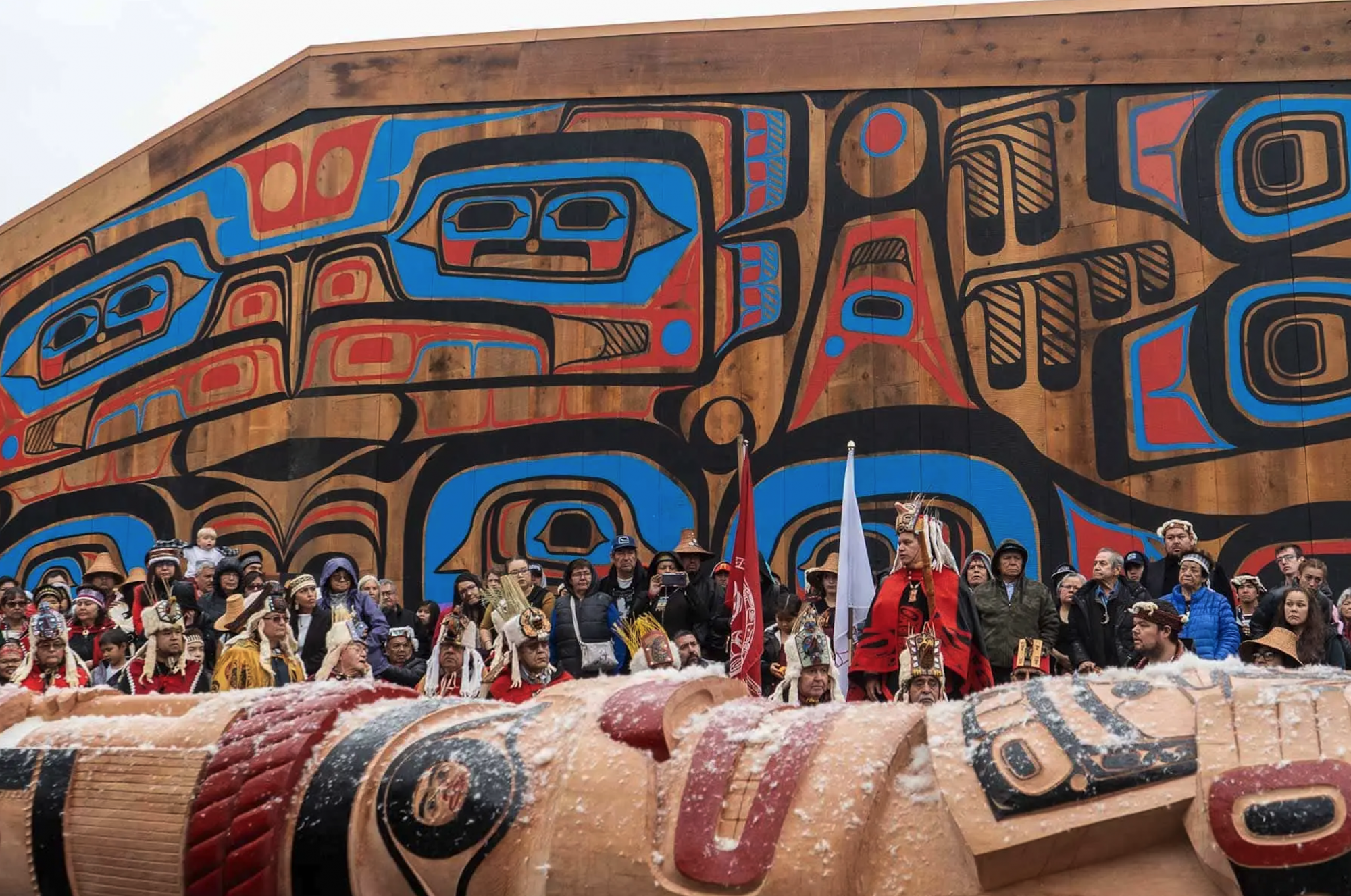
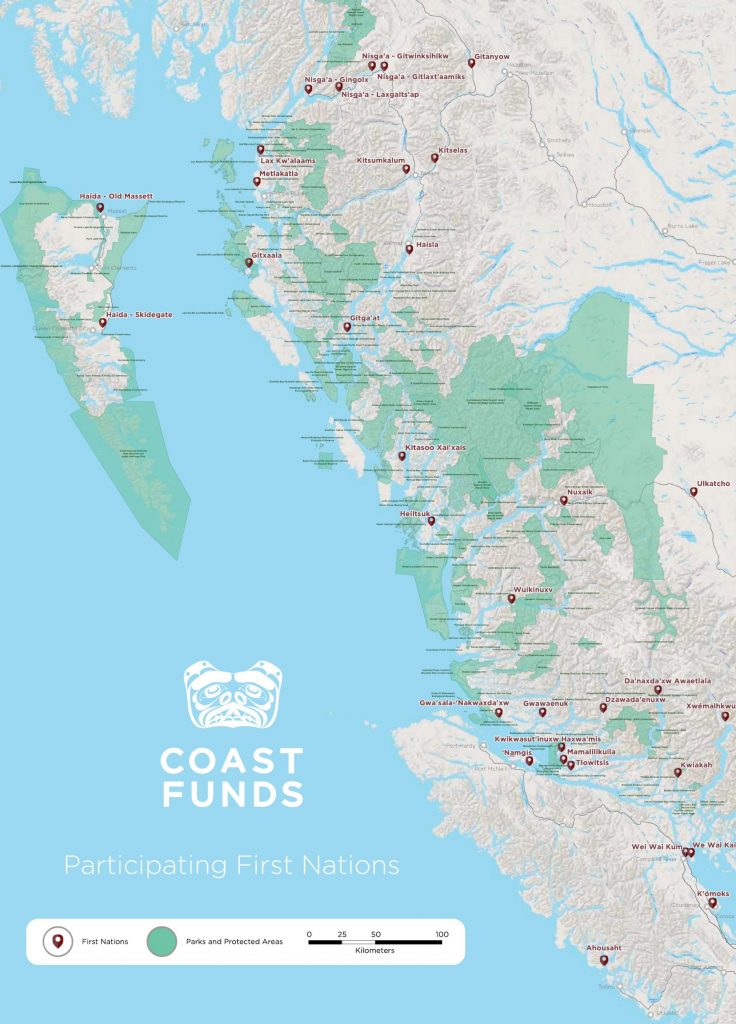
The Great Bear Rainforest (GBR)—the largest contiguous temperate rainforest in the world—has been home to First Nations since time immemorial. Its ecosystems and cultures are deeply interconnected, forming the foundation of a globally recognized model of Indigenous-led stewardship and conservation governance.
Since 2007, Coast Funds has invested more than 15 years in supporting First Nations stewardship, governance, and sustainable economic development across the Great Bear Rainforest. This long-term commitment has enabled Indigenous Nations to build and sustain Guardian programs, conservation-based enterprises, and governance institutions rooted in Indigenous laws, cultural responsibilities, and relationships to place.
The conservation economy in the Great Bear Rainforest offers a living example of what climate leadership looks like when it is Indigenous-led rather than externally imposed. Rather than treating conservation as a constraint on development, Nations have advanced models that integrate ecological protection, community wellbeing, and economic self-determination. These approaches challenge dominant Western assumptions that environmental protection and economic opportunity must exist in tension.
ABOUT THE
RESEARCHER
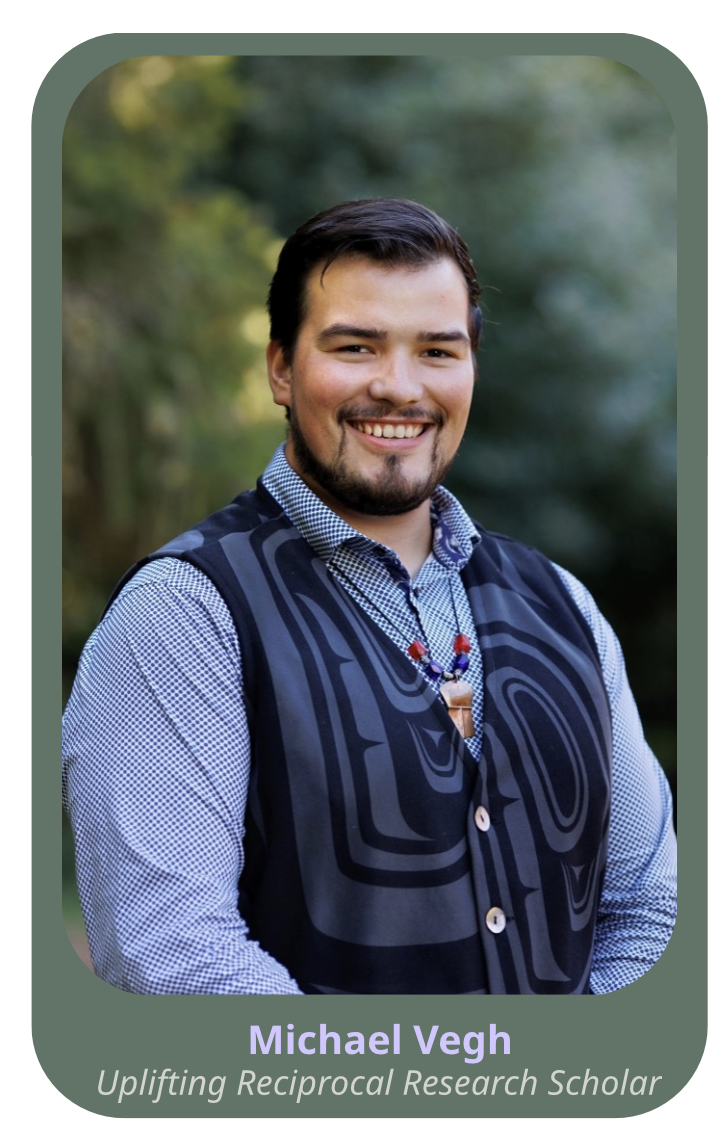
My name is Michael Vegh (Q̓án̓ístisḷa), I am a Heiltsuk Nation citizen. I am an MBA Candidate at the Gustavson School of Business at the University of Victoria, specializing in sustainable innovation and conservation finance. I currently serve as the Director of Constitutional Implementation for the Heiltsuk Nation, where I lead the operationalization of the Haíɫzaqv Constitution, and advances Haíɫzaqv -driven governance, accountability, and decision-making systems. Grounded in Haíɫzaqv values, I am committed to building systems that strengthen Indigenous self-determination, support intergenerational wellbeing, and align capital with climate stewardship and justice.
OVERVIEW OF THE RESEARCH
PURPOSE:
My MBA capstone research explores the qualitative impacts of investments into coastal First Nations that are breathing life into the conservation economy. I am specifically looking at how these investments have strengthened governance, cultural well-being, and community stewardship outcomes. This project complements existing quantitative economic research by synthesizing qualitative evidence drawn from Nation reports, interviews with First Nations leaders, and reviewing existing literature. Together, they form a comprehensive picture of the conservation economy’s social, cultural, and environmental outcomes as defined and measured by the very communities that uphold and benefit from it the most.
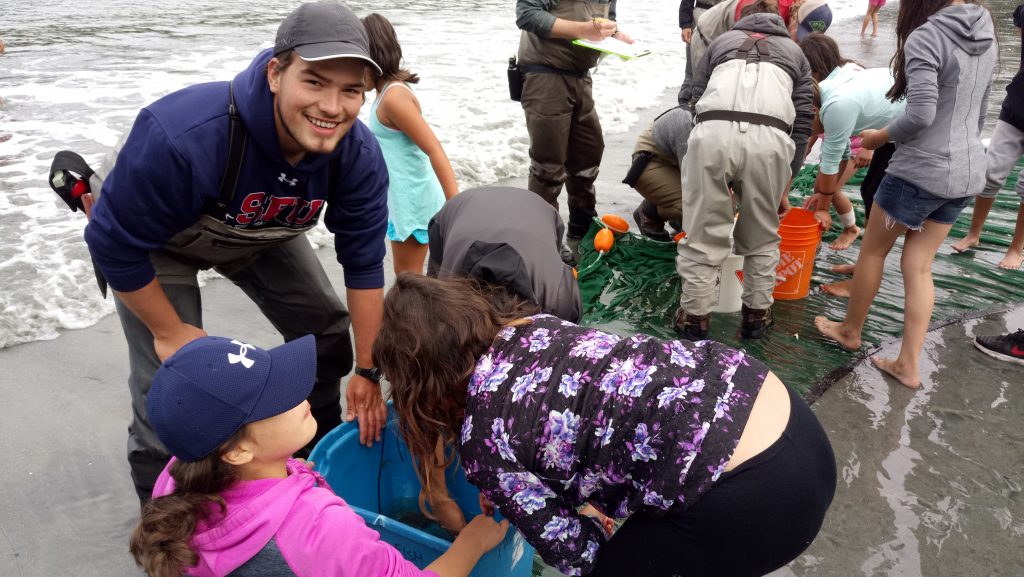
My work exists at the intersection of Indigenous jurisdiction, economic development, and environmental stewardship, with a particular focus on the Great Bear Rainforest and coastal British Columbia. I have spent my career working with First Nations governments, conservation finance institutions, and philanthropic partners to design governance frameworks, measure impact, and translate values-based investments into tangible community outcomes. My professional background includes board and advisory roles with organizations such as Nature United and Indigenous-led climate and conservation initiatives.
This case study demonstrates that true resilience is relational: it emerges from governance systems that honour reciprocity between people, lands, and waters. As governments and partners seek to advance the BC First Nations Climate Strategy, the GBR’s experience offers a roadmap for investing not only in ecosystems—but in the governance and cultures that sustain them.
RESEARCH QUESTIONS:
My research focuses on 3 main questions:
- How have Coast Funds’ investments contributed to the development of Indigenous-led stewardship and governance systems in the Great Bear Rainforest?
- What lessons can be drawn from more than 15 years of community-led stewardship to inform future climate adaptation and financing frameworks?
- How can Indigenous definitions of success guide broader measurement, learning, and accountability frameworks?
Together, these questions create space to move beyond program-level outcomes and toward a deeper understanding of systems change. By unpacking how Indigenous governance, long-term financing, and community-defined success interact in practice, this research contributes knowledge that can support more transformational, relational, and place-based approaches to climate adaptation and resilience.
Connection to BC First Nations CLIMATE STRATEGY
& Disaster Risk Reduction
This research directly supports the BC First Nations Climate Strategy and Action Plan (BCFNCSAP) by examining how Indigenous-led conservation financing and stewardship systems contribute to climate resilience, adaptive capacity, and self-determined decision-making in practice. This project reflects BCFNCSAP priorities in lived governance and implementation experience from the Great Bear Rainforest.
ALIGNMENT WITH KEY PILLARS:
- Self-determination and governance: This project centers Indigenous jurisdiction by examining how First Nations define, govern, and measure success within stewardship and conservation economy initiatives. Through analysis of Coast Funds–supported governance structures, stewardship programs, and decision-making processes, the research highlights how Indigenous Nations exercise authority over climate priorities in ways that reflect their own laws, values, and responsibilities to territory. In doing so, the project contributes knowledge on how self-determined governance can be operationalized within climate financing and accountability systems.
- Nature-based solutions: This research engages the BCFNCSAP emphasis on nature-based solutions by examining Indigenous-led stewardship systems — including Guardian programs, marine planning, and land and water protection initiatives — as climate responses grounded in Indigenous laws and responsibilities to place. Rather than assessing ecological outcomes directly, the project explores how long-term investments support the governance structures, coordination, and continuity required for these stewardship approaches to function over time, contributing learning relevant to the design of future conservation and climate finance frameworks.
- Community resilience: This project contributes to understanding community resilience by examining how conservation economy investments support local capacity, governance stability, and culturally grounded stewardship systems. Consistent with the BCFNCSAP emphasis on preparedness and self-determined climate response, the research helps articulate how resilience is understood and strengthened through relationships, sustained employment, and continuity of stewardship institutions — complementing infrastructure-based approaches to disaster risk reduction.
Together, these findings help translate the BC First Nations Climate Strategy from policy intent into practical learning, demonstrating how Indigenous-led governance and long-term financing can support proactive climate adaptation and disaster risk reduction across diverse First Nations contexts.
TRANSFERABLE LEARNINGS
This project has deepened my understanding that climate resilience in the Great Bear Rainforest emerges from governance systems rooted in long-standing relationships to territory, rather than from technology or policy interventions alone. One key insight has been how long-term, trusted investment enables stewardship institutions to grow incrementally, respond to uncertainty, and remain accountable to community priorities. I also learned that Indigenous definitions of success frequently prioritize continuity, care, and collective responsibility — values that challenge dominant climate measurement frameworks but are essential to meaningful resilience. Together, these insights highlight that climate leadership in the Great Bear Rainforest is shaped less by isolated projects or short-term outcomes, and more by the durability of relationships, institutions, and shared commitments that endure across generations.

Central to this model is the recognition of Indigenous law, jurisdiction, and decision-making authority as the foundation for long-term stewardship and accountability. Through this research, I learned that when conservation outcomes are embedded within Indigenous governance institutions, responsibility for land and waters is not treated as a standalone program objective, but as an ongoing legal and cultural obligation. This approach enables environmental protection to be pursued alongside economic participation and cultural continuity, rather than in competition with them. The Great Bear Rainforest illustrates how stewardship systems grounded in Indigenous governance can create durable accountability — one that is sustained through relationships, community oversight, and responsibility to future generations, rather than through external compliance or short-term performance metrics.
Importantly, the governance and finance structures developed in the Great Bear Rainforest are not prescriptive, but adaptable. Other First Nations can draw on these approaches to design locally grounded conservation economies that reflect their own laws, cultures, and relationships to land and water. This includes the use of Indigenous-led governance bodies, values-aligned financing mechanisms, and long-term investment strategies that prioritize community-defined outcomes over short-term returns. Together, these elements offer a transferable framework for building climate resilience that strengthens Indigenous self-determination while supporting sustainable economic futures across diverse territories.
Reciprocal research,
co-development, & collaboration
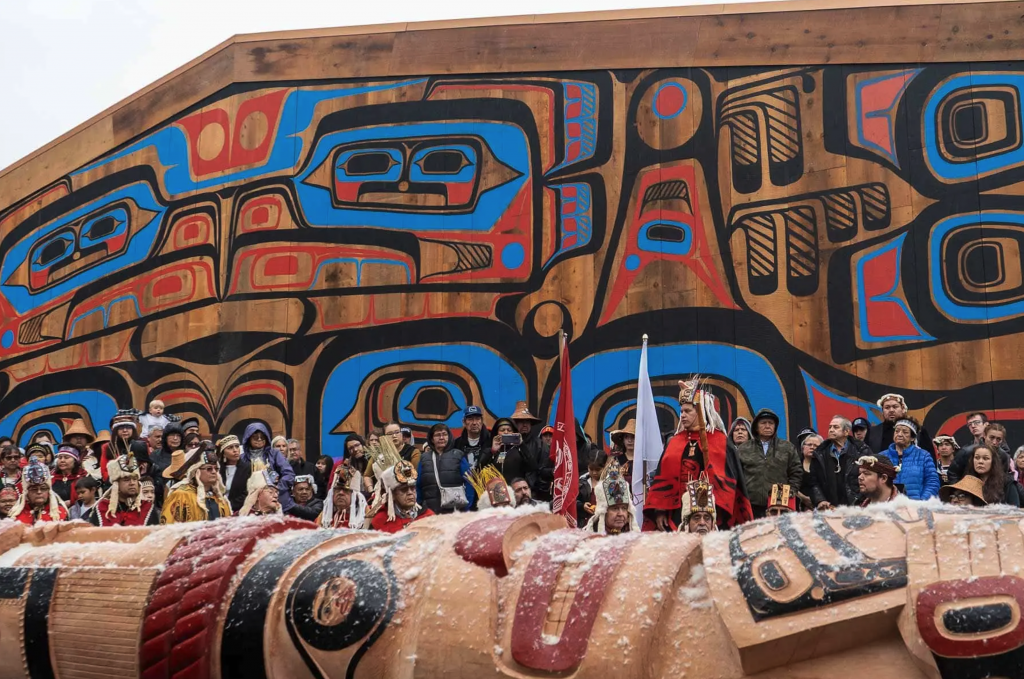
This project demonstrates how reciprocal research and collaboration can function as an integrated approach to Indigenous-led climate work. Grounded in Nation-driven inquiry, the research was shaped by priorities identified through Coast Funds’ First Nations partners, ensuring alignment with community-defined outcomes rather than externally imposed research agendas. Ethical engagement followed UVic’s Indigenous research protocols and Heiltsuk Ǧviḷás, reinforcing relational accountability rooted in respect, responsibility, and reciprocity. Integrating Indigenous knowledge systems alongside Western analytical tools through a Two-Eyed Seeing approach supported a more holistic understanding of governance, stewardship, and impact.

Through this work, I learned that effective collaboration depends less on coordination structures and more on trust built over time, clearly defined roles, and respect for Indigenous decision-making authority. The Great Bear Rainforest conservation economy illustrates how long-term, Indigenous-led governance and financing structures bring together First Nations governments, philanthropic partners, conservation organizations, and Crown governments in ways that reduce fragmentation and strengthen collective action. Rather than operating in silos, partners are aligned through shared purpose and long-term commitments that extend beyond project-based timelines.
A key insight from this research was the role of shared measurement systems within long-term conservation financing models such as Finance for Permanence. Co-developed indicators help align diverse partners while allowing Nations to retain authority over how success is defined and evaluated. Shared measurement functions as a learning and accountability tool rather than a compliance mechanism, supporting transparency, adaptability, and trust across partnerships over time.
Together, these insights highlight best practices for breaking down silos and facilitating collaboration, including centering Indigenous governance, investing in long-term relationships, and developing flexible measurement systems grounded in Indigenous definitions of success. They also offer practical recommendations for future research and partnerships: co-develop research priorities from the outset, prioritize relational accountability alongside technical expertise, and design evaluation frameworks that support learning, adaptation, and long-term stewardship rather than short-term outputs.
Community well-being outcomes as
an Indigenous-defined measurement framework
The Community Well-Being Outcomes Framework offers an important lens for understanding how Indigenous Nations define and evaluate the impacts of conservation and stewardship investments. Rather than prioritizing narrow economic or environmental indicators, the framework reflects a holistic understanding of well-being that integrates environmental conservation, cultural vitality, social empowerment, and economic prosperity as interconnected and mutually reinforcing.
Through this research, I learned that this framework challenges conventional impact measurement approaches commonly used in climate finance and conservation funding. By centering Indigenous values and lived priorities — such as language revitalization, intergenerational knowledge transfer, stewardship responsibility, and governance strength — the framework expands what counts as “impact” beyond what is typically captured through quantitative metrics alone.
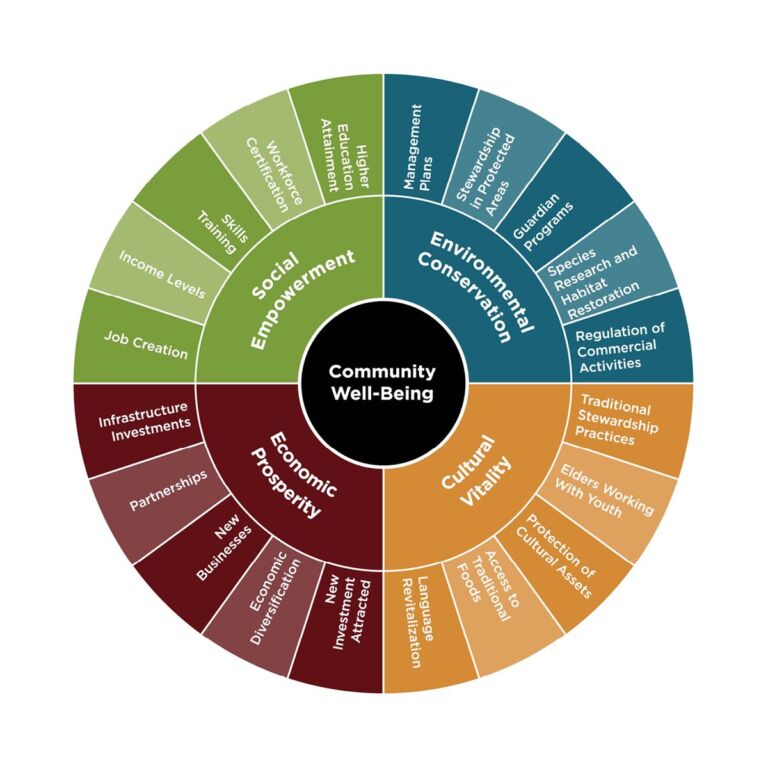
Importantly, the Community Well-Being Outcomes Framework also functions as a practical tool for shared measurement and accountability. It provides a common reference point that allows diverse partners to align around long-term goals, while still respecting Nation-specific definitions of success. In doing so, it demonstrates how Indigenous-designed measurement systems can support learning, transparency, and trust across partnerships, reinforcing that meaningful climate outcomes are inseparable from community well-being.
LESSONS AND
RECOMMENDATIONS
Building on the findings of this research, several key learnings emerge about what enables effective, Indigenous-led climate action. Across the Great Bear Rainforest, long-term conservation outcomes have been supported not by isolated programs, but by governance systems, financing models, and measurement frameworks that are Indigenous-designed and relational in nature. These learnings highlight the importance of centering Indigenous jurisdiction, investing in long-term partnerships, and redefining impact in ways that reflect community well-being alongside ecological outcomes.
These insights can be shared and applied through a range of pathways, including policy development, climate finance design, and collaborative research practices. In the Great Bear Rainforest, these approaches have been advanced through Indigenous-led governance bodies, long-term conservation financing mechanisms such as Finance for Permanence, and shared measurement frameworks that align partners while respecting Nation-specific definitions of success. Together, these examples demonstrate how research-based learning can inform practical action, offering guidance for governments, funders, and researchers seeking to support Indigenous-led climate leadership in other regions.
- Center Indigenous governance in climate finance: Ensure that future conservation and adaptation funds are managed through Indigenous-led structures that uphold self-determination.
- Integrate qualitative indicators into climate reporting: Economic metrics alone cannot measure the full value of conservation. Include indicators of cultural continuity, language revitalization, governance strength, and intergenerational stewardship.
- Support Knowledge co-production: Design climate adaptation research as collaborative learning—where local knowledge and academic insight shape each other in real time.
- Build capacity for reciprocal partnerships: Invest in relationship infrastructure: data sharing agreements, ethics frameworks, and Nation-to-Nation research governance.
- Scale the conservation economy framework: Use lessons from the GBR to inform other regions developing Indigenous-led “conservation economies” or “climate finance for permanence” models across BC and beyond.
LOOKING FORWARD

This research has reinforced that Indigenous-led climate action is not simply a matter of implementing new tools or policies, but of strengthening the governance systems, relationships, and responsibilities that sustain stewardship over time. Through this project, I gained a deeper appreciation for how conservation finance, measurement frameworks, and research practices must be designed in ways that align with Indigenous law and community-defined priorities if they are to support meaningful and lasting outcomes.
Looking forward, the lessons emerging from the Great Bear Rainforest point toward important opportunities for governments, funders, and researchers to rethink how climate initiatives are developed and evaluated. Investing in Indigenous governance capacity, supporting long-term financing approaches, and embracing Indigenous-defined measures of success are not supplementary considerations — they are foundational to effective climate leadership.
As climate impacts intensify and adaptation efforts accelerate, the knowledge generated through Indigenous-led stewardship systems offers critical guidance for the future. By continuing to centre Indigenous jurisdiction, reciprocity, and relational accountability, future research and investment can move beyond short-term interventions toward approaches that strengthen resilience across generations.

Michael Vegh is a masters student at the University of British Columbia, and a recipient of a PICS Uplifting Reciprocal Research Scholarship.

In honour of the Relationship Protocol between the Pacific Institute for Climate Solutions (PICS) and the First Nations Leadership Council (FNLC), this Knowledge Highlight series reflects PICS’ commitment to supporting the priorities of the BC First Nations Climate Strategy and Action Plan and the Action Plan for Disaster Risk Reduction by First Nations in BC through capacity building, research, and education.