
Anticipating tomorrow’s climate challenges
The Climate Foresight program aims to germinate transdisciplinary and cross-sectoral collaborations that explore complex and emergent climate challenges and generate transformative knowledge and solutions.
Climate Foresight supports bold, cross-sectoral initiatives that address complex and poorly understood climate issues. By funding early scoping workshops and ongoing networks, this program fosters innovative collaboration between researchers, Knowledge Holders, and those directly applying climate insights.
Climate Foresight Dialogues
What big challenges are on the horizon, and how can we explore transformative solutions to those problems?
The Pacific Institute for Climate Solutions is looking for researchers ready to lead that conversation.
This call is now closed. Subscribe to our newsletter to receive updates on this funding call and others.
The opportunity: To lead an innovative dialogue with talented and insightful researchers and practitioners in B.C. and beyond, that shapes the next generation of transformative climate solutions.
The program: PICS believes deep insights begin with in-person connection, generative conversations, and a commitment to shared inquiry. Our Climate Foresight Program aims to germinate transdisciplinary and cross-sectoral collaborations that explore complex and emergent climate challenges and generate transformative knowledge and solutions.
The Climate Foresight Program has a two-phase process of research support:
- Climate Foresight Dialogues will bring together teams of up to 18 scholars and practitioners situated across multiple academic disciplines and sectors in an issue-scoping and partnership development retreat in an inspiring B.C. setting. Proposals for Dialogues are solicited through an open call.
- Following the Dialogues, PICS will support project teams to co-develop collaborative research projects to generate transformative knowledge and solutions approaches. Promising initiatives will be considered for funding contributions of up to $300,000, as well as continued support from PICS to mobilize and communicate knowledge and outputs to relevant audiences.
The call for proposals for the Climate Foresight Dialogues is now closed.
This call invited researchers at PICS universities to pitch big ideas on the under-researched and complex problems that require interdisciplinary and intersectoral responses.
What stands in the way of low-carbon, resilient, and inclusive futures for British Columbia, and who are the people — researchers from diverse disciplines, and other knowledge holders and practitioners — you would bring together to co-design transformative research on solutions to these challenges?
PICS will support all aspects of planning and hosting a Fall 2026 multi-day, retreat-style Dialogue to explore your proposed challenge and collaborative responses, to a value up to $30,000.
Two dialogue proposals will be selected from the Spring 2026 call. The next call will be made in Spring 2027.
This call is now closed.
Subscribe to our newsletter to receive updates on this funding call and others.
Eligibility
- Leadership: Applicant teams are made up of one lead applicant and one to two co-applicants. Applicant teams are expected to be multidisciplinary. The lead applicant, and at least one co-applicant, must be full-time faculty members from one or more of the four PICS universities (SFU, UBC Vancouver and UBC Okanagan, UNBC, UVic). We encourage applicant teams involving more than one PICS university. An additional co-applicant may be from a non-PICS post-secondary institution, private and practitioner sector, community or Indigenous organization, or government.
- Participants: Following project award, PICS staff will work with co-leads to recruit additional dialogue participants. Dialogue participants should reflect a diversity of identities, experience, disciplinary and sectoral range, as relevant to the proposed topic (leading scholars across academic disciplines, decision makers, practitioners, thought leaders situated across sectors, and rights holders), and early career as well as established scholars.
In keeping with PICS’ B.C.-focused mandate, at least half of participants should be B.C.-based. Subject to budget, other participants may be national and/or international depending on expertise and perspective required for the chosen topic. PICS staff will participate as co-facilitators and observers.
If you have any additional questions, please contact saranelson@uvic.ca in advance of the deadline.
Learn more about the Climate Foresight projects funded in our 2025 call:
PICS funds six efforts to prepare for tomorrow’s challenges
PICS will fund six efforts to prepare for tomorrow’s climate challenges, in its first round of funding through the Climate Foresight program.
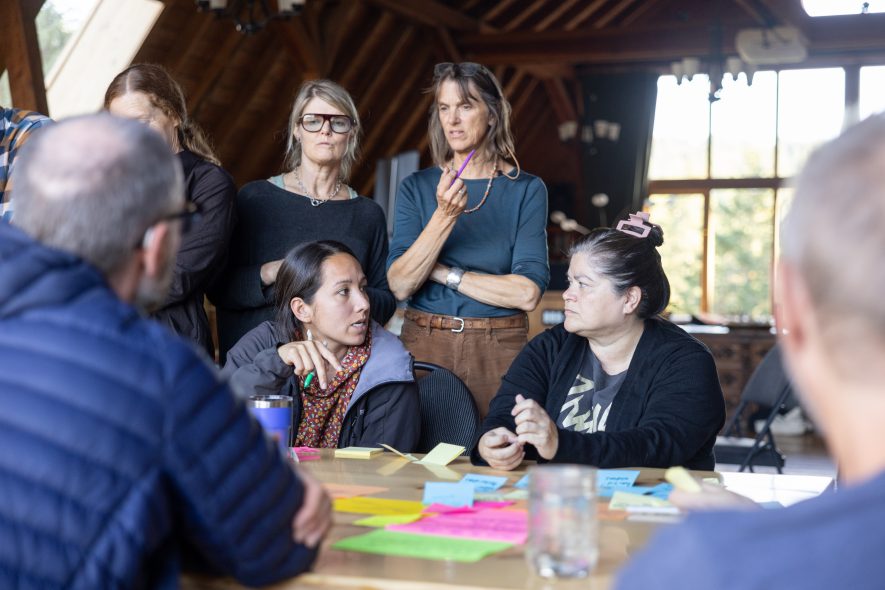
Climate Foresight dialogues seed new thinking on emerging challenges and solutions
Retreats bring together researchers and other experts to contemplate, create, and plan.
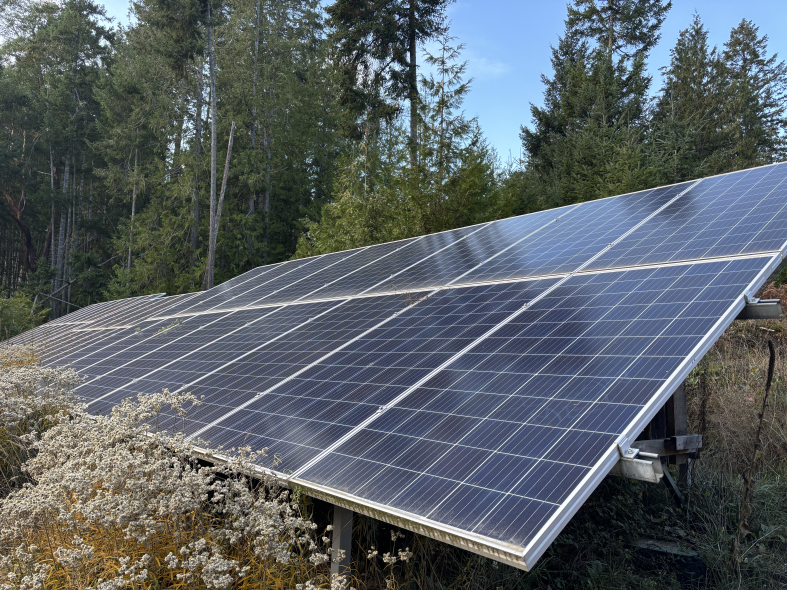
Is Collective Ownership Climate Action’s Secret Ingredient?
How banding together to buy renewable energy infrastructure can help communities today and tomorrow.
FAQs
Please review the Frequently Asked Questions below before you complete your application.
Whom can I contact with questions about the application form or process?
Please contact the Climate Foresight Lead, Sara Nelson, with any questions.
What kinds of topics are eligible for the Dialogues? ?
As a requirement for eligibility, proposals must demonstrate the primary relevance of climate change to the proposed topic and research: i.e., how climate change plays a direct role in the problem drivers or impacts that the research will address, and/or how the solution pathways bear directly on climate change drivers, impacts, and/or responses. Thematic focus for the Dialogues is broadly open to issues in climate change mitigation and/or adaptation, aligned with PICS’ values and commitments to justice and reconciliation.
Eligible topics for Dialogues:
- are directly relevant to climate change impacts, mitigation, and/or adaptation in B.C., but may also have relevance beyond the province;
- are complex and emergent, requiring interdisciplinary and intersectoral solutions;
- and have the potential to inform transformative approaches across at least two of PICS’ impact areas.
This program is funded through PICS’ public endowment, and as such topics must offer a benefit to the public good.
More information on PICS’ values and perspective on transformative research is available in the Guide for Applicants.
What do you mean by Climate Foresight?
We use foresight in a broad sense to refer to the collaborative exploration of new problem domains which are at the horizons of climate research and solution development. The invitation for the Climate Foresight program is for researchers to propose collaborations that address complex and poorly understood climate issues. Proposals do not need to employ specific foresight methodologies. The Climate Foresight Program is our opportunity to support the research community in exploring the types of knowledge and action that will be needed in the future to address emergent climate challenges.
It is important to my project that I have more than two co-applicants in addition to the lead applicant. Is that allowed?
We suggest a limited number of co-applicants to ensure clear leadership of the dialogue, and to make it more feasible to schedule project team meetings on the short timeframe necessary for planning the Dialogue. Other key participants may be listed as known invitees in the application form.
How are projects evaluated?
Proposals for Dialogues will be evaluated by PICS staff and an external decision review committee. PICS staff will conduct interviews with shortlisted teams to inform their evaluations.
Applications will be evaluated using the following criteria, with consideration for the fit with PICS values and priorities and the balance of the PICS portfolio:
- Significance and relevance of the proposed topic (40 per cent)
- Potential for transformative impact (35 per cent)
- Diversity and credibility of the leadership team (25 per cent)
A detailed scoring rubric is available in the Guide for Applicants.
When will we know if we are funded?
PICS will communicate funding decisions in early July. PICS staff will work with Dialogue leads to schedule initial planning meetings in July.
How are funds administered?
PICS will handle the administrative and financial aspects of the Dialogue retreats, including booking and paying for the venue, catering, travel, and other arrangements. No funds will be transferred to the applicant’s home institution. This will ease administrative load on recipients and enable PICS staff to support the dialogue planning.
When and where will dialogues occur?
Dialogues retreats will occur in October and November, to allow sufficient time for planning and to accommodate research proposal development following the dialogues. PICS staff will work with Dialogue leads to select appropriate dates and to recruit participants.
Planning for the Dialogues will require that project team member participate in planning activities and regular meetings during the summer.
Dialogues will be held at one of a selection of retreat centres in B.C., as arranged collaboratively between PICS and the Dialogue leads, and taking into account budget and travel logistics.
Will there be open calls for research funding under the Climate Foresight Program?
Climate Foresight aims to work with groups to build collaborations from the ground up. The first stage in this process is the Dialogues, which are intended to generate priorities for subsequent PICS research funding. Following the Dialogues, we will invite Dialogue leads to develop proposals for up-to-three-year funding contributions of up to $300,000. These proposals will be by invitation only, and decisions on funding will be adjudicated through a separate process.
The Climate Foresight Program will launch annual open calls for Dialogues. Proposals for research funding will be by invitation only to Dialogue projects.
When will the next open call for Dialogues be?
The next open call will be in Spring 2027.
Climate Foresight Application Form
This call is now closed.
Subscribe for email updates to be notified when this program reopens for applications. The following sector will receive specific information related to the Climate Foresight program: academic/research community member.
Subscribe for email updates: