This past year (2024-2025) has been transformative for the Pacific Institute for Climate Solutions (PICS). Guided by a renewed sense of purpose, we launched our new Strategic Plan, setting a clear course to accelerate climate action across British Columbia and beyond. The plan reaffirms our mission to mobilize cutting-edge research, collaboration, and knowledge exchange that create tangible, lasting climate solutions.
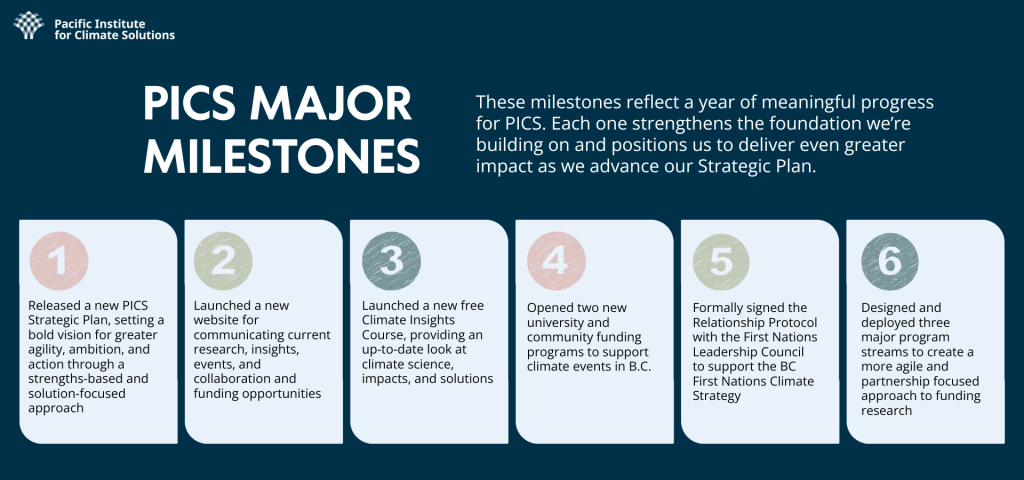
A central achievement was the launch of our renewed website, www.climatesolutions.ca—a dynamic hub for climate knowledge and partnerships that showcases our programs, analysis, and opportunities. It invites researchers, policymakers, and communities to co-create a low-carbon, resilient future.
Our programs are translating the strategy into impact. Our climate internshipsconnect students with organizations advancing climate goals and our support for eventsbuilds knowledge and capacity. Our Climate Foresight Program identifies emerging challenges and drives collaborative research; the Decision Impact Program supports timely, evidence-based policy decisions; and the Community Co-Design Program ensures communities and Nations lead and benefit from research.
This year also marked a milestone in our reconciliation journey. PICS signed a Relationship Protocol with the First Nations Leadership Council and launched the Indigenous Climate Fellows Program and an award-winning podcast with Siila Watt-Cloutier, reinforcing our commitment to Indigenous leadership in climate action.
Together, we’re turning evidence and knowledge into meaningful solutions.
— Ian Mauro Executive Director Pacific Institute for Climate Solutions (PICS)
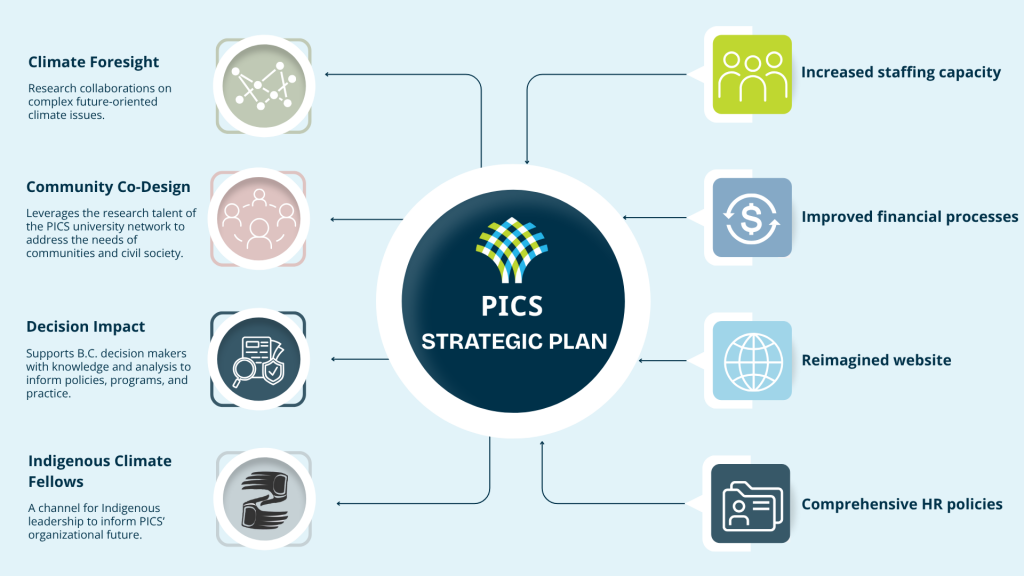
In the spring of 2024, PICS launched its new Strategic Plan: 2024 and Beyondand began the roll-out of new supporting projects and programs.
A reimagined website, climatesolutions.ca, was launched, bringing to life PICS’ commitment to communications and knowledge mobilization as a core plank of its new organizational direction. Based on analysis of our audience’s needs, our website offers a suite of products to ensure the right information is shared with the right people in the right way.
PICS redesigned its funding programs to ensure they deliver value and meet the differentiated needs of three core constituencies. The Climate Foresightstream focuses on research collaborations on complex future-oriented climate issues, driven by the interests of scholars and students. The Community Co-Design stream leverages the research talent of the PICS university network to address the needs of communities and civil society, those living at the forefront of climate change. And, the Decision Impact stream supports B.C. decision makers with evidence and analysis to inform policies, programs, and practice. Activities under these restructured programs commenced in the spring of 2025.
Read moreClose
PICS also made key changes to its organizational structure to align with the goals and values of the new Strategic Plan. New staff were hired to align people to the new programs. A comprehensive Team Member Handbook and associated policies were developed. An energized administrative team improved the efficiency of financial services to our partners. Additionally, an Indigenous Climate Fellows program was inaugurated to establish a channel for Indigenous leadership to inform PICS’ organizational future; with Inuk climate leader and Nobel Peace Prize Nominee Siila Watt-Cloutier serving as the inaugural Fellow.
In the Fall of 2024, PICS underwent the periodic external review required for the renewal of mandates for all research centres at the University of Victoria. This examined PICS’ objectives, goals and activities over the previous six years, based on a comprehensive self-assessment produced by the PICS staff. The review panel’s conclusions highlighted that “PICS’ strong contributions to collaborative and interdisciplinary research; student capacity building; and knowledge mobilization are particularly noteworthy”. They also stated that “PICS’ research programs have resulted in a large volume of original, high-quality, co-designed, climate-solutions research” and suggested the new strategic plan helps to integrate and leverage PICS in meaningful ways with our partner ecosystem.
Our Ecosystem
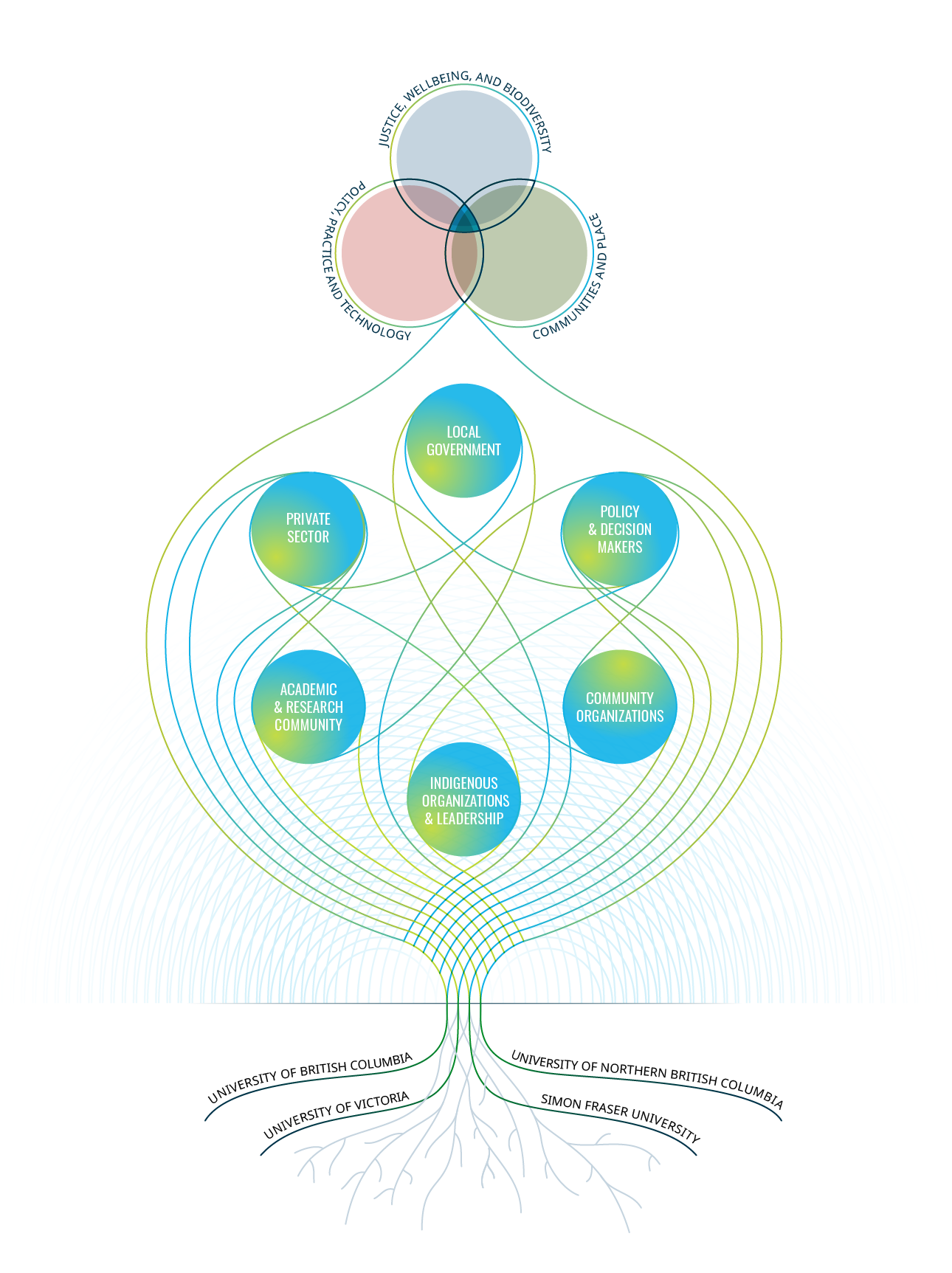
Rooted in partnership, the PICS ecosystem grows through collaboration. Our four founding universities anchor a network of researchers, governments, and communities whose connections nurture the ideas and actions that lead to lasting climate solutions.
Mapping our ImpactClose
This map highlights PICS’ supported climate research, action, and projects across B.C. in 2024–2025. Each marker represents a research project, event, or internship funded through one of our programs. Together, these initiatives reflect PICS’ commitment to advancing place-based climate solutions, empowering emerging leaders, and building partnerships that strengthen resilience and well-being across the province.
Advancing our Intended Impacts
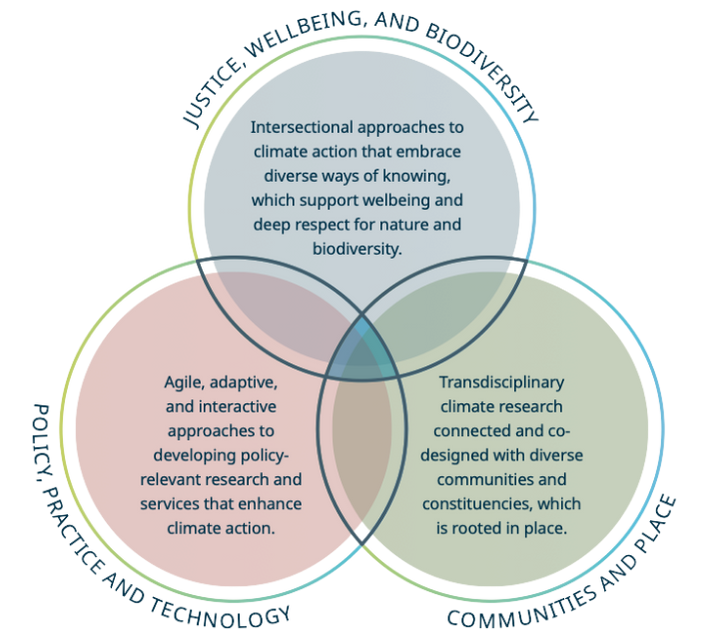
From April 1, 2024 to March 31, 2025, PICS built on the foundation of our latest Strategic Plan. Our Intended Impacts—advancing climate solutions at the intersections of Justice, Wellbeing, and Biodiversity; Policy, Practice, and Technology; and Communities and Place—shaped our efforts throughout the year. The stories in this annual report highlight how these guiding commitments are not only driving progress today but also laying the groundwork for the transformative climate action still to come.
Justice, Well-Being, and Biodiversity
Intersectional approaches to climate action that embrace diverse ways of knowing, which support wellbeing and deep respect for nature and biodiversity.
Durable, fair, and effective climate solutions begin with respect for human, Indigenous, and other beings’ rights. In 2024/25, PICS supported initiatives that advanced reconciliation, safeguarded well-being, and strengthened the connections between people, culture, and ecosystems. From forging a first-of-its-kind Relationship Protocol with the First Nations Leadership Council and restoring Indigenous fire stewardship in the Gitanyow Lax’yip, to improving community well-being through urban forestry, this work demonstrates how climate action and justice are deeply interwoven.
The following impact stories illustrate the progress and outcomes achieved through some PICS-funded projects.
Relationship Protocol advances First Nations climate solutions
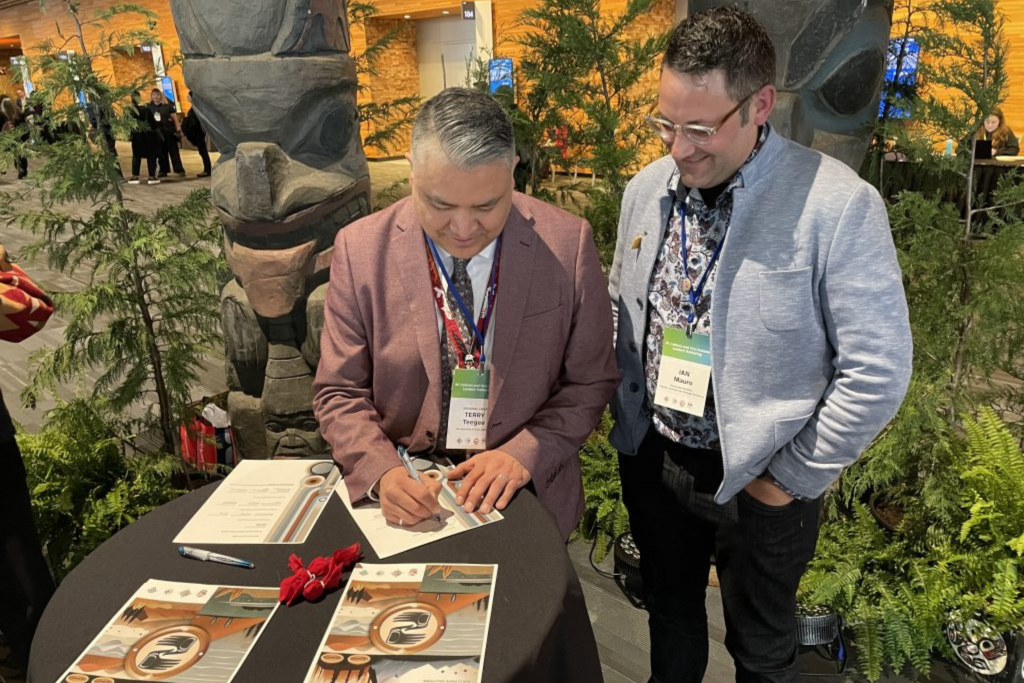
In January 2025, PICS and the First Nations Leadership Council (FNLC) signed a first-of-its-kind Relationship Protocol to support First Nations climate leadership across British Columbia. This voluntary agreement establishes a collaborative foundation for advancing climate priorities while upholding and uplifting First Nations title, rights, and climate knowledge.
By investing in capacity building, research, and education, PICS is helping create space where Indigenous rights, community well-being, and ecological stewardship come together. This work reinforces the principle that climate solutions must be rooted in justice, support the well-being of people and communities, and safeguard the biodiversity that sustains us all.
Decarbonizing B.C.’s energy system and supporting biodiversity
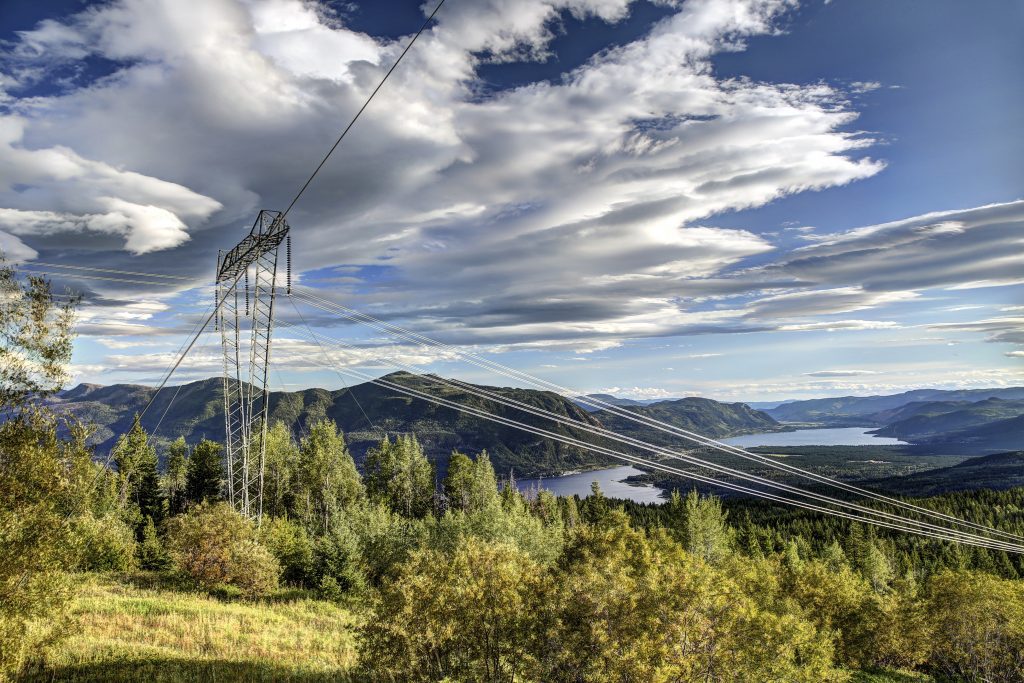
With support from a $180,000 PICS grant, Dr. Taco Niet and their team at Simon Fraser University are exploring how British Columbia’s clean energy transition can advance climate goals while protecting biodiversity, ecosystems, and supporting community well-being.
Read moreClose
As new technologies like hydrogen, heat pumps, and electric vehicles emerge to reduce carbon emissions, there’s an expectation of rising electricity demand. Meeting that demand will require expanding renewable energy generation—such as wind, solar, and hydropower—but without careful planning, this growth could create new pressures on land, water, and biodiversity.
To help guide sustainable development, the research team developed an integrated modelling framework for B.C. that brings together three key models: the BC Nexus model, which links climate, land, energy, and water systems; the RESource model, which assesses renewable energy potential and spatial impacts; and the PyPSA BC model, which simulates how the electricity grid operates and evolves. Together, these tools help identify technology pathways that minimize ecological disruption, reduce transmission bottlenecks, and promote more equitable energy planning.
The findings show that while B.C. has abundant renewable energy potential, land use restrictions, environmental exclusions, and grid accessibility costs limit viable sites for development. Coordinated planning across policy, land management, and infrastructure domains will be critical to ensure that renewable energy expansion supports biodiversity and community values—helping build an energy future that is both low-carbon and just.
Fighting fire with food
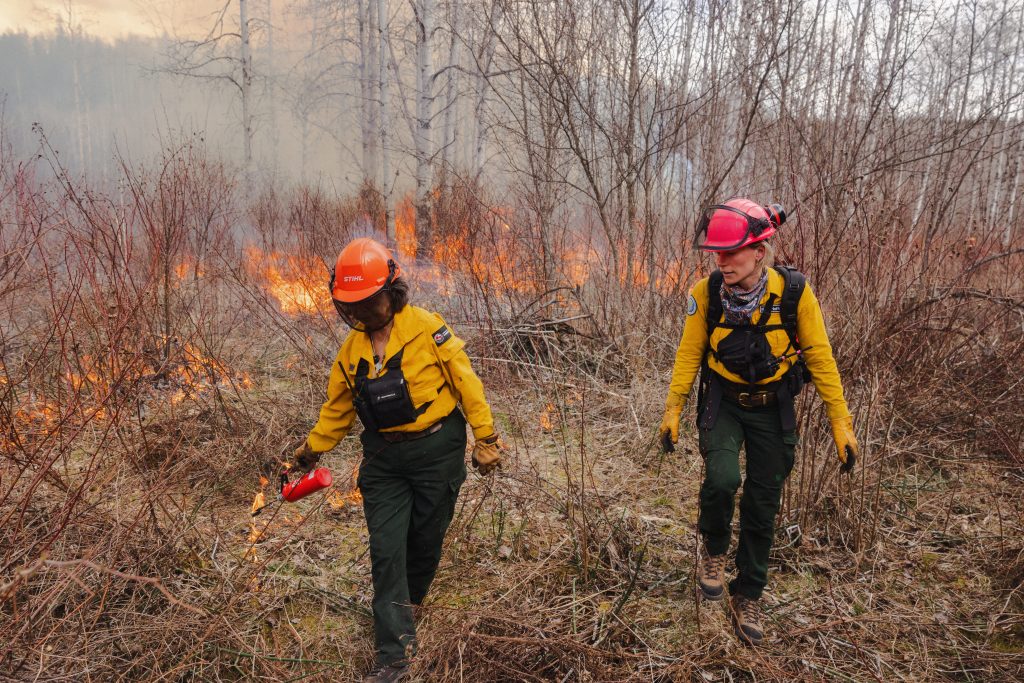
The Gitanyow Nation has long stewarded its lands through cultural burning. The Nation has used fire to maintain healthy ecosystems, manage food and medicinal plants, and support wildlife. With support from a PICS grant worth $180,000, Dr. Lori Daniels and Dr. Kira Hoffman at UBC partnered with the Gitanyow Lax’yip Guardians to revitalize these practices, combining historical knowledge, Indigenous expertise, and ecological monitoring.
Read moreClose
Over the past year, the project expanded its cultural burn areas to cover more than 500 hectares of forest and grassland ecosystems, completing burns on over 100 hectares. Higher elevation sites were incorporated to support huckleberry management, and Elders’ knowledge guided fire prescriptions to support the growth and availability of key plants like huckleberries, nodding onion, nettles, riceroot, as well as habitats for moose and grizzly bears. Local school students and residents visited burn sites, harvested culturally important plants, and engaged in workshops and public presentations, including a panel moderated by Elder Darlene Vegh alongside Dr. Daniels and author John Vaillant. Camera trap photos and harvested seeds have been shared with the community to connect residents with the ecological and cultural significance of fire stewardship.
The project has also helped to achieve important policy advancements, working with provincial authorities and forest licensees to amend silviculture prescriptions and remove timber harvesting obligations within parts of the Gitanyow territory. These changes give the Gitanyow Nation greater authority to care for their lands using fire to balance cultural, ecological, and economic values. By restoring cultural burning practices, the project is simultaneously strengthening ecosystem resilience, supporting food and medicine security, and rebuilding relationships that sustain the Gitanyow Nation’s stewardship of their territory for generations to come.
Siila Watt-Cloutier joins PICS as inaugural Indigenous Climate Fellow
In spring 2024, respected Inuk climate leader and Nobel Peace Prize nominee Siila (Sheila) Watt-Cloutier became the inaugural Indigenous Climate Fellow at the Pacific Institute for Climate Solutions.
A lifelong advocate for Inuit rights and a leading voice for climate action, Watt-Cloutier used her fellowship to inspire the next generation of climate-conscious leaders across PICS partner universities. Her fellowship centred on climate leadership grounded in culture, human rights, and intergenerational responsibility.
Read moreClose
One of the fellowship’s key legacies was A Radical Act of Hope, a limited-series podcast produced by PICS in collaboration with Everything Podcasts, which is co-hosted by Watt-Cloutier, PICS’ Executive Director Ian Mauro, and Janna Wale the Indigenous Research and Partnerships Lead at PICS. The series explores Watt-Cloutier’s life, work, and teachings, and features conversations with Indigenous women changemakers Leena Evic, Dr. Nicole Redvers, and Aleqa Hammond on climate-conscious leadership rooted in Indigenous knowledge and collective care. In 2025, the podcast earned two top honours at the Signal Awards—a Gold Award from the judging academy and Listener’s Choice in the Activism, Public Service & Social Impact category—reaching listeners globally and amplifying Indigenous climate leadership far beyond B.C.
To further share this message with students and academic communities, PICS hosted an on-campus conversation with Watt-Cloutier at the University of Victoria in Spring 2025. The event brought together students, staff, faculty, and community members for a powerful discussion on climate, human rights, and the role of youth in shaping a more just future. Attendees heard firsthand how leadership rooted in consensus, wisdom, and stewardship can guide climate action with humanity and hope.
Together, the fellowship, podcast, and campus engagement ignited dialogue, shifted perspectives, and equipped emerging climate leaders with a values-based model of change, one centred on integrity, reciprocity, and collective action.
Related Justice, Well-Being, and Biodiversity stories
Evidence and knowledge are key building blocks for effective climate action. This past year, PICS invested in catalyzed research and analysis by convening experts, commissioning whitepapers, and targeted research grants. This work includes synthesizing climate risk assessment best practices and research gaps, exploring barriers to climate engagement, and examining methods for cost benefit analysis. Together, these efforts demonstrate how targeted research and knowledge mobilization can inform policy and practice.
The following impact stories illustrate the progress and outcomes achieved through some PICS-funded projects.
How to get B.C.’s climate groove back
Long regarded as climate leaders, British Columbians seem to be faltering in their climate ambitions. Despite increasing climate disasters, climate change ranks as a voting priority for only four per cent of British Columbians, behind housing, health care, and economic concerns.
The report identifies opportunities for policymakers, practitioners, and community leaders to align climate policies with the values and priorities of British Columbians. By focusing on strategies such as improving communication, engaging the public through climate assemblies, and holding opposing actors accountable, this report and its short Explainer directly inform how climate initiatives can be implemented and scaled in the province. These findings provide a roadmap for more effective, evidence-based approaches to fostering public and institutional engagement with climate policy.
Innovation policy meets climate policy
Cutting emissions from heavy industries is essential for meeting climate goals — but it’s a complex challenge. Sectors like oil and gas, cement, mining, pulp and paper, and aluminum are major emitters, but also emissions-intensive and trade-exposed (EITE) — meaning they face global competition that can make low-carbon transitions harder. With support from a $180,000 PICS grant, Dr. Mark Jaccard and Dr. Alicia Maine at SFU, explored how these industries can move toward low- and zero-emission solutions while staying competitive in B.C. and across Canada.
Read moreClose
The research looked at how companies can develop and adopt new zero-emission technologies, and what mix of policies can best support this transition. It examined how climate policies, such as carbon pricing, can work alongside innovation-supporting policies that help companies invest in research, development, and new technology.
Using a new energy-economy model, the project tested different policy combinations to see how they affect industrial emissions, technology adoption, and the risk of “carbon leakage” — when companies move operations outside Canada to avoid climate regulations. The goal was to find the most effective pathway to reach net-zero emissions by 2050 while keeping Canada’s EITE industries competitive.
The findings show that a range of new technologies — such as electrification, hydrogen, digitalization, carbon capture and storage, and Direct Air Capture — could play a major role in helping these industries decarbonize. Carbon removal technologies become especially important once emissions get close to zero and further reductions become costly.
The research also highlights an opportunity: regions with oil and gas resources could transition to producing zero-emission electricity and hydrogen by pairing fossil fuels with carbon capture. This would help Canada maintain economic growth while building a cleaner, more competitive industrial sector for the future, especially in the context of increasingly challenging trade barriers.
From research to resilience: Enhancing climate risk assessments
Climate change risk assessments are widely used to understand threats and prioritize adaptation opportunities, but practices across B.C. vary in quality and effectiveness. Over the past year, PICS has led work to strengthen these practices through a collaborative initiative that convened more than 200 experts and knowledge holders across four workshops and 20 interviews.
Read moreClose
The resulting report, Bridging climate research and risk assessments: A research and knowledge mobilization agenda, identifies common pitfalls that can lead to incomplete or ineffective assessments. This work is informing ongoing provincial risk assessment processes and regulations. It has guided the creation of PICS’ wildfire and extreme heat primers that support local governments in applying comprehensive climate research to their planning and preparedness efforts.
By highlighting best practices and gaps, this work helps guide organizations—both public and private—to adopt more robust, evidence-based approaches. As the province’s next round of climate risk assessments move forward, PICS’ guidance aims to increase the ambition, capability, and accountability of risk assessments in B.C., ensuring communities, ecosystems, and infrastructure are better prepared for a changing climate.
The cost of cost-benefit analysis
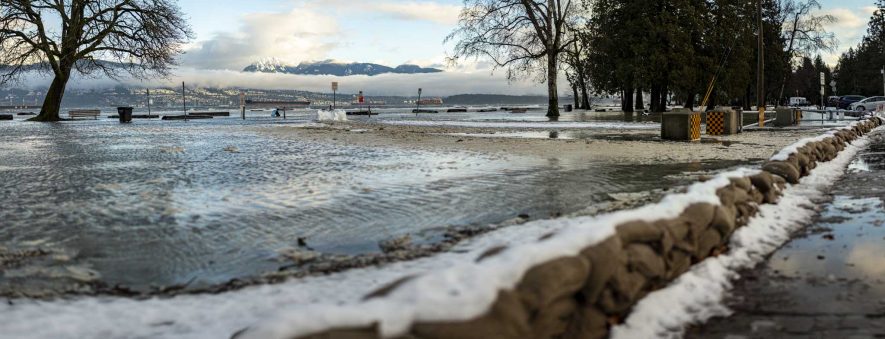
Flooding events are becoming increasingly severe in B.C., and communities face tough choices about adaptation, including managed retreat. PICS-funded research through the Living With Water project examined how cost-benefit analysis is applied to these decisions and highlighted its limitations in capturing social, cultural, and environmental factors.
Read moreClose
Our 2024 report, Economic Assessment and Decision-Making for Community-Led Managed Retreat in British Columbia, advocates for integrating multi-criteria decision analysis (MCDA) alongside cost-benefit analysis to better reflect community values and encourage inclusive decision-making. By translating research into actionable guidance, PICS helps local governments and decision-makers consider the full range of costs, benefits, and trade-offs when planning retreat strategies. This work exemplifies how research can shape policy and practice to better support resilient, climate-informed communities.
Related Policy, Practice and Technology stories
News
Solid Carbon receiving $24M to advance ocean-based carbon dioxide removal
Communities and their environments are at the heart of meaningful climate action. This past year, PICS engaged diverse communities—across culture, geography, and interest—to understand their climate experiences and priorities, and to co-design solutions that have tangible impact. This work includes supporting community-led climate action events, internship projects that connect students to real-world climate solutions, and research on the unique challenges faced by mountain, rural, and remote communities. By centering local knowledge and collaboration, these efforts help ensure climate action is relevant, inclusive, and lasting.
The following impact stories illustrate the progress and outcomes achieved through some PICS-funded projects.
Small grants, big impact: Supporting local climate action across B.C.
The PICS Climate Action Events program includes two streams: one supporting communities and First Nations, and another for our university partners. Both streams fund events that empower people to turn ideas into tangible climate solutions. In 2024/25, 27 events across B.C. received support, fostering collaboration, skill-building, and dialogue around climate challenges.
Read moreClose
Through the community stream, PICS supported nine events across the province. Highlights included the Victoria Native Friendship Centre’s Stepping into Story: Learning on the Land—a six-week Indigenous-led course connecting participants to land, water, and climate justice—and the Clayoquot Biosphere Trust’s Regional Climate Action in Clayoquot Sound, which brought together planners, leaders, and community members to celebrate local climate wins, map existing projects, and identify future opportunities.
The university stream also connected research to local priorities. At UNBC, Green Week encouraged hands-on sustainability through local food fairs and composting workshops. At UVic, the Garry Oak Ecosystem: Reconnecting People with the Land event combined place-based education with planting Indigenous food species. And at SFU, the Climate Innovation: A Community-Centred Approach event convened researchers and community partners to explore collaborative pathways for impact.
Together, these events, whether hosted by communities or universities, demonstrate how modest investments can spark lasting, place-based climate action rooted in equity, reciprocity, and collaboration.
Internship program invests in next generation of climate leaders
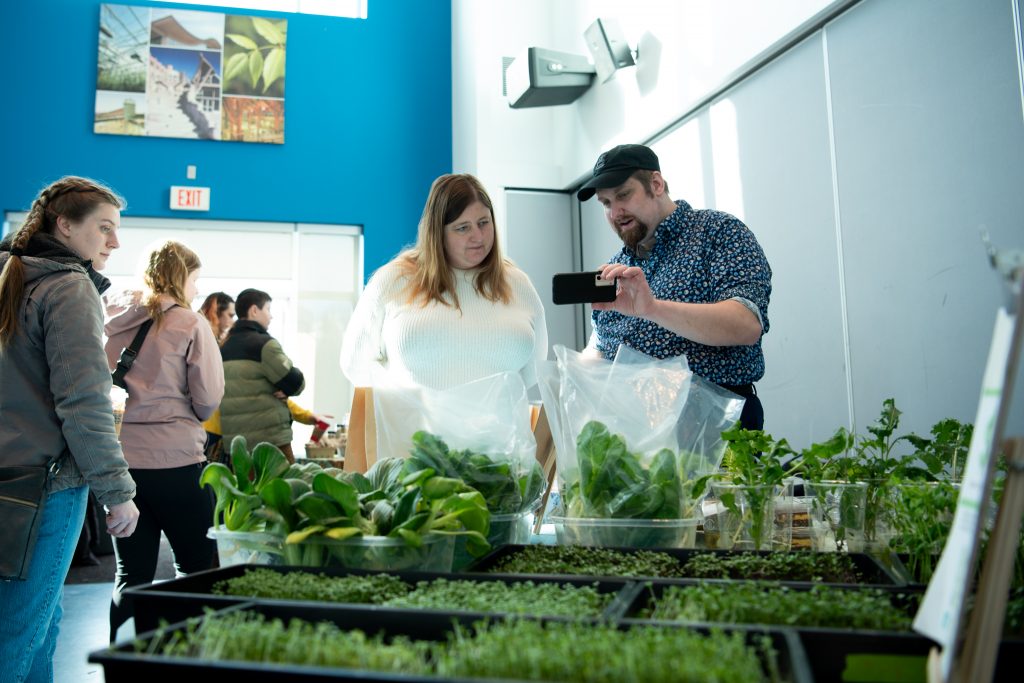
The PICS Climate Internship Program strengthens communities across British Columbia by connecting B.C. organizations with skilled university students. The 2024 internship cohort included 25 students, all of which applied their knowledge to advance projects ranging from public engagement and low-carbon transportation to Indigenous-led food and ecosystem initiatives.
Read moreClose
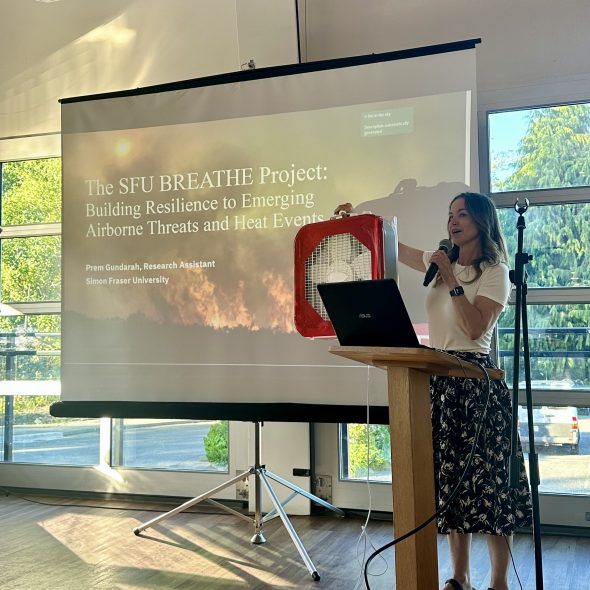
Backed by a generous $100,000 contribution from Coast Capital Savings, the program gave 25 organizations the capacity to engage in climate action projects that might not otherwise happen. Interns like Matthew Edwards, Juliana Janot, and Marcela Faralhi Daolio supported community-based projects—from DIY air cleaner workshops to mapping regional climate action groups and climate adaptation planning in Haida Gwaii—bringing meaningful impact to the people and places they served.
By embedding students in local initiatives, the program strengthens community networks, supports place-based solutions, and fosters knowledge exchange that benefits both current and future climate action leaders. These internships demonstrate how hands-on learning and local engagement together create lasting benefits for communities and the environments they depend on.
Reducing landslide, rockfall, and flood risks
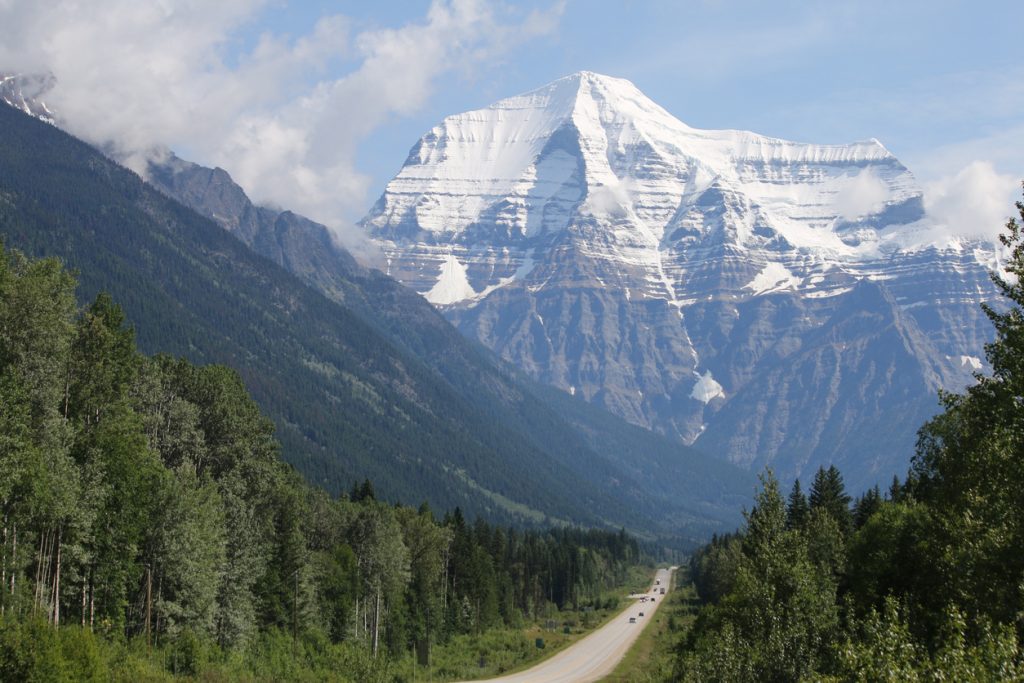
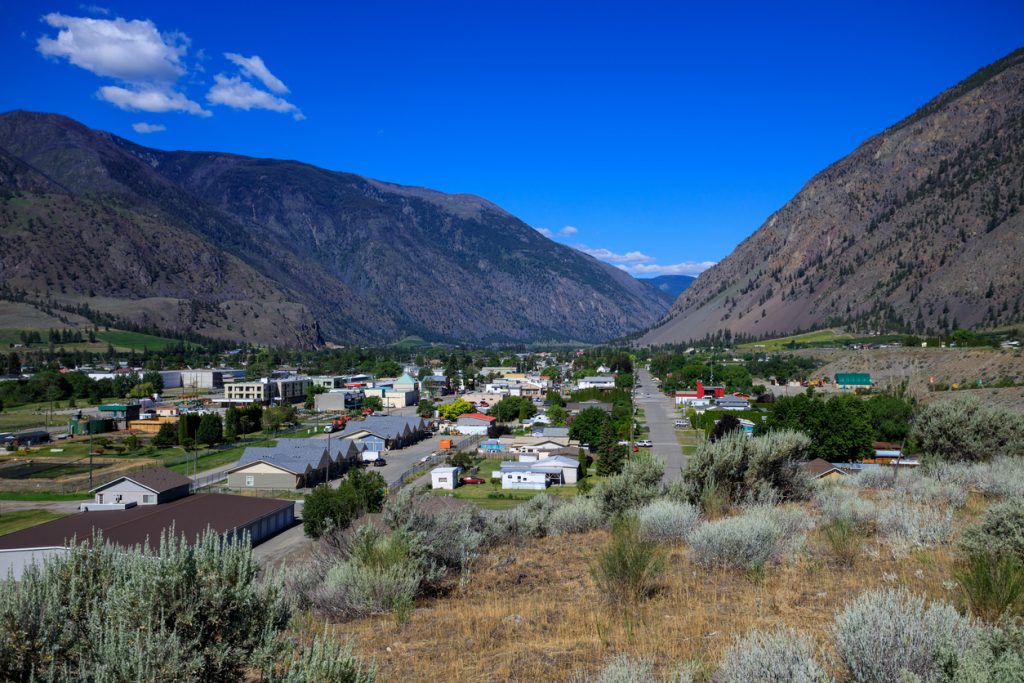
Communities in the Robson Valley face growing risks from climate change, including water scarcity, shifting snowpacks, and slope instability. With support from a $180,000 PICS grant, Dr. Joseph Shea and his team at the University of Northern British Columbia have partnered with local residents, community groups, and the Ministry of Forests to provide timely information to prepare for and adapt to these hazards. By combining real-time monitoring, hazard modelling, and community-based insights, the project equips communities to make informed decisions about safety and sustainability.
Read moreClose
Throughout the past year, the team has engaged deeply with residents in McBride and Valemount, focusing on vulnerabilities to water shortages and slope hazards. The team held adaptation-focused workshops and community consultations to ensure local knowledge guided the project’s research priorities.
PhD student Samiullah (Sami) Sofizada, supported in part by the PICS grant, designed low-cost sensors for community-based slope monitoring around Valemount. Sofizada won Best Poster Presentation at the 2025 Canadian Association of Geographers conference for his research, and plans to bring his expertise into local high schools, inspiring the next generation. Meanwhile, McKenzie Ostberg, who completed her master’s degree with the project, returned to the Robson Valley this fall to lead adaptation-focused community workshops.
PICS funding also helped leverage additional resources, including a workshop grant to study community adaptation strategies, and support from the Canada Foundation for Innovation and BC Parks Living Labs program to install detailed snow observatories in the region. Together, these efforts are creating a network of tools, data, and local knowledge that strengthens the resilience of mountain communities in the Robson Valley.
Practical solutions for rural communities on the climate frontlines
Rural and remote communities are on the frontlines of climate change, facing challenges like wildfire, changing ecosystems, and energy insecurity. The four year, $1,000,000 PICS-funded Serving Rural and Remote Communities project is co-developing practical, place-based solutions alongside First Nations and rural communities.
Read moreClose
In its second year, the project team has recognized that impact doesn’t always unfold the way you first imagine. Originally envisioned around in-depth community case studies, the team shifted its approach to prioritize workshops, handbooks, and scalable tools that reach more communities at once. For example, the project’s Community Fire Resilience Handbook has been shared at multiple workshops and forums, incorporating feedback from First Nations housing and climate managers across B.C. This pivot acknowledges the many demands on rural and First Nations communities’ time, while still ensuring their voices guide the project’s outputs.
Through values-based engagement, Indigenous-led workshops, and new initiatives like developing an “impact narrative,” the project has continued to build trust and relationships while equipping communities with accessible resources.
Looking ahead, the team will launch a website, release a podcast series on solar and battery backup systems, and continue to share findings and resources through policy briefs, academic publications, conferences, and workshops—ensuring that the tools created are not just about research, but about resilience where people live.
Preparing for and adapting to sea level rise and flooding
The four year, $1,000,000 PICS-funded Living With Water project focuses on empowering communities to prepare for and adapt to sea level rise and flooding. In its fourth and final year— rather than focusing solely on technical solutions like infrastructure, Living With Water explored what adaptation looks like when it’s grounded in community values. This kind of values-based approach reshapes both the questions that are asked and the pathways that are imagined, opening space for more just, inclusive, and locally relevant responses to sea level rise.
Read moreClose
Over 2024–25, the project produced a range of impactful publications and resources to support decision-making and community adaptation. Key outputs include the Economic Assessment and Decision-Making for Community-Led Managed Retreat in British Columbia, which examines the role of cost-benefit analysis in managed retreat decisions and the Flood Governance Mapping Report which summarized workshops conducted in 2023 and 2024 and highlighted the usefulness of timeline mapping for planning and responding to flooding events. The project also engaged broader audiences through the Living With Water podcast, featuring experts and researchers in coastal adaptation.
Related Communities and Place stories
Reflection
Everything is connected: Supporting Indigenous climate resilience in a PICS summer internship