By Octavio Cruz
Along the shores of Coles Bay, in the heart of the Greater Victoria Region, Pauquachin First Nation (PFN) is reasserting its role as steward of marine and intertidal ecosystems amid accelerating climate change. Rising seas, foreshore erosion, and the ongoing impacts of colonial dispossession have placed increasing pressure on coastal food systems. In response, PFN is revitalizing coastal stewardship through approaches grounded in Indigenous governance, food sovereignty, and climate resilience—re-engaging with Coles Bay as a living system that sustains both community and ecosystem health.
This Knowledge Highlight shares practical examples of Indigenous-led climate resilience projects implemented and planned by Pauquachin First Nation, offering a case study of how Indigenous Knowledge and governance can be woven with western scientific practices to respond to anthropogenic climate change. These applied initiatives which include shoreline softening, bioengineering, and Indigenous sea garden construction are designed to address severe foreshore erosion, reduce storm surge risk, and strengthen food security within intertidal spaces.
This highlight recognizes that climate change and restoration sciences operate within colonial systems; there is continued researcher responsibility to avoid perpetuating colonial harms by working under and with accountability to local Indigenous communities in an anti-colonial manner.
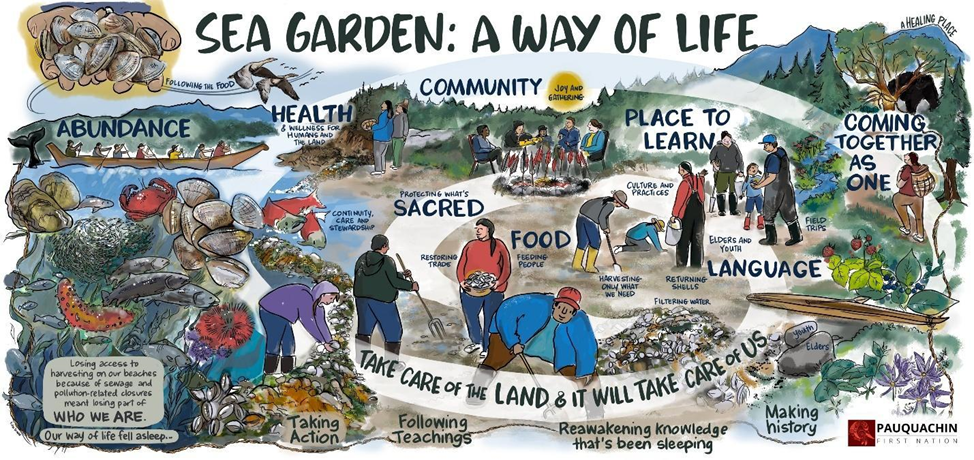
Anti-colonial practices can occur at any stage of applied climate resilience projects, or most societal actions, by emphasizing Indigenous governance, accountability to local places, reciprocal relationships and the active refusal of extractive or dominance-based colonial models.
Western scientific research increasingly promotes anti-colonial practices, but there is much work left to do to challenge systems that influence climate change that are rooted in colonial systems, including capitalism, patriarchy, imperialism, and racism, and which lead to marginalized Indigenous worldviews.
Meaningful engagement with Indigenous Knowledge therefore requires researchers to take responsibility for actively challenging those power structures that reproduce colonial harm.
Collaboratively (and co-conspiratorially), we created the four major projects (outlined below) as a basis for a wider, resilient shoreline in Coles Bay for the Nation. These project have integrated community needs and kept an eye to long-term climate change patterns the Nation will need to accommodate moving forward. My role has been to support concept development, species documentation and integration, weaving Indigenous sciences and western sciences to meet PFN standards, as well as generate opportunities for community members, youth, and Elders to engage with all project stages.
- Indigenous Sea Wall Garden Wall Creation
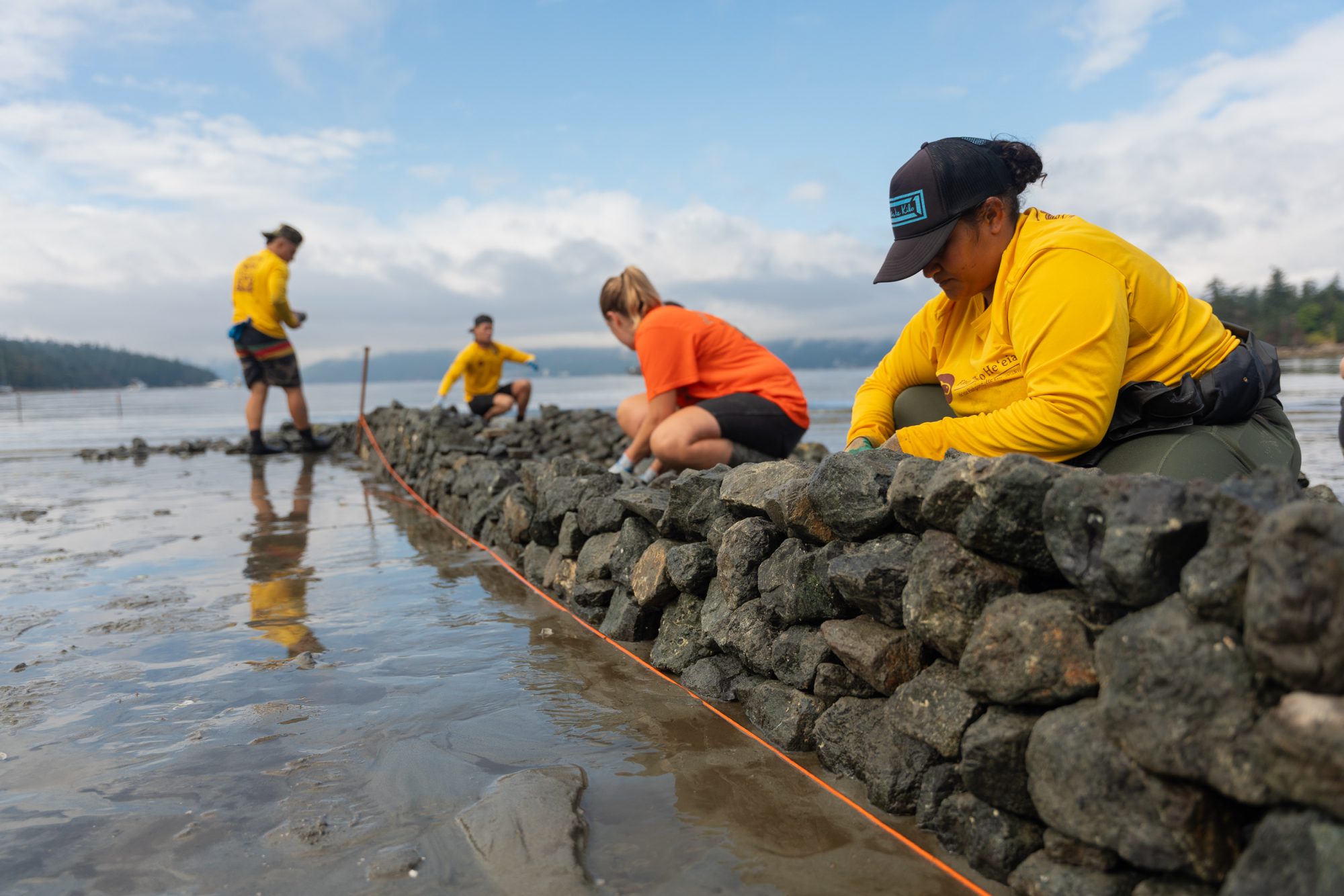
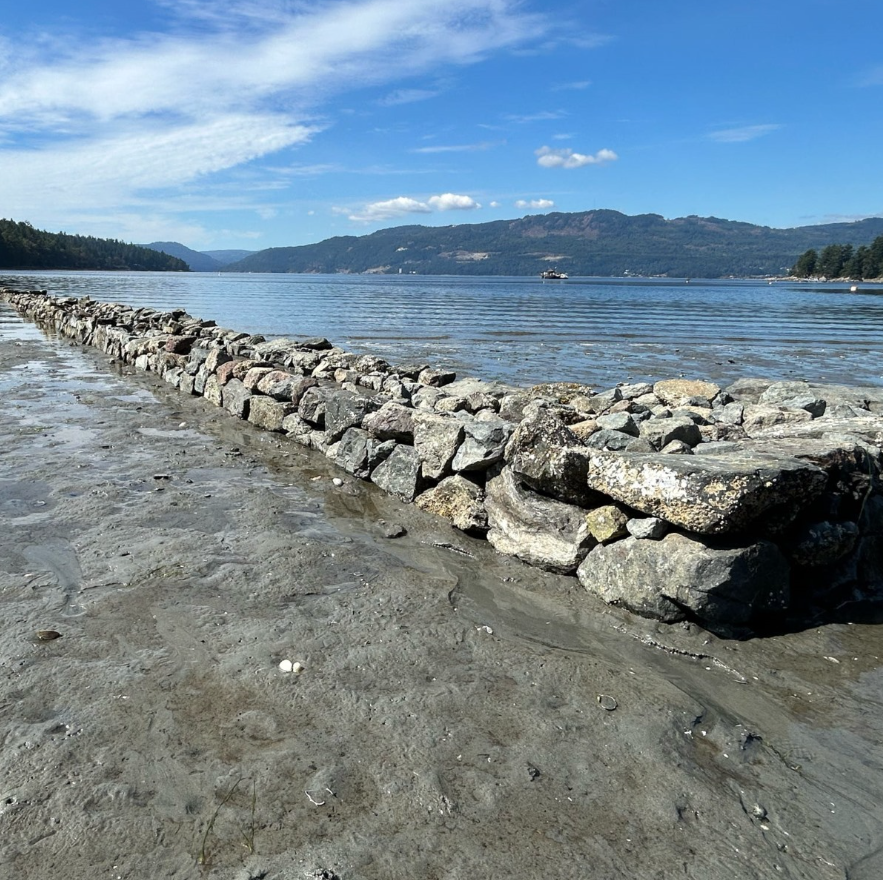
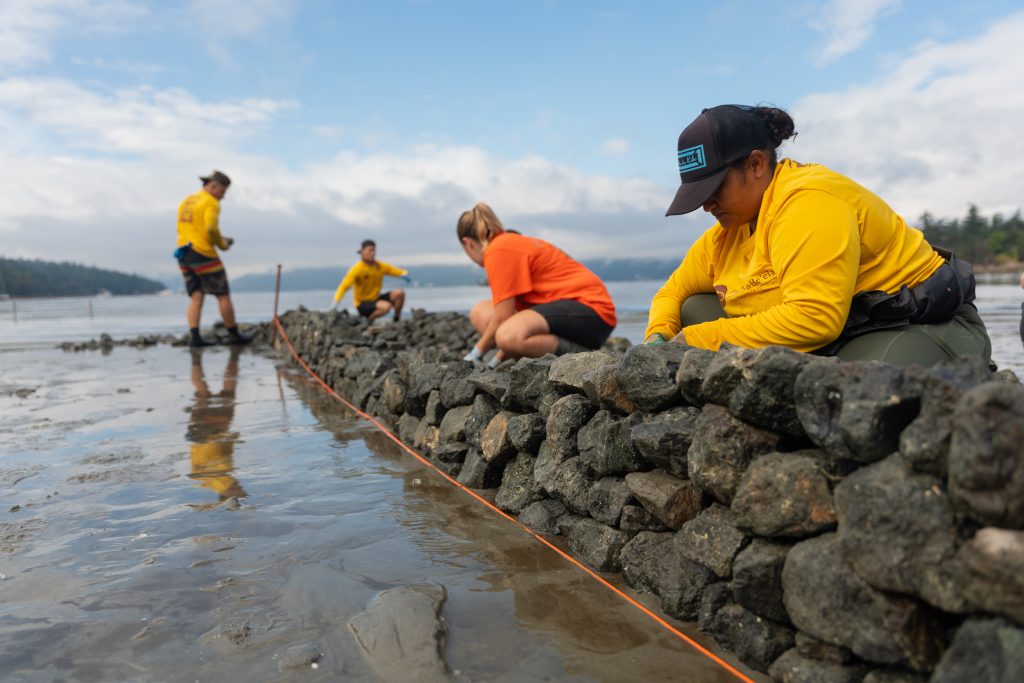
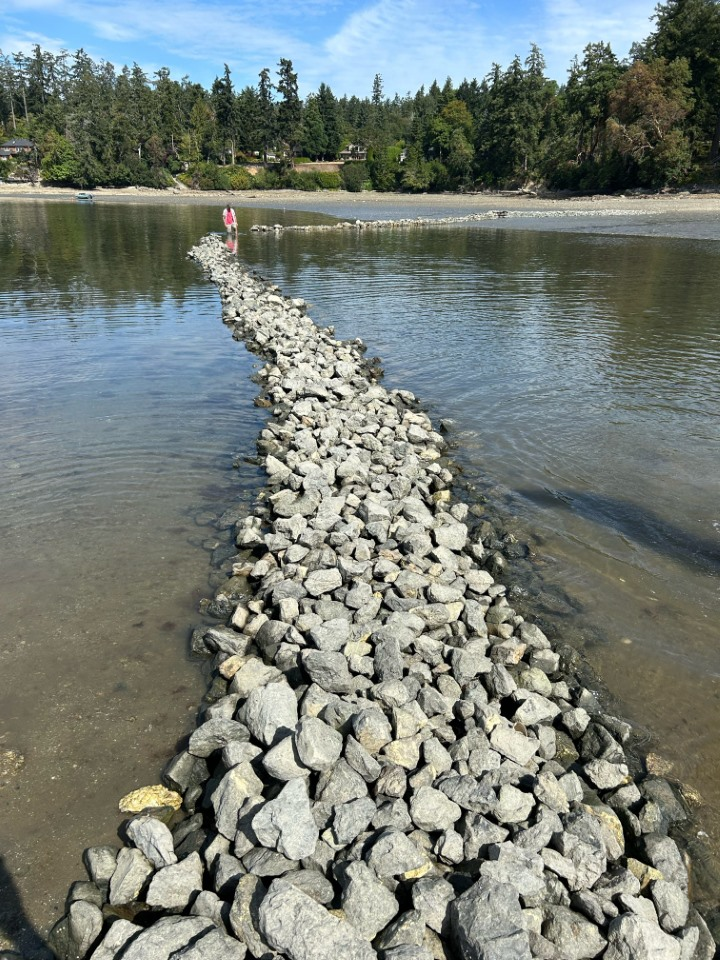
A 400-foot rock wall was built at the lowest intertidal zone forming terraces that increased biodiversity and shellfish abundance by up to four times as a way to integrate cultural clam management with long-term climate resiliency in the environment.
Elders and Knowledge Holders worked with technicians to guide both the placement and construction of intertidal structures. Their input drew on harvesting practices, changes observed in intertidal species over time, community harvesting needs, and locally specific projections for extreme storm events.
- Shoreline Softening and Habitat Restoration
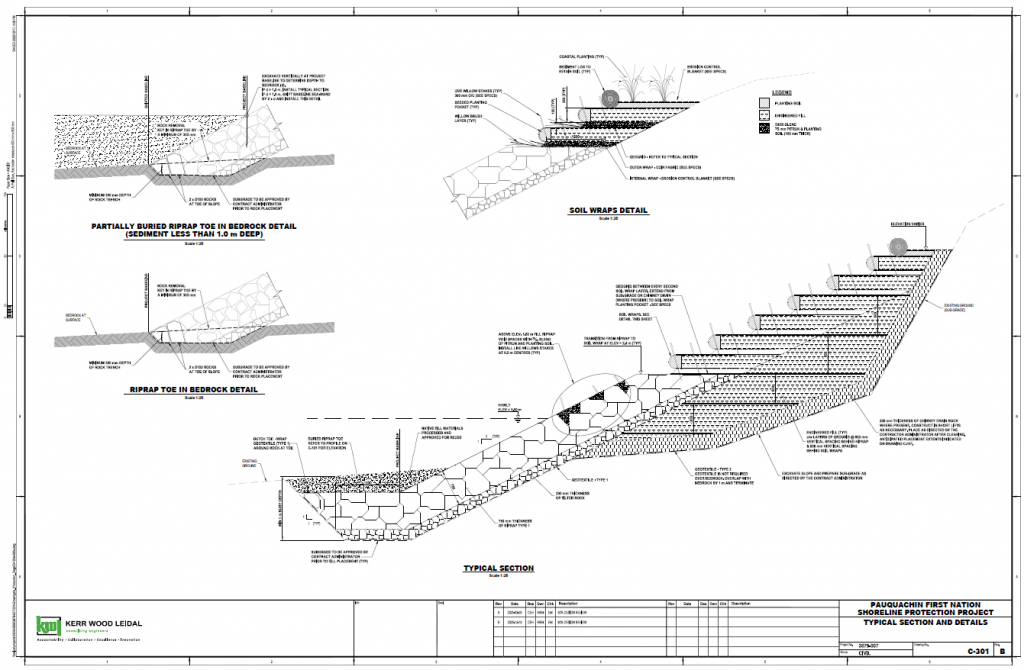
Erosion control structures are being built above the sea garden wall using layers of soil and rock. These structures will help stabilize the shoreline, restore intertidal habitat, and support Olympia oyster recovery. They will also create space for marshes, root gardens, and berry gardens. The design combines engineered approaches with Indigenous planting Knowledge to guide habitat restoration.
- Stormwater and Pollution Management
A resilient stormwater system has been planned to manage runoff before it enters Coles Bay. This system uses bioswales, rain gardens, and constructed wetlands, treating as much as 90 per cent of runoff. The approach blends traditional plant Knowledge with hydrological engineering to reduce pollutants and improve water quality.
- Integrated Food and Medicinal Plant Systems
Higher-elevation shoreline areas and plantings in bioswales have been designed to include culturally important fruits, berries, and medicinal plants. These plantings align with Garry oak and Douglas-fir ecosystems and create opportunities for community use and new seed banks for culturally significant species.
POSITIONALITY
I am Octavio Alonso Cruz Coto, and was born in Caracas, Venezuela. I have been shaped by diasporic histories entwined with Spanish colonization, and my ancestry includes Lebanese, Andean, Spanish and British roots.
While, through my Andean heritage, I have Indigenous ancestry, I do not personally identify as Indigenous due to lost cultural transmission in my family. I personally use the term “Indigenous Ancestry” to best describe the mestisaje present in my family, while acknowledging and honoring the multitude of roots I hold. My intersectional roots define my responsibilities as a settler working for Indigenous communities, and I primarily collaborate with Pauquachin First Nation on Vancouver Island.
I aim to engage deeply at a local level, and to advance sovereignty, reciprocity, and relational accountability in my work. My research is motivated by the urgent need to center Indigenous governance, Knowledge, and legal orders in climate and marine restoration work. I approach this through an anti-colonial ethic, recognizing this as an ongoing, lived practice that demands critical reflection and continual reorientation.
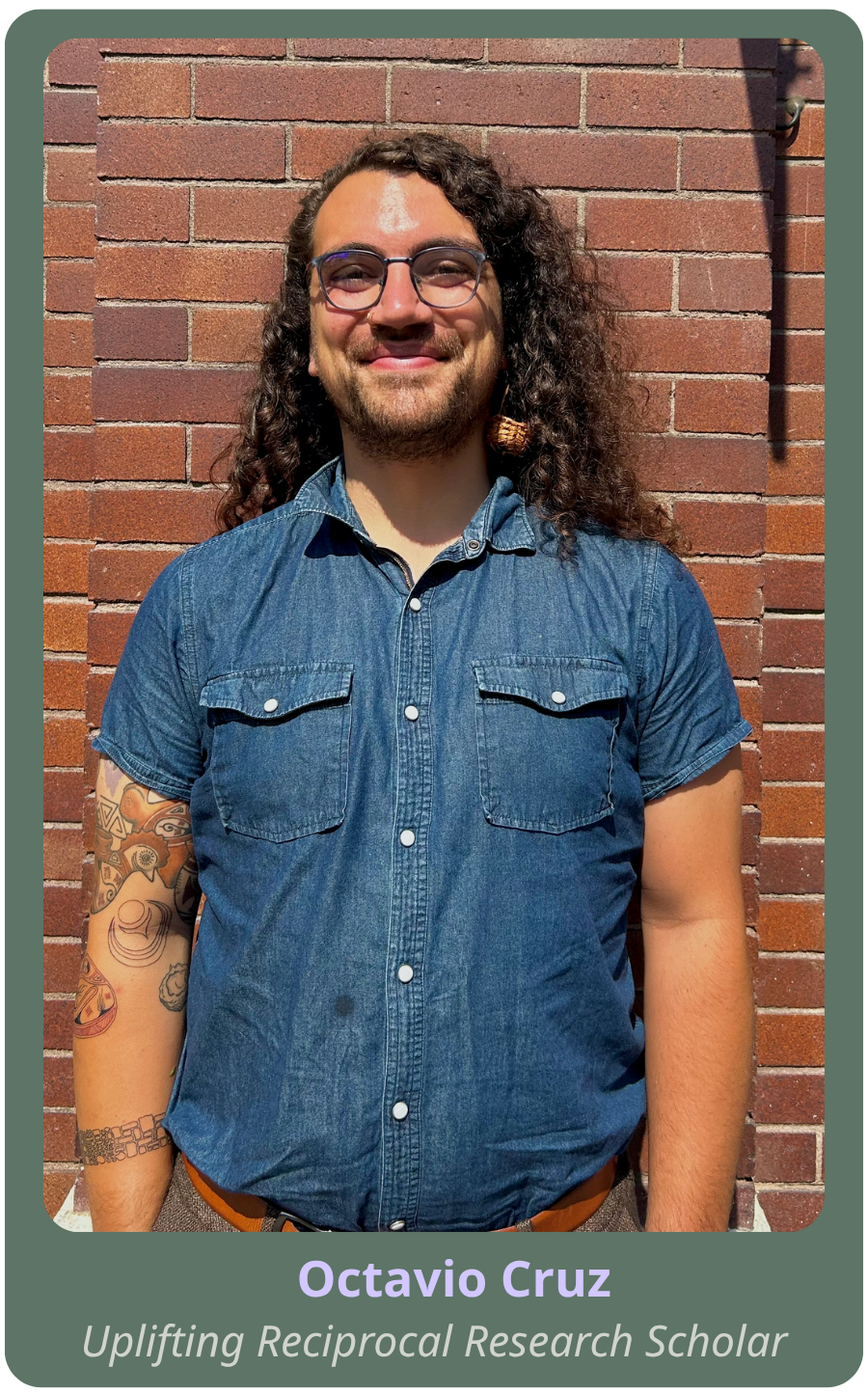
I hold an undergraduate degree and a MSc in marine ecology and environmental studies respectively. I am currently proceeding with a PhD in Environmental Studies at the University of Victoria, researching specific intertidal dynamics of interest for Pauquachin First Nation on their behalf.

My doctoral research examines Indigenous-led marine stewardship, focusing on shellfish restoration and the impacts of colonial governance on food systems. Specifically, this work was requested as an extension of my relationship with Pauquachin First Nation by community members and Elders, to ensure appropriate depth and long-term engagement by the Nation with their marine spaces.
Research as a framework
for restoration
Grounded in their 1852 Douglas Treaty rights and cultural obligations within their climate resiliency and restoration projects, PFN is actively centering cultural restoration within Coles Bay. The focus of my research involves collaboratively building and documenting the Nation’s efforts in several restoration projects within Coles Bay—a bay that is one of the Nation’s most important residential, cultural, and historical food harvesting areas that remains central to community well-being and practice.
Central to this work is the integration of shoreline softening, bioengineering, and Indigenous sea garden construction, that aim to address severe foreshore erosion, storm surge risk, and reduce food insecurity within intertidal spaces in the face of climate change. This is coupled with active community engagement.
I act as a liaison between community members, Elders, and technical developers to ensure the community’s voice is heard and needs are met. This involves interviews with community members, Knowledge Holders and Elders, as well as through activity workshops, field days, and sharing circles with assistance from staff in Pauquachin First Nation’s Marine Department.
My research also examines policy barriers related to First Nation marine harvesting rights in British Columbia, with a focus on shellfish restoration. In partnership with Pauquachin, my work offers policy recommendations for community-led restoration projects and highlights institutional barriers that currently hinder community efforts.
Pauquachin First Nation
marine climate leadership
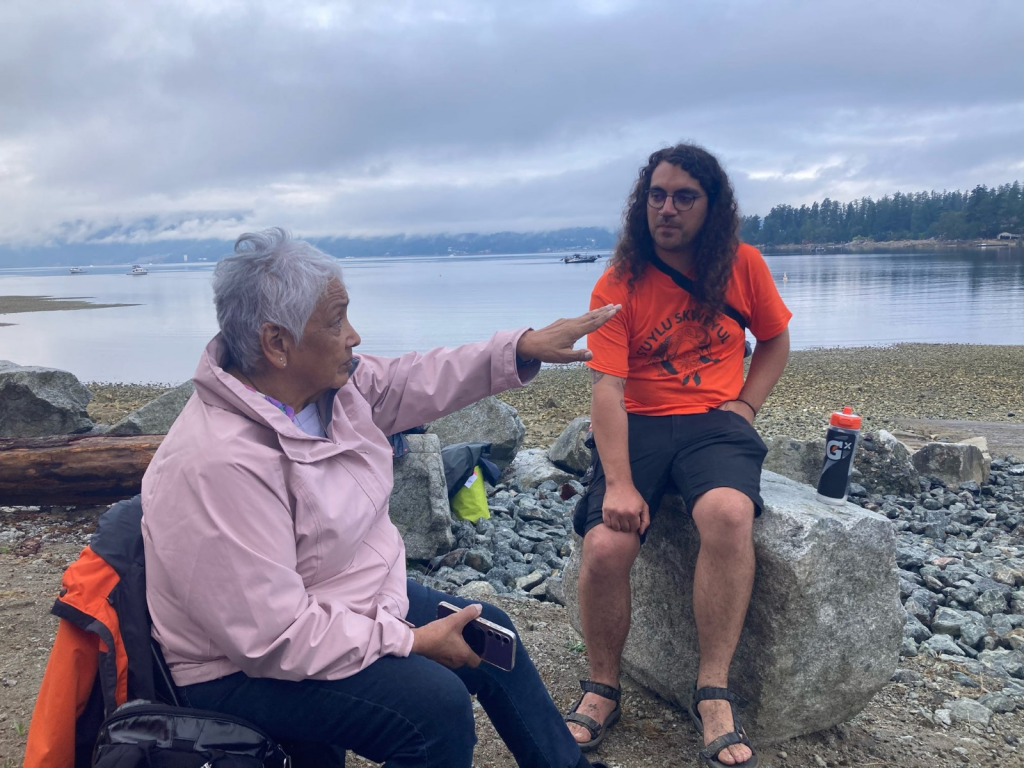
PFN is leading a number of shellfish restoration activities. These have been guided by community priorities, using workshops, discussions and community meetings, aiming to build resilient environmental systems with specific targets such as shellfish restoration and climate resilience. Projects have integrated Indigenous ecological Knowledge, local histories, and place-based observations with western scientific tools such as biodiversity monitoring and hydrological modeling to create adaptive and culturally grounded climate resilience solutions.
PFN, in collaboration with provincial government agencies, and myself as a research lead have developed a Shellfish Restoration Handbook that outlines shellfish restoration activities specifically in Coles Bay alongside associated policy considerations. The handbook showcases how long-term policy critiques and summaries can be developed as part of research, so that others can learn from work conducted.
This advocacy can assist in changing policies that generate barriers to harvest, as described within. The handbook is publicly available and serves as a reference for Indigenous-led shellfish restoration planning.
Relationship to the BC First Nations Climate Strategy and Action Plan
for Disaster Risk Reduction
Pauquachin First Nation has been consistently monitoring and planning restoration of their shellfish beds due to anthropogenic inputs such as stormwater and septic discharge. During these detailed surveys and community-led projects, the Nation identified increased shoreline erosion as a major threat to both clam habitat and culturally significant sites along a 250-metre stretch of foreshore beside the restoration areas. We have recorded approximately 40 feet of shoreline loss, linked to intensified storm events and sea-level rise.
In response to these increasing challenges and barriers to access in community, PFN initiated a climate resiliency project, funded through the Union of BC Municipalities’ Community Emergency Preparedness Fund (Disaster Risk Reduction — Climate Adaptation stream).
Two major infrastructure interventions were co-designed with engineers, stewards, and staff to address these threats. First, a novel shoreline softening system has been developed to stabilize the eroded cliffs, incorporating Indigenous and western ecological engineering practices. This system includes regraded slopes, more than 10,000 native food plants, and 84 heirloom fruit trees as both bioengineering and food security measures. A new 150 metre sea garden has been constructed with hand-stacked stone as a Douglas Treaty activity in August 2025, alongside 450 Indigenous aquaculture practitioners, Knowledge Holders, and community members.
Secondly, Pauquachin First Nation is currently implementing a new stormwater management system designed to handle 1-in-200-year storm events, like the atmospheric river of 2021. The upgraded infrastructure integrates five filtration areas, integrating rain gardens, media filters, constructed wetlands, and other passive treatment elements, to improve water quality and reduce contaminants entering the intertidal zone by around 90 per cent. This innovation directly supports disaster risk reduction by addressing both climate-related hazards and pollution stressors.
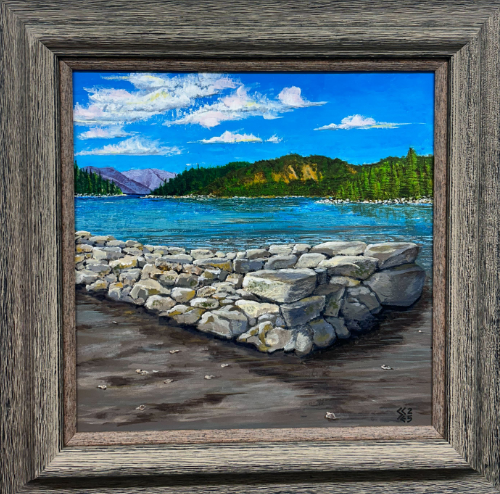
This research supports PFN’s assertion of inherent and Douglas Treaty-protected rights, including the right to govern, access, and revitalize marine territories. The sea garden will be built with hand-stacked rock wall at the 0.5 metre tidal mark and is central to this restoration. It aims to create optimal clam habitat while mitigating wave energy.
The broader project reaffirms PFN’s self-determination and jurisdiction over their ancestral lands and waters, consistent with the UN Declaration on the Rights of Indigenous Peoples (UNDRIP) and B.C.’s Declaration on the Rights of Indigenous Peoples Act (DRIPA). These initiatives shift away from limited consultation toward recognition of PFN as full rights-holders in climate response and marine governance.
The research also contributes to growing institutional and technical capacity within PFN’s Marine Department. It has supported the development and retention of five full-time First Nation staff positions and involved many community members in restoration work. These actions strengthen community leadership and build long-term climate resiliency through applied training, knowledge exchange, and intergenerational learning including language integration (Hul’q’umi’num’).
Pauquachin First Nation has emerged as a regional leader in Indigenous-led restoration, being the first Nation in the Southern Gulf Islands to design and construct a new sea garden in over a century. The Nation’s approach integrates Indigenous Knowledge systems with contemporary ecological science and engineering, producing a climate-resilient and culturally grounded marine management model. External recognition, including a 2023 and 2025 Ecostar Award and 2024 Regenerative Agriculture Foundation grant, reflects the Nation’s leadership in the field.
The overall project will restore 2.2 acres of degraded intertidal zone and foreshore habitat, supporting biodiversity, enhancing traditional food systems, and improving long-term ecological resilience.
The project exemplifies proactive climate adaptation through infrastructure that anticipates and mitigates future climate impacts. It integrates traditional ecological Knowledge with contemporary planning tools to enhance community preparedness. This includes nature-based solutions such as rain gardens and shellfish-based water filtration, which are scalable and adaptable across coastal First Nations territories. The collaborative design process, involving stewards, Knowledge Holders, researchers, and engineers, demonstrates a viable model of co-development that can be replicated elsewhere. The work also contributes to provincial adaptation strategies by providing evidence-based, community-led restoration frameworks aligned with BCFNCSAP priorities.
Reflections AND Recommendations
for Indigenous Climate Resiliency Work
I have worked with and alongside some amazing and inspiring people throughout my time at Pauquachin First Nation, with five years working as a researcher for the Nation and for two years as a doctoral student.
However, to lift the initiatives off the ground, a major amount of capacity building was required to properly support the work happening in community. Training for staff, community members, and support for intergenerational Knowledge transfer were all important in creating and strengthening stewardship initiatives that are all helping PFN to build towards local, sustainable, long-term climate resilience.
Restoration and climate resiliency strategies being used by PFN were defined by Pauquachin First Nation local Knowledges first and foremost, and goals, priorities, and measures of success were defined by the Nation. This included grounding future visions in climate action, implementation of treaty rights and practices such as harvesting, and continuation of long-term stewardship responsibilities. The parameters set by the Nation in all projects outlined here treat climate adaptation as an exercise in sovereign Indigenous governance, not just as technical problem solving alone. To continue this good work, researchers should:
- Center reciprocity throughout your work, aiming beyond consultation or documentation, and produce tangible products centered in benefits for the community.
When working with Nations, reciprocity must move past material outcomes. Every phase of the work must be rooted in responsibilities to the community and produce tangible benefits to the Nation; in our case, this means research and work that supports and increases harvesting, employment, food access, infrastructure development, and training. These larger tangible efforts create longer-term resilience than knowledge-only research approaches.
- Allow Indigenous Knowledges from the local community to guide the project at every stage.
Elders’ Knowledge, harvesting histories, and place-based observations should shape where and how you implement restoration and climate solutions. Western science should be used as a complementary tool, as needed, and eventually set down to allow local Knowledges to take over long-term stewardship and management of solutions.
- Pauquachin First Nation’s approach to intertidal climate resilience specifically views the entire intertidal zone as a continuously managed system.
Restoration methods here, including erosion control, shellfish habitat, medicinal plants, and stormwater management are all woven as a single system responding to climate change, aiming for long-term sustainability. I would specifically challenge and recommend to non-Indigenous researchers or researchers working for other Nations to center hyper-local epistemologies and worldviews together, working on local problems with care guided by community, while ensuring all projects weave together in a long-term fashion.
Truly revitalizing Indigenous stewardship challenges dominant narrative related to land and shoreline use. According to PFN Knowledge, treating beaches as living, managed food landscapes is an important part of building resilience, which conflicts with settler norms of recreation and regulation, requiring researchers to actively navigate regulatory systems that often undermine Indigenous governance.
While we have faced and will continue to face many barriers in revitalizing stewardship practice, we faced them together, towards strengthening Pauquachin First Nation’s sovereignty. I hope this inspires researchers to co-conspire with Nations more frequently to create good trouble.
Final Reflections
Overall, the work I am fortunate to contribute towards with Pauquachin First Nation shows that intertidal restoration can function as both climate adaptation as well as anti-colonial governance implementation when Indigenous Nations are supported and lead in decision-making processes, knowledge production and implementation of developed materials with limited barriers restricting cultural management.
The projects underway at Coles Bay show that climate resilience works can align with treaty rights, cultural law, food sovereignty, and long-term stewardship responsibilities rather than only ecological or engineering objectives alone.

This research continues to reveal limitations of western scientific policies and systems alone, especially when they fail to recognize Indigenous jurisdiction. Regulatory barriers, extractive research norms, and colonial funding structures continue to constrain Indigenous-led climate action. That means, however, that action can be taken from a resilience lens if both technical innovation is woven by researchers and practitioners into praxis that centers Indigenous governance and refuses systems that undermine it. Researchers therefore carry an obligation to directly and actively confront those power structures rather than reproduce them.
Octavio Cruz is a PhD candidate at the University of British Columbia, and a recipient of a PICS Uplifting Reciprocal Research Scholarship.

In honour of the Relationship Protocol between the Pacific Institute for Climate Solutions (PICS) and the First Nations Leadership Council (FNLC), this Knowledge Highlight series reflects PICS’ commitment to supporting the priorities of the BC First Nations Climate Strategy and Action Plan and the Action Plan for Disaster Risk Reduction by First Nations in BC through capacity building, research, and education.