Where we build today shapes the climate impacts of tomorrow. How can governments create safer, affordable, and resilient communities?
Climate risks need to be reflected in land use decisions to support affordable and resilient communities in British Columbia.
Where We Build Matters: Land use planning for safety, affordability, and resilience examines how the local government land use planning system in B.C. currently addresses climate risks.
The report highlights key challenges with B.C.’s land use planning system: decentralized roles, fragmented policy adoption, and a complex decision-making environment with competing priorities, pressures, and misaligned incentives.
Read the full report ↓
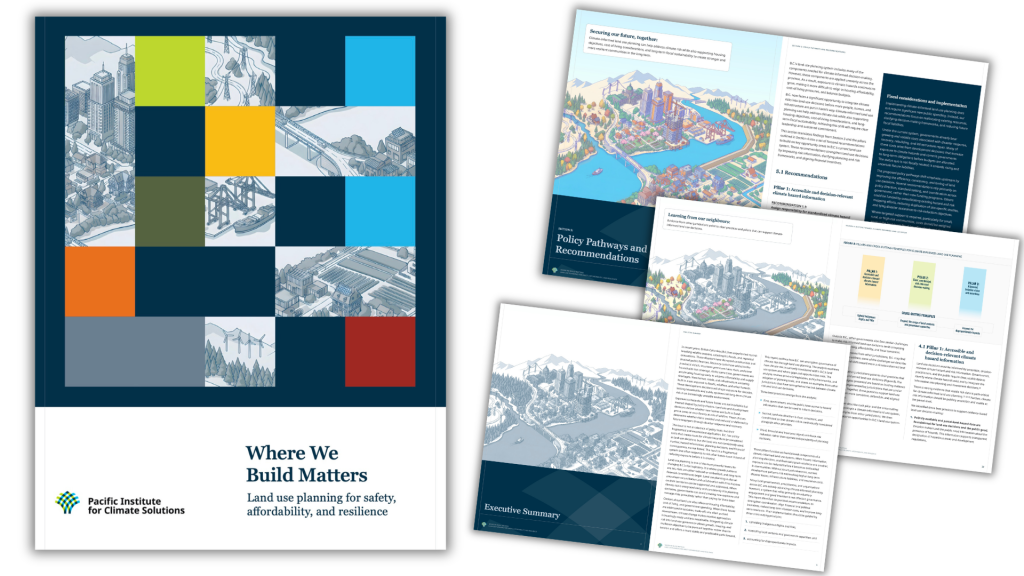
Where We Build Matters: Land use planning for safety, affordability, and resilience
Experts discuss the importance of land use planning in a changing climate.
This report highlights three key actions to strengthen climate-informed land use decisions. These actions should be implemented by the Government of B.C. in consultation with local governments, First Nations, and other key actors.

Increase data-driven decision-making
Develop accessible, standardized, and parcel-level climate hazard information for land use planning across B.C.

Coordinate and direct climate-informed land use planning
Coordinate provincial mandates and create clear directions for local governments to make climate-informed land use decisions.

Align risk reduction with financial incentives
Align and directly link financial incentives with long-term risk reduction actions through disaster financial assistance and insurance.
Technical papers
This report draws on commissioned research and analysis from experts.
Building Climate-Informed Land Use Policy in British Columbia: A jurisdictional analysis
Prepared by Dr. Bernard Soubry. This report compares climate-informed land use frameworks in Canada and internationally.
Land use planning in a changing climate: Roles and responsibilities
Prepared by Dr. Andreanne Doyon, SFU. This report summarizes key land use planning roles with a focus on climate risk and adaptation.

Land use planning in a changing climate: Policy opportunities
Prepared by Dr. Andreanne Doyon, SFU. This report presents land use planning policy opportunities to reduce climate risks in B.C.
PICS gratefully acknowledges the financial support of the Province of British Columbia through the Ministry of Emergency Management and Climate Readiness (EMCR).