By: Dylan Hillis
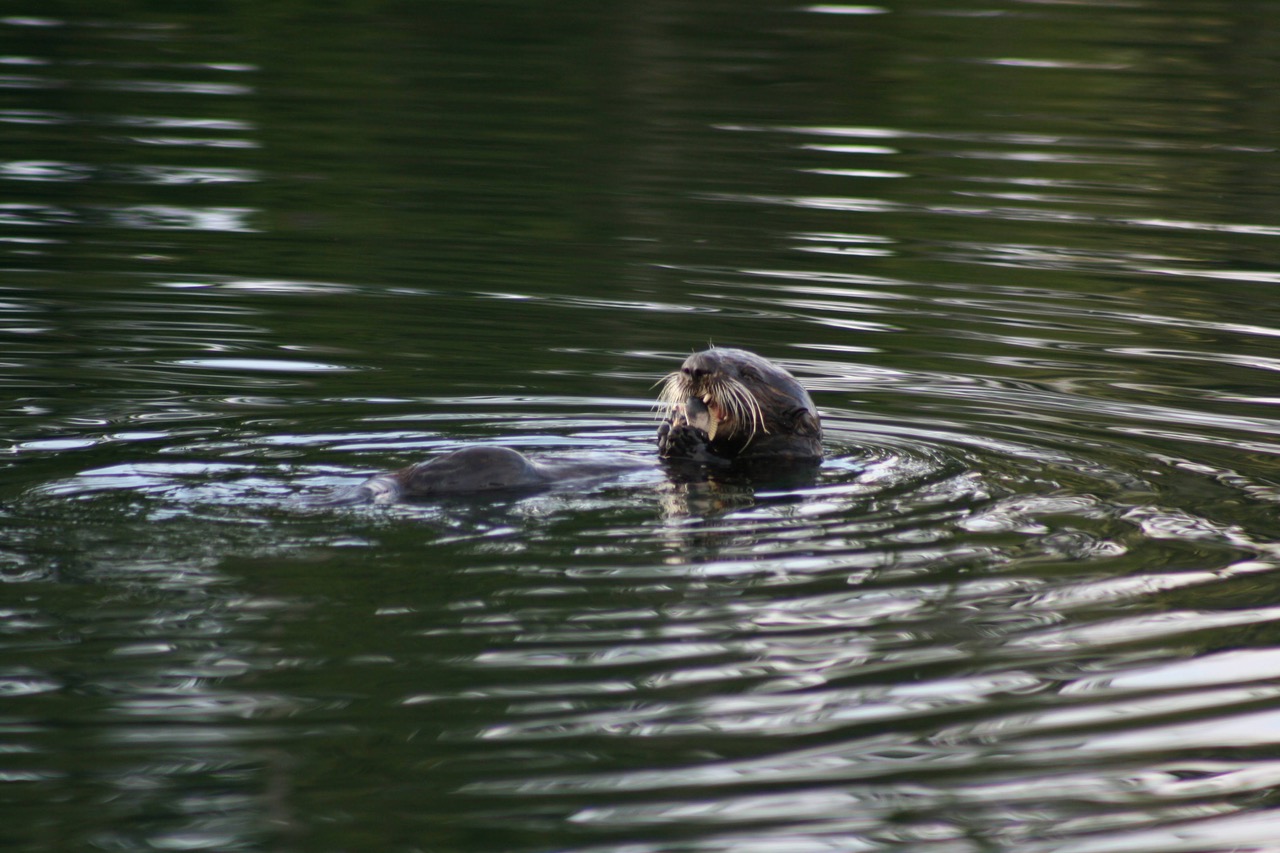
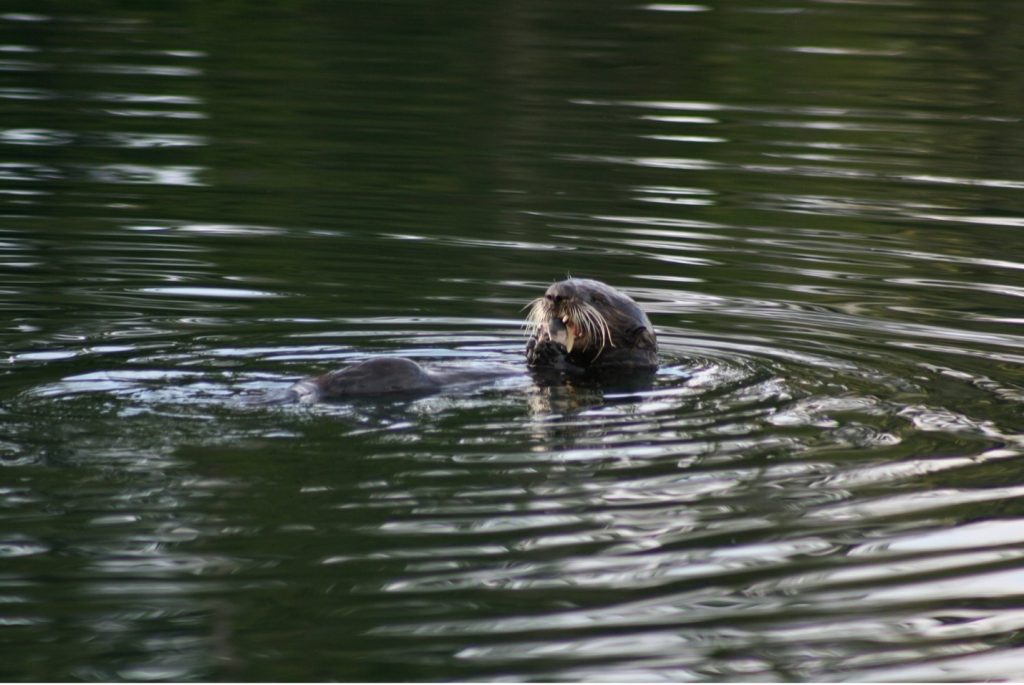
Throughout coastal British Columbia, shellfish have served an integral role in Indigenous food systems since time immemorial. And yet, access to many types of shellfish, like clams, crabs and endangered northern abalone, have declined over recent decades due to recovering sea otter populations. Once threatened with extinction, sea otters were hunted for their pelts during the maritime fur trade and are now a federally protected species.
Thanks to conservation efforts, sea otters have been brought back from the brink of extinction and can now be spotted up and down the coast. Widely regarded as a conservation success story, Canada’s endangered species legislation and recovery plans ignore millennia of human-sea otter relationships, which exclude coastal First Nations from carrying out their ancestral rights and responsibilities. This disruption has deepened food insecurity and poses a direct threat to the food sovereignty of many coastal Nations. Consequently, Nuu-chah-nulth Peoples along western Vancouver Island are deeply concerned about the imminent collapse of shellfish populations and are exploring culturally informed management practices to revitalize relationships between people, otters, and shellfish.
The coastal Voices
APPROACH
My name is Dylan Hillis, and I am of mixed British and Icelandic settler ancestry with over four generations of direct family connections to coastal B.C. and the commercial fishing industry. As a descendant of a fishing family, I was taught to appreciate the centrality of seafood in upholding the food and economic security of coastal communities. Since arriving at the University of Victoria in 2013, I have pursued studies in coastal sustainability and am now a PhD candidate in the Department of Anthropology working under the supervision of ḥapinyuuk Dr. Tommy Happynook. Throughout my academic journey, I have come to reflect upon my family’s direct involvement in commercial fishing — an extractive industry rooted in colonialism that has effectively disrupted Indigenous peoples’ millennia-old relationships with their ancestral territories. Knowing this heritage has taught me of my own responsibility to address past harms and repair relationships for the betterment of the ocean and generations to come.
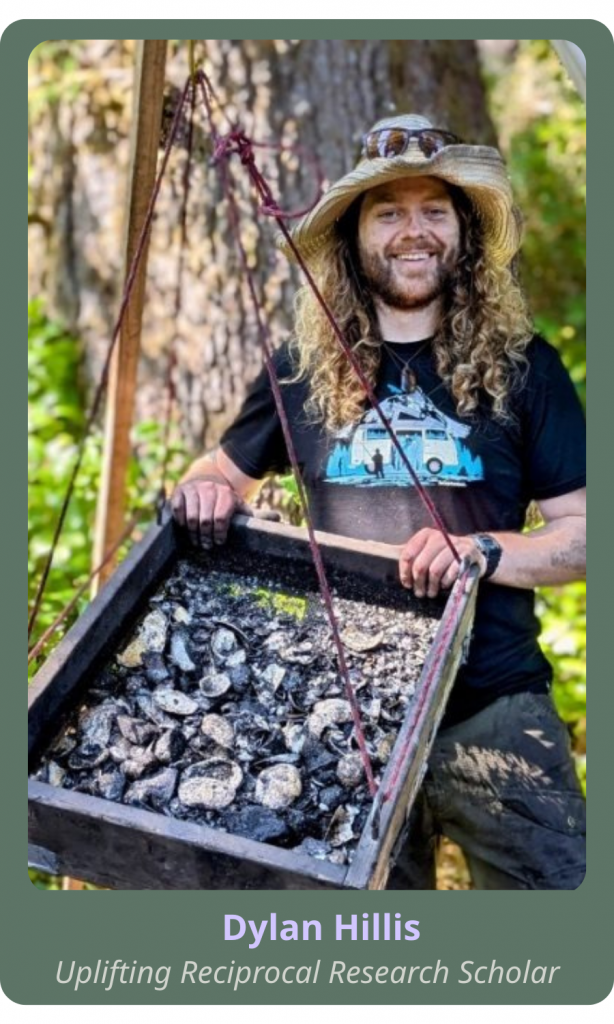
With the support and guidance of the Coastal Voices Hereditary Chiefs Steering Committee and in partnership with several Nuu-chah-nulth Nations, my doctoral research leverages archaeological and ecological data alongside the voices of Hereditary leaders and Knowledge Holders to illuminate First Nations’ visions of food sovereignty amidst sea otter recovery and climate change. Through this work, I am documenting the intertwined and millennia-old relationships that link humans, shellfish, and sea otters — information that is urgently needed to counteract the erasure of Nuu-chah-nulth peoples in contemporary sea otter management.
Over the past nine years, I have had the privilege of witnessing and working as an archaeologist and researcher in Nuu-chah-nulth Territories alongside the contemporary rights holders and descendants of the original, deep time leaders responsible for managing the relationships between people, lands, and waters. Working alongside Indigenous leaders and Knowledge Holders, our goal is to develop policy-relevant scientific research that upholds ancestral governance principals, protocols, and authority to support First Nation food sovereignty amidst sea otter recovery and climate change. As an archaeologist, the historical perspective I bring alongside the voices of coastal First Nations can help affirm the millennia-old relationships linking people, otters, and shellfish. By weaving archaeological information alongside the voices of coastal First Nations, my work supports the (re)awakening of ancestral management practices that once ensured healthy ocean relations.
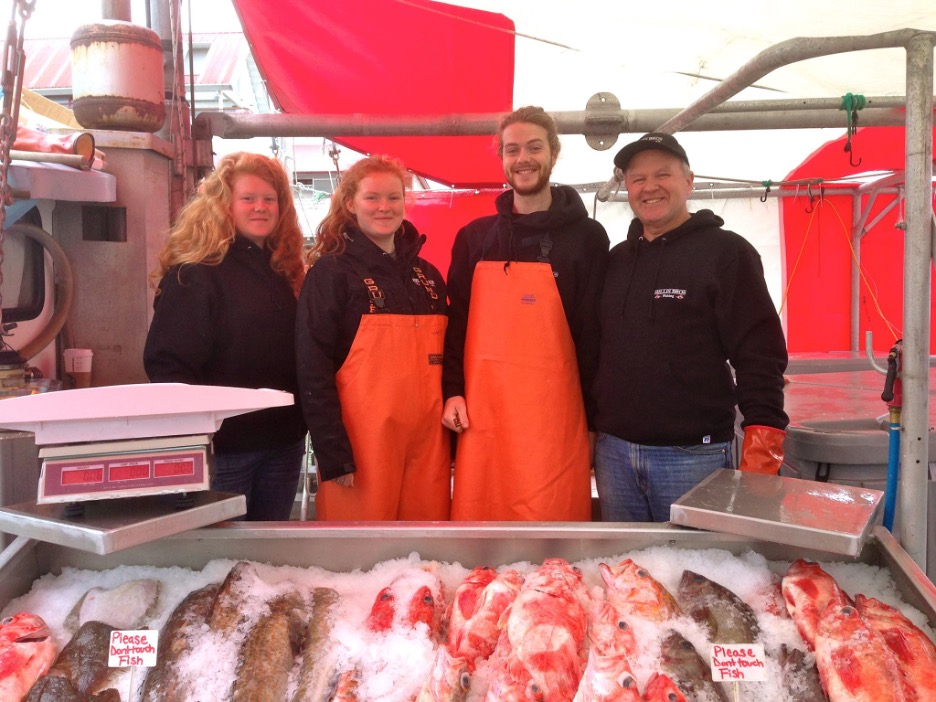
In B.C., sea otter conservation is based on a colonial approach to resource management that actively restricts coastal First Nations from upholding their responsibilities and obligations to manage the relationships between people, otters, and shellfish. By extending shellfish harvest information into the distant past, my research can help inform managers of the effect otters have on present-day clam populations compared to ancient times. By upholding ancestral Indigenous governance principles, protocols, and authority, this approach models a new way to co-produce policy-relevant science that supports Nation-to-Nation environmental governance and equitable research processes that align with the United Nations Declaration on the Rights of Indigenous People. This approach ethically elevates Indigenous protocols, Knowledge, and governance authority in both marine science and its application in decision‐making.
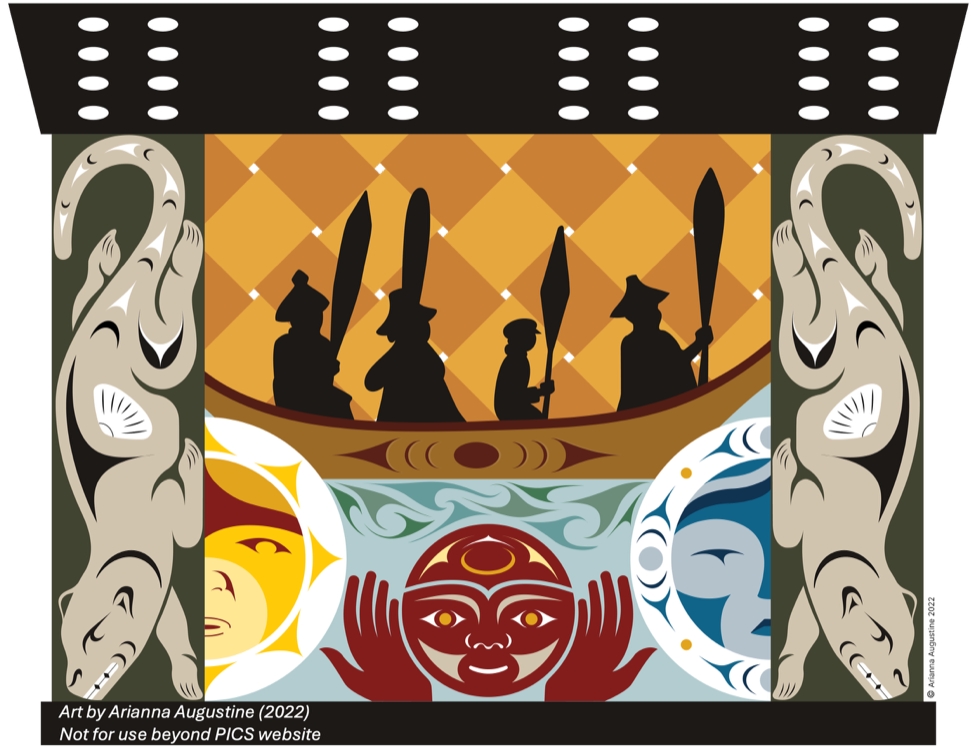
Traveling together in a shared canoe, four people are navigating towards a future where relationships among people, sea otters, shellfish, and kelp are guided by ancestral laws of respect, responsibility, and balance. These people represent Hereditary Indigenous Chiefs, Knowledge Holders, and western scientists who are on a journey together to create a more equitable, resilient, and sustainable future for our shared ocean home. The unique hats and paddles identify the distinct yet unified Nations, of the Haida, Haíɫzaqv , and Nuu-chah-nulth, as they steer the canoe, set the course, and take care of each other. In their midst, a young child, representing western science, sits. While the child is eager to help propel the canoe forward and has much to contribute, they also have much to learn. Central to this journey is respect for distinct and sovereign knowledge systems and views of nature. When both are honoured and woven together, represented by the cedar mat in the background, they create a richer picture of the whole. The canoe is navigating through the turbulent waters of climate change, entrenched colonialism, and scientific imperialism in current ocean governance. Underneath the canoe, there is a child (center) who represents the future. Their hands are raised giving thanks. We raise our hands to give thanks but also to ask permission from the Creator. Grandmother Moon and Grandfather Sun are on either side and showing balance and cycles of nature. On either side of the main image you can see sea otters diving to the sea floor with their bellies full of clams, one of many shellfish that both sea otters and coastal First Nations rely on for food, medicine, and identity. This journey towards food sovereignty and justice for all is contained in a bentwood box – in Nuu-chah-nulth a Hup-a-qwin-um – a Hereditary Chief’s chest containing all the chiefly treasures, laws, values, principles, cultural protocols, and Knowledge used to take care of the water, land, human, and non-human kin in their territory for which they have responsibility. It represents the governance systems, which includes everything we need to uphold our responsibilities of taking care of the coast, including each other. The lid of the box is decorated with operculua, the trap door of the red turban snail, another type of shellfish that hold importance to indigenous people and sea otters.
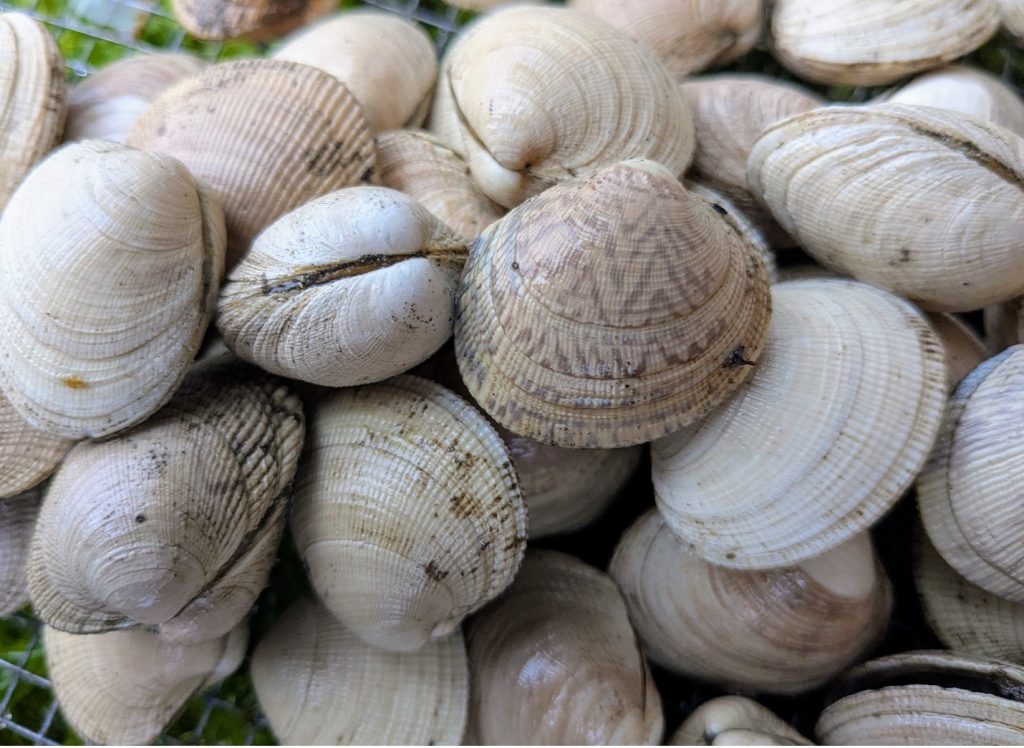
More specifically, my research takes a historical approach to understand the size and age clams were typically harvested in the past to then contrast with contemporary conditions. Knowing how big and how old clams were thousands of years ago tells us about the sustainability of ancient shellfisheries and strategies people used to protect clams from hungry sea otters. Because sea otters prefer large nutritious clams, the presence of large clams archaeologically can serve as an indicator that sea otters were kept away from important harvesting sites by people and vice versa. While we can infer the degree to which sea otters were managed historically by examining the size of clams preserved in the archaeological record, we can also measure how fast they were growing by counting their growth lines, which are just like tree rings. By understanding the age of clams and how fast they were growing, we can infer how often beaches were being harvested in the past. This helps us better understand potential strategies and tending practices
that may have helped the clams grow faster, many of which are still used today by community members.
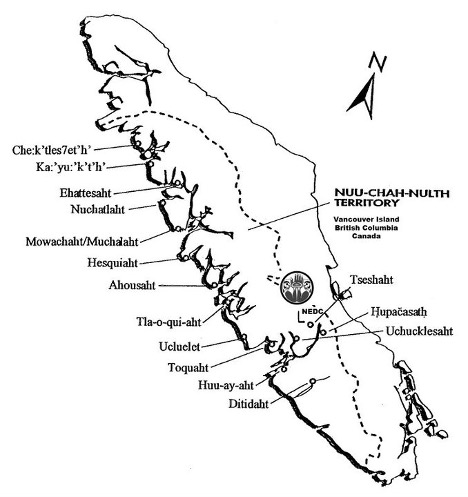
Much of western Vancouver Island encompasses the ancestral territories of Nuu-chah-nulth Peoples. At their northernmost extent reside the Ka;‘yu;‘k’t’h’/Che:k’tles7et’h’ First Nations (KCFN). These territories are at the epicenter of sea otter recovery. As sea otters had been completely removed from the entire B.C. coast due to overhunting, a small number of Alaskan otters were first brought back to KCFN Territories by federal scientists in the late 1960s and early 1970s. Since their reintroduction the population has boomed, which now threatens the health of numerous species of shellfish. To this date, KCFN and other coastal Nations continue to be excluded from any decision making relating to sea otter management, violating their constitutionally protected rights to fish for food, and social and ceremonial purposes.
BUILDING TOGETHER —
AN ENACTMENT OF INDIGENOUS FOOD SOVEREIGNTY
In the summer of 2024, with the invitation and leadership from Tyee ḥaẃił hyuuštulth and ḥaẃił n’yasim, I joined KCFN community members alongside the Nuu-chah-nulth Youth Warriors program to help advance local food security by building a clam garden. As shellfish populations have been lost due to the recovery of sea otters, building the clam garden provided an opportunity to meaningfully contribute to KCFN by helping bring back shellfish. Together, we built a 50-meter rock wall in the lower intertidal as an assertion of hereditary authority and responsibility to care for both the land, sea, animals, and people of KCFN.
To show their support, Heiltsuk, Haida, and Nuu-chah-nulth hereditary leaders each brought a foundation rock from their home territories, symbolizing the multiple Nations coming together to support and uplift KCFN food sovereignty and governance. To enact reciprocity for all those who contributed to the clam garden construction, a community feast was held in Houpsitas and served as an opportunity for everyone to share food, songs, knowledge, gifts, and appreciation.
Showing up and meaningfully contributing to the Nations by sharing knowledge, lending a hand, or simply listening has become an integral part of this work. The past six years of my involvement with Coastal Voices has provided numerous opportunities for me to bring archaeological insights alongside living Knowledge of ancestral practices held by Hereditary leaders and Knowledge Holders. For example, one evening after building the clam garden I measured clamshells excavated from the Ka;‘yu;‘k’t’h’ village of Aktis. Over the course of this one evening, I was able to show that ancient clams were twice as big as those found on the same beach today. As ḥaẃił n’yasim pointed out, this information is helping (re)awaken Knowledge from a time when sea otters were culturally managed and points to how things could be in the future.
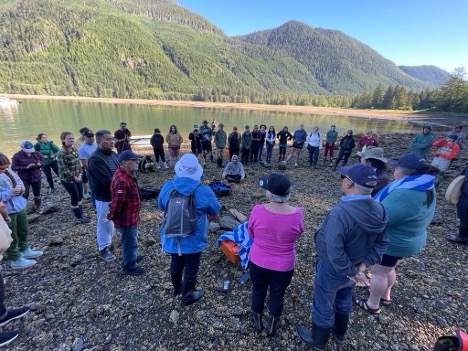
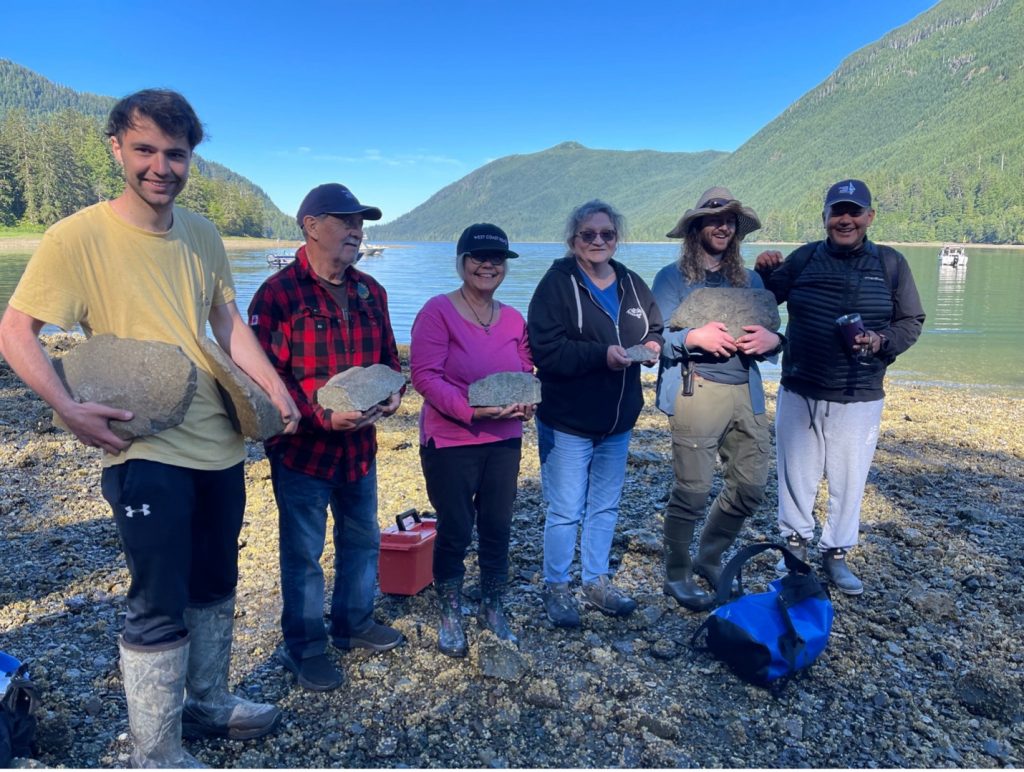
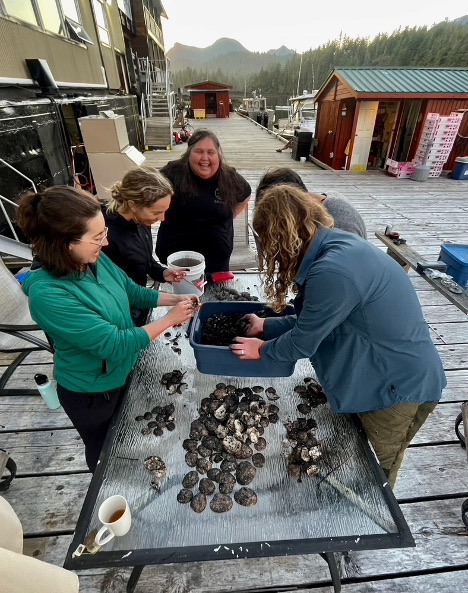
A. The creation of a clam garden (rock wall terrace in the intertidal environment) in Ka;‘yu;‘k’t’h’/Che:k’tles7et’h’ Territories was an effort to qʷaaʔaqƛin (restore balance) and caacim (make things right). By enacting their inherent rights through the resurgence of ancestral clam garden practices, Hereditary leaders enacted their responsibility for managing the relationships among people, lands, waters, and skies.
B. The foundation rock ceremony in Ka;‘yu;‘k’t’h’/Che:k’tles7et’h’ Territories.
C. Sorting clamshells excavated from Aktis overseen by ḥaẃił n’yasim.
the research
tO DATE
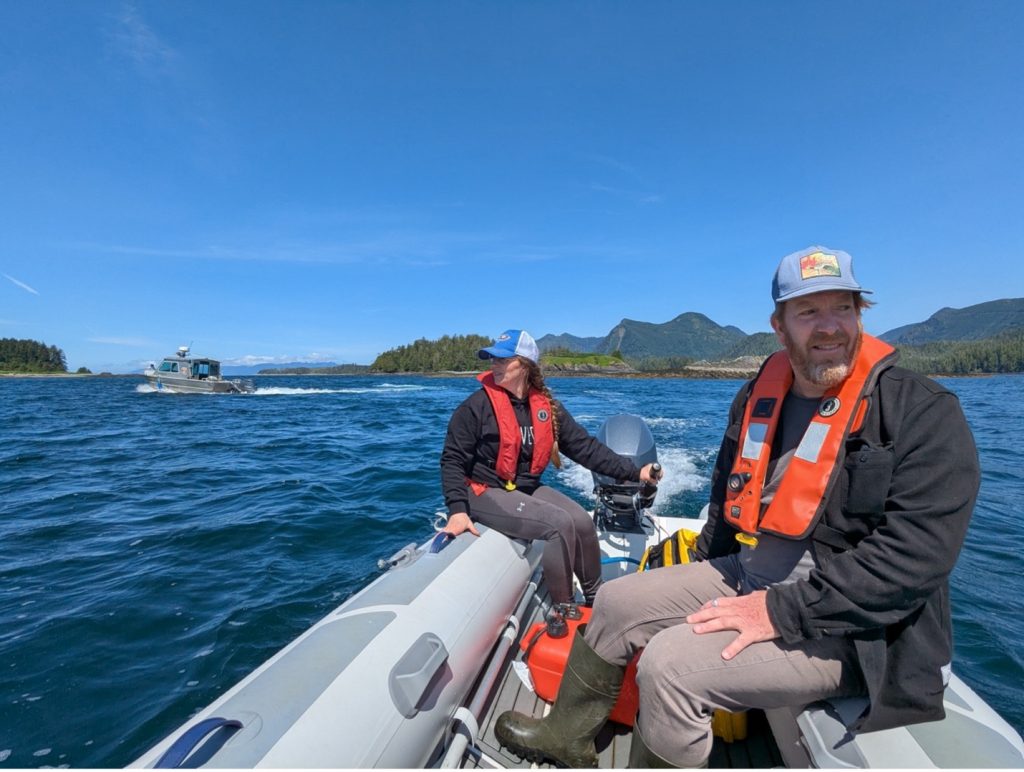
With a second invitation from KCFN hereditary leaders, last summer I joined Witwaak Guardians, KCFN archaeologist Mindy Ogden, and University of Victoria professor Dr. Iain McKechnie to conduct archaeological excavations in the area. To date, very little archaeology has occurred in the territory, so the opportunity to conduct research was met with great interest from community members. Over the course of June 2025, I traveled to a number of ancestral villages with the intention of identifying suitable locations to conduct low-impact excavations. As my research focuses on ancient shellfisheries practices, we preferentially sampled in areas with large concentrations of clamshells that were made visible due to erosion. By focusing on these natural shell exposures, we were able to limit our impact to these sensitive places in accordance with cultural protocols.
On our hands and knees, we peeled back the forest floor revealing rich cultural soils and dense shell layers, which spoke to the accumulated history of human habitation over millennia. Thick layers of largely intact clamshells formed distinct white horizontal bands against the dark silty loam — these piles of clamshell likely represent single moments in time following a feast or potlatch. At one village we visited, we found sand layered in-between the stratigraphy, which hint at the power of long-ago winter storms that tossed the beach far up onto land.
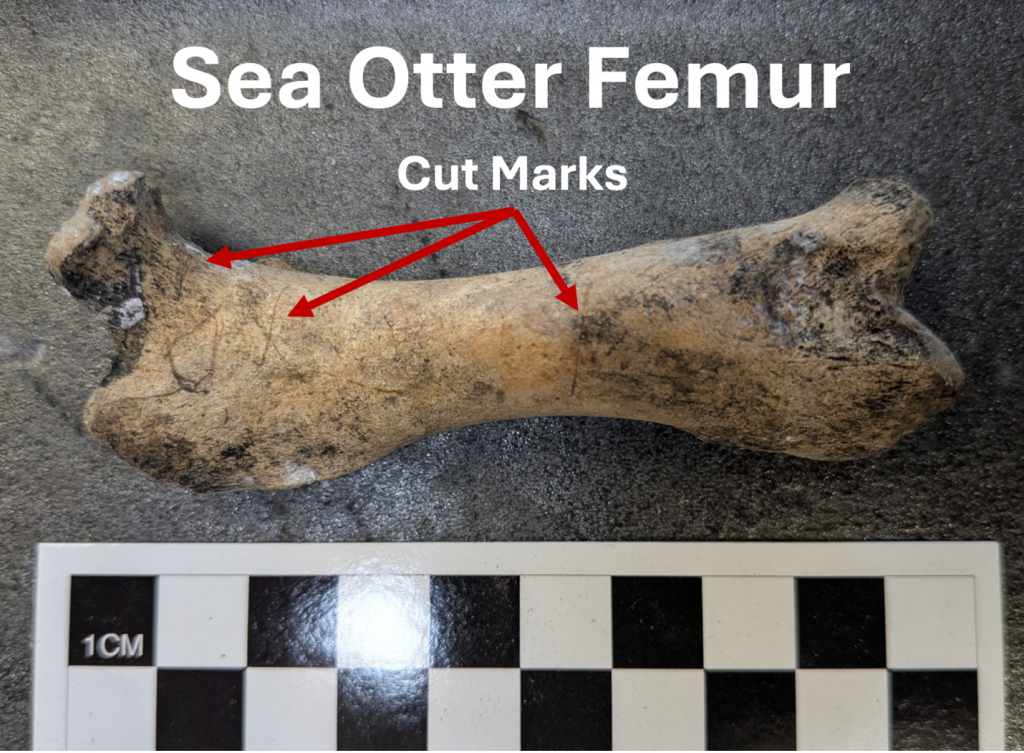
At another village we encountered the femur (leg bone) of a sea otter. Based on its size and lack of fused epiphyses (joints), this bone likely came from a juvenile male. According to Nuu-chah-nulth Knowledge Holders, older otters often pushed the young males out and away from the group, forcing them to find new areas to forage for food. This meant that the young males often ended up in important shellfish harvesting areas that people relied upon for their food security. These young males were often hunted in order to protect harvesting sites and then skinned for their fur, which was highly valued and worn only by certain individuals. While it is not uncommon to find sea otter bones in Nuu-chah-nulth Territories, this particular bone has evidence of cut marks that are consistent with skinning the animal for its pelt. Because this bone was found nearly two meters below the surface, it shows the continuity of sea otter hunting over the past several thousand years.
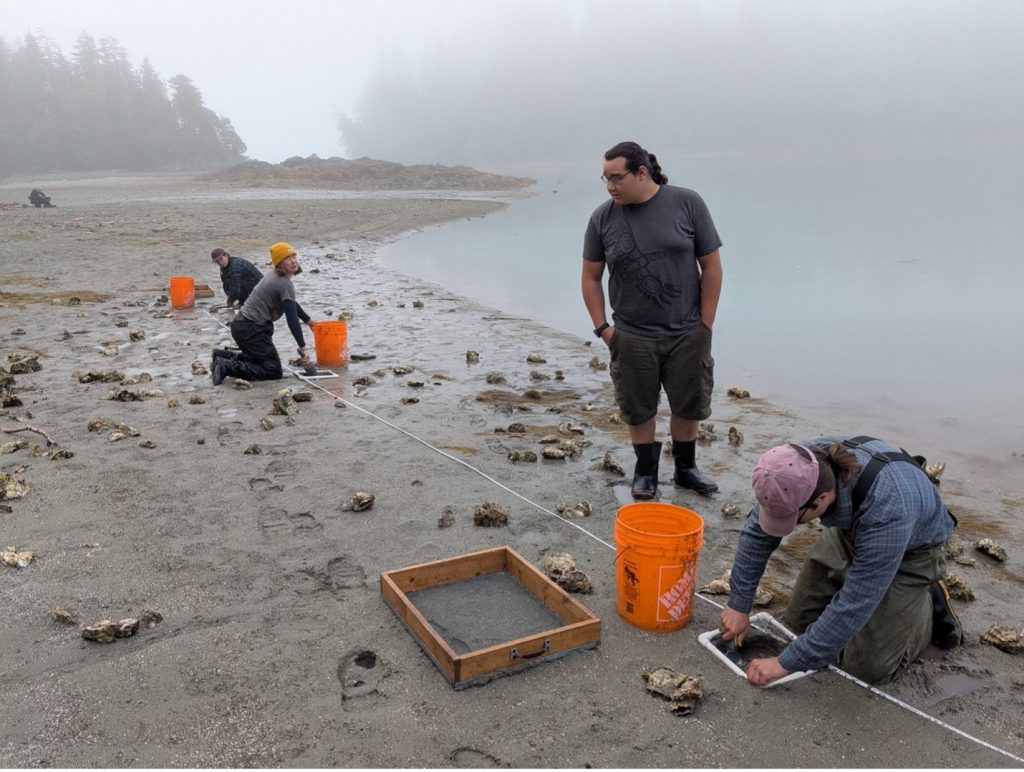
In addition to my field work in KCFN Territories last summer, in July I joined the Tl’ihuuwa Archaeology Project in Barkley Sound, which was led by Tseshaht First Nation archaeologist Denis St. Claire. The opportunity to contrast my archaeological insights across regions along western Vancouver Island and different Nuu-chah-nulth Nations helps to show potential patterns or differences in how shellfisheries were historically managed. With the help of Tseshaht Beach Keepers, I also conducted surveys of living clam populations which indicate clams are twice the size in Barkley Sound compared to KCFN Territories today. Because there are currently far more sea otters in KCFN Territories than Barkley Sound, these results demonstrate how an overabundance of sea otters result in significantly smaller clams.
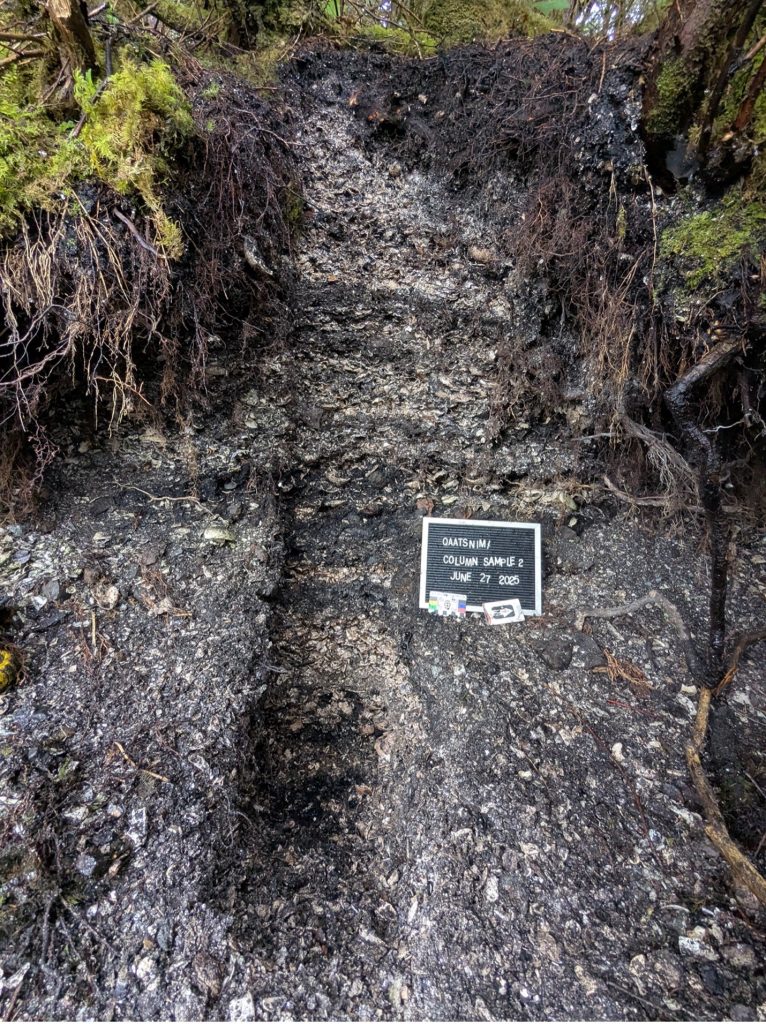
A. Beautiful stratigraphy reflecting centuries and millennia of Ka;‘yu;‘k’t’h’ presence at their ancestral village of Qaatsnimł, Clanninick Cove. Here the cultural deposits extend far below the surface of the beach, which indicates people lived here when sea levels were much lower.
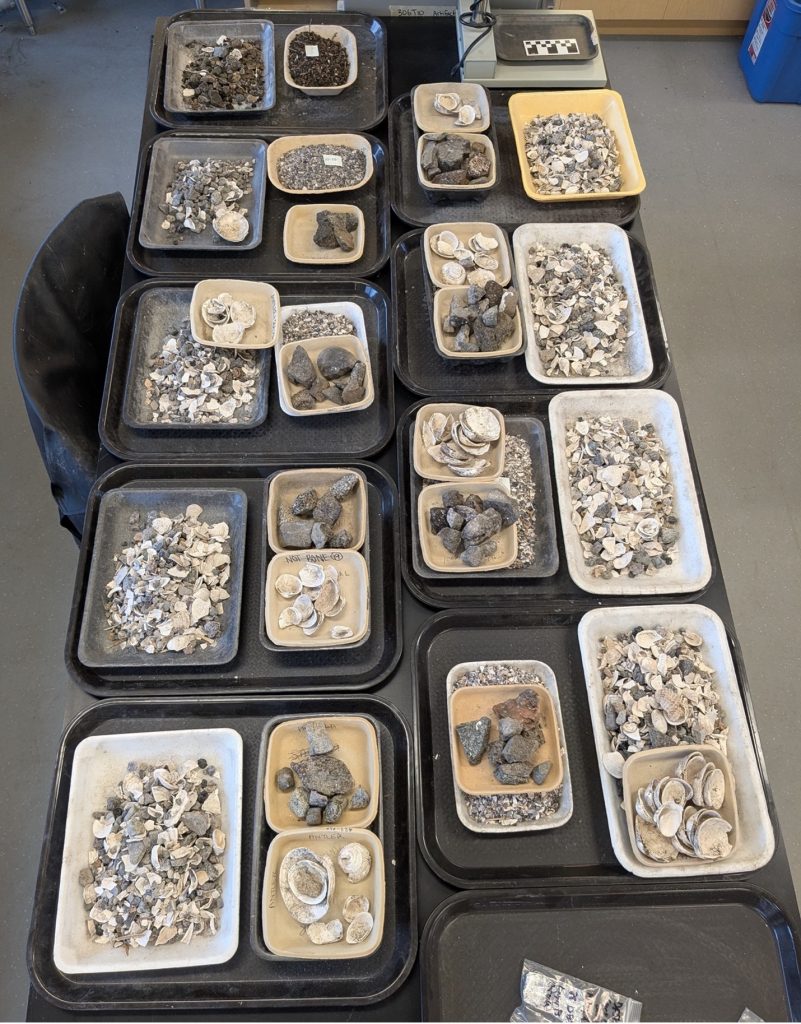
B. Sorting archaeological samples in the Historical Ecology and Coastal Archaeology Lab at UVic. Each tray represents 10 cm of depth in our vertical sample. Separating each individual level allows me to understand changes in shellfish use over time, as levels closer to the surface represent more recent history while levels deeper down are older.
C. Distinct cut-marks on this sea otter femur (leg bone) are consistent with skinning the animal for its pelt, which was highly prized amongst Nuu-chah-nulth communities and became an important trade good during the maritime fur trade.
D. Teshaht Beach Keeper Kashus Dick observing intertidal clam surveys one foggy morning at Tl’ihuuwa, Tseshaht hahuułi. As sea otters have not yet returned in large numbers to Barkley Sound (unlike Ka;‘yu;‘k’t’h’/Che:k’tles7et’h’ Territories), we found that living clams are twice as large in Tseshaht Territories compared to Ka;‘yu;‘k’t’h’/Che:k’tles7et’h’ Territories.
At this stage in my research, I am processing the archaeological samples in the Historical Ecology and Coastal Archaeology Lab at the University of Victoria. This involves a time-consuming process of washing, drying, identifying, sorting, weighing, and bagging the materials, not to mention measuring and cutting all the clamshells for further analysis. Because this work involves examining clamshells that were dug up from ancient villages, many of which are very old (some of these villages were continuously lived in for over five thousand years!), these shells are often extremely fragile, so I have to bring a lot of care and intention to this work. So far, it’s been a rewarding process, as you never know what you might find.
My supervisor ḥapinyuuk, a Nuu-chah-nulth Hereditary leader and Knowledge Holder, visits frequently to observe and share teachings. For me, having this intentional space to share knowledge and learn from one another is redefining what it means to co-create research in a truly collaborative way. And by recognizing how we each bring our own strengths and expertise forward (and importantly, knowing our limitations) helps foster a space of mutual understanding that doesn’t prioritize one knowledge system over another.
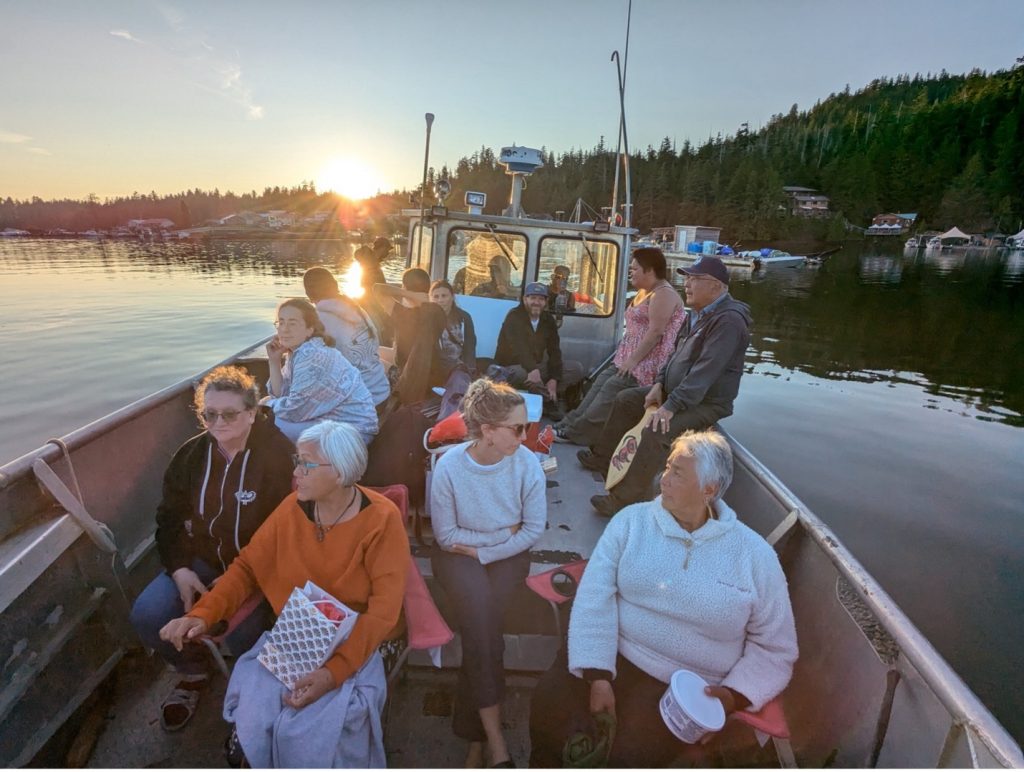
Over the next few months, I will be wrapping up my laboratory analysis, conducting interviews with Nuu-chah-nulth Knowledge Holders, and beginning to organize a community-focussed clam dig in Huu-ay-aht First Nations (HFN) Territories. This clam dig will include HFN and KCFN community members, Nuu-chah-nulth Youth Warriors, and the Coastal Voices team, and together we will create a space where folks can come together to dig clams and share knowledge (while I measure shells that clam diggers are harvesting for food!). My hope with this is to do the science, but also reciprocate by creating an opportunity where Knowledge can be passed from elders to the youth. While this work is far from done, I extend my heartfelt thanks to all the Hereditary leaders, Knowledge Holders, and community members who continue to support this endeavour. Klecko klecko!
Dylan Hillis is a PhD candidate at the University of Victoria, and a recipient of a PICS Uplifting Reciprocal Research Scholarship.

In honour of the Relationship Protocol between the Pacific Institute for Climate Solutions (PICS) and the First Nations Leadership Council (FNLC), this Knowledge Highlight series reflects PICS’ commitment to supporting the priorities of the BC First Nations Climate Strategy and Action Plan and the Action Plan for Disaster Risk Reduction by First Nations in BC through capacity building, research, and education.