In Canada — and in most countries — green hydrogen is touted as part of the energy solutions to achieve our net zero target by 2050. Today, the vast majority of hydrogen in the world, around 99 per cent is produced from hydrocarbons. By contrast, and as its label implies, green hydrogen is produced from renewables through electrolysis, a process which separates water’s molecules with an electrical current. The hydrogen produced from this process, it is argued, could then be used as a clean fuel to power certain hard-to-abate sectors, such as long-haul transport and industrial processes.
My engagement with climate justice advocacy and research started back in Quebec, where I’m from, for two main reasons. First, I found that the provincial government was complacent regarding climate action because most of the grid is already powered by hydroelectricity, a renewable energy source. However, we know that that is not enough. Second, there was a complete lack of reflexivity around the harm done to Indigenous Peoples in Quebec with the development of hydroelectric dams. So, when I heard that green hydrogen was being hyped as not only the next climate silver bullet, but also as a “national” project for the province, many red flags popped up. As a white settler, I thought it necessary to investigate this proposed technology critically and resist continued harm done to Indigenous Peoples in the name of climate action. On the flip side, I also wanted to explore how alternative forms of development could be beneficial to different communities. Thus, my PhD research focuses on the potential benefits, impacts, and challenges for communities developing green hydrogen.
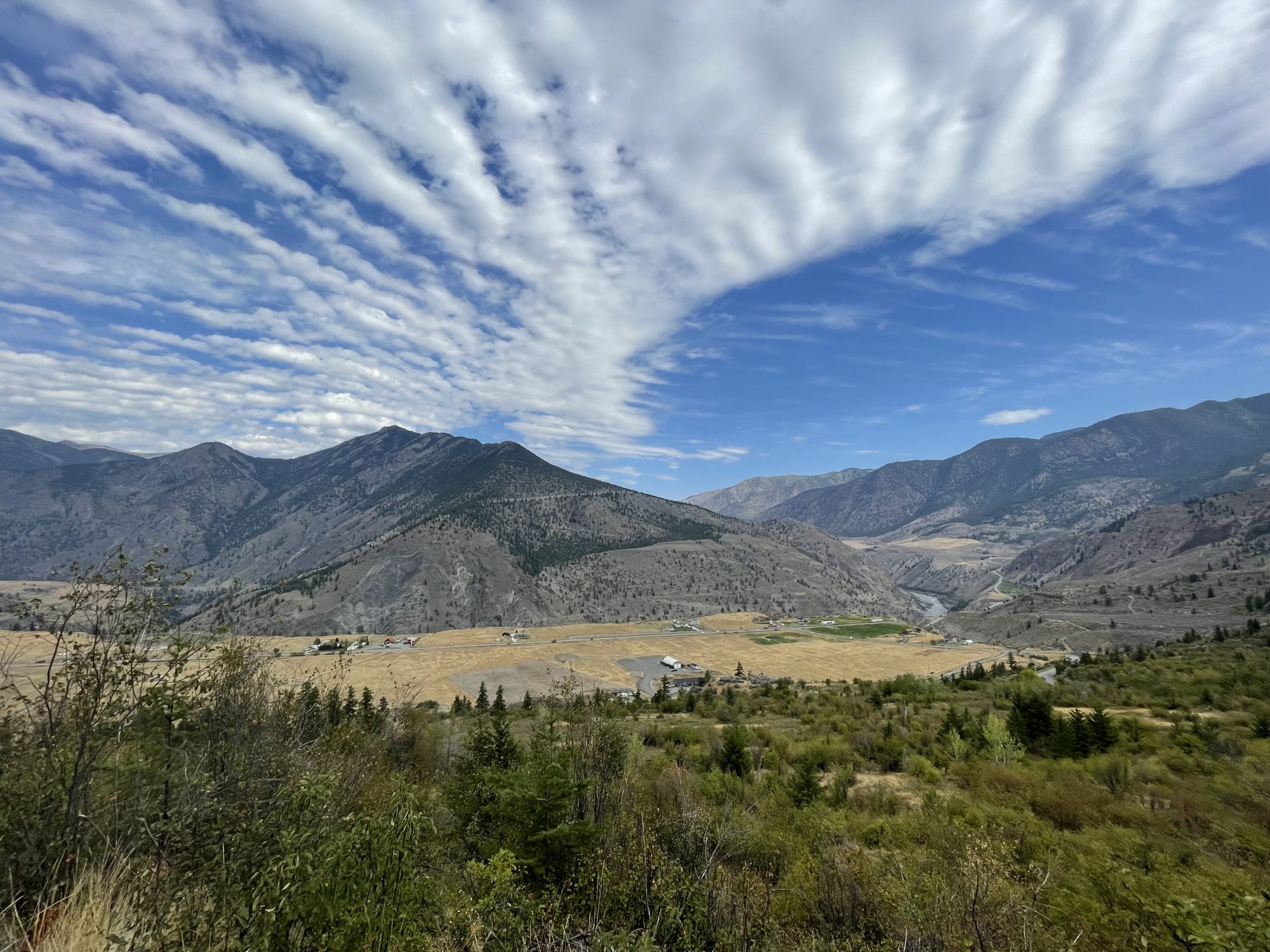
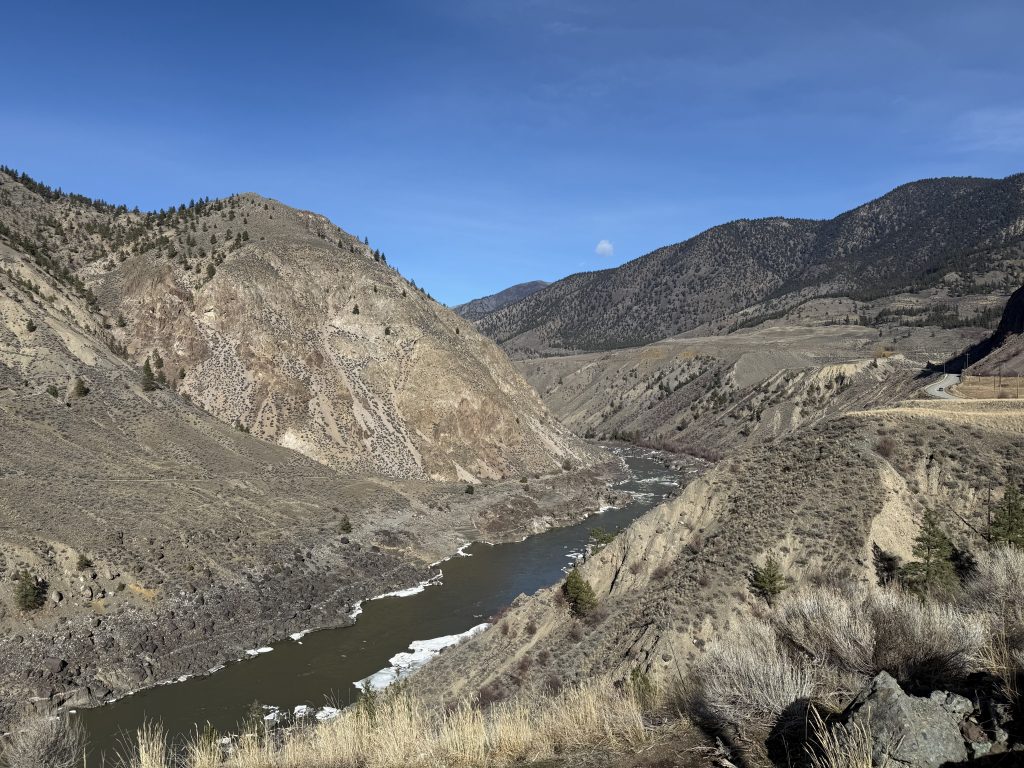
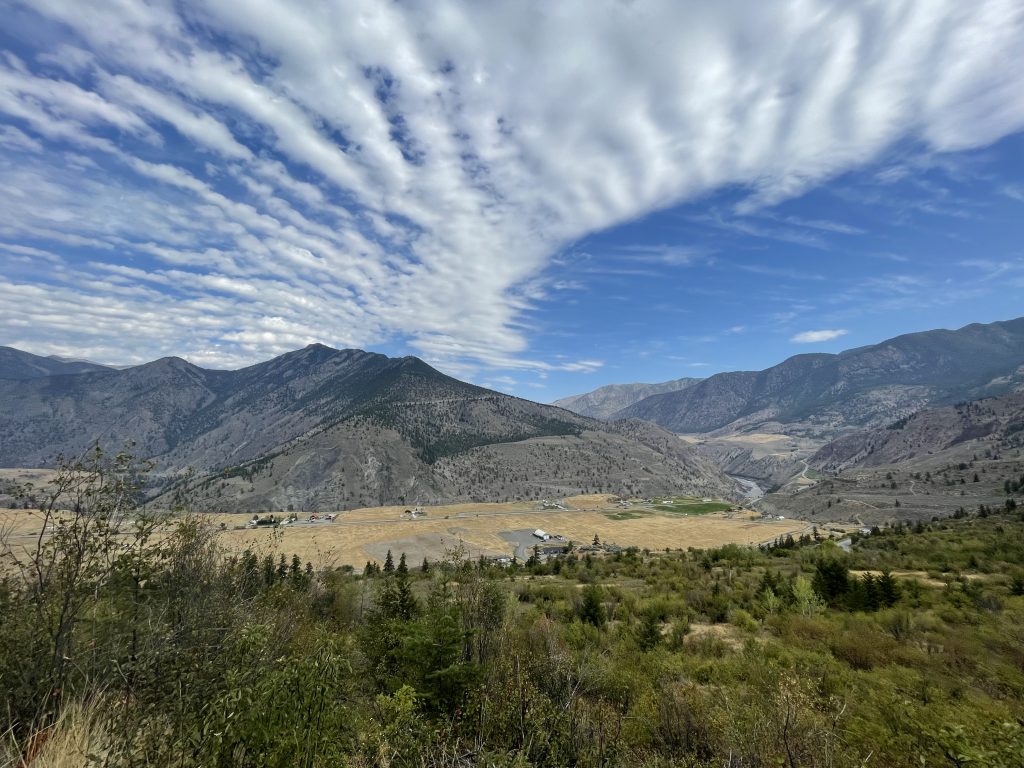
My research began in partnership with Salish Elements, an Indigenous-led startup which has one main project in development: the Xaxli’p-Salish Limited Partnership (XSLP). The idea of the proposed project is to build a green hydrogen production facility with Xaxli’p, an Indigenous community near the District of Lillooet, BC. The community is one of eleven Indigenous communities that make up the St’át’imc Nation. Xaxli’p’s population of around 1,100 members mostly lives off reserve land, with around 300 on reserve. Xaxli’p means “the brow of the hill,”; It is surrounded by steep slopes and mountain peaks, nested on a plateau, which gives a panoramic view over part of the Fraser River.
Xaxli’pmec — the people of Xaxli’p — have lived within Xaxli’p traditional territory since time immemorial, with evidence of occupying the area for around 8,000 years.

The proposed green hydrogen facility presents a potential opportunity for Xaxli’p and other communities as Xaxli’pmec shapes the project on their own terms. As a researcher, my work aims to reimagine energy transitions as not only technological, but socio-political and cultural, where governance, knowledge, and decision-making reflect the people and lands most affected. Ultimately, my research is not just about hydrogen or energy—it’s about how the future gets shaped and by whom.
Indigenous-led
Climate solutions
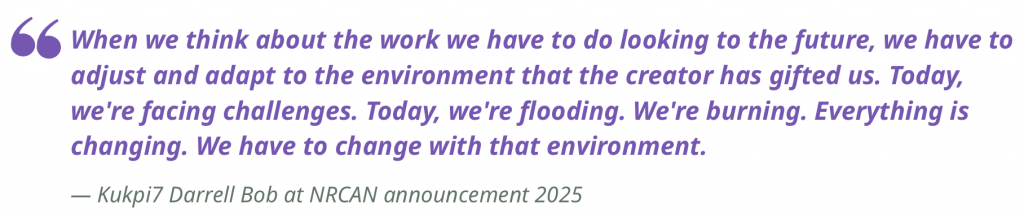
In a recent announcement for the project, Xaxli’p Chief Darrell Bob and Rueben George, the founder of Salish Elements, shared sobering assessments of the state of our planet that echoed each other:
!["I spent the last 15 years of my life protecting our lands, waters, and people… We see the problems that are out there. Since I've been born, 60 per cent of the world's mammals have died. What's left of that is 65 per cent livestock. 50 per cent of the world's species have died… there were over a thousand fires in British Columbia last year. There's a half-mile of land of mountain that fell into the Fraser River. I couldn't imagine explaining those things to [my grandpa]… What I'm saying is more than any other time in human history, we need something like [Salish Elements]. We need to move forward because the trajectory that we're going on isn't good… I spent the last 15 years of my life protecting our lands, waters, and people… We see the problems that are out there. Since I've been born, 60 per cent of the world's mammals have died. What's left of that is 65 per cent livestock. 50 per cent of the world's species have died… there were over a thousand fires in British Columbia last year. There's a half-mile of land of mountain that fell into the Fraser River. I couldn't imagine explaining those things to [my grandpa]… What I'm saying is more than any other time in human history, we need something like [Salish Elements]. We need to move forward because the trajectory that we're going on isn't good…"
— Rueben George, Salish Elements Founder, at NRCAN announcement 2025](https://climatesolutions.ca/wp-content/uploads/2026/05/Screenshot-2026-05-25-at-1.33.48-PM-1024x401.png)
Both leaders are deeply committed to acknowledging and addressing the environmental crises we face, and this collaboration is but one manifestation of this synergy. Xaxli’p community members are also very committed to being actors of change with regards to the environmental and climate crises that we face today — crises and disasters they know too well due to the increasing regularity and strength of fires, low water levels in the Fraser River, and other ecosystem changes.
Broadly speaking, green hydrogen development has been framed by governments and industry, with very few examples of local communities setting the terms of engagement around such projects. Yet, self-determination and governance are core pillars of climate justice. In fact, the BC First Nations Climate Strategy and Action Plan (FNCSAP) explicitly mentions that to advance Indigenous rights, climate action must support the development and implementation of community-led climate strategies. This means that no matter the climate solution, it must be locally grounded and Indigenous-led.
This means that green hydrogen, or any other climate solution, cannot simply be parachuted into the community. The FNCSAP’s principles for self-determination, culture, stewardship, collaboration, and empowerment reverberate throughout the partnership between Salish Elements and Xaxli’p. This energy project would have to make sense for Xaxli’p, and the Salish Elements development model is inherently designed to foster and realize such principles. The development of a green hydrogen plant would address multi-faceted challenges, such as contributing to decarbonization, local economic development, and self-determination — all the while respecting the vision for taking care of the land set by the elders.

Salish Elements projects are designed to offer majority ownership to its partners. The ownership of businesses allows for greater autonomy in all phases of a project. Xaxli’p Development Corporation is also in the process of building other businesses and partnerships, all based on Xaxli’p vision for development.
These economic opportunities, including the one proposed by Salish Elements, are but one strategy to tackle some of the historical and ongoing injustices Indigenous communities face.
community development
through climate action
In contrast to most hydrogen plants, the Xaxli’p energy project is purposefully set up for holistic community development. Following community direction, the project provides avenues to design, redesign, and make changes based on local needs. It also allows the local administration to, at any point in time, pause or end a project if the community decides it is no longer in their best interest. What matters is getting it right for the community, rather than for external shareholders or stakeholders.
The unique nature of the electrolysis process also invites creative ways to think about infrastructure development and upgrades. For example, when I visited the Xaxli’p administration, staff shared with me the desire to see more community members return to Xaxli’p territory. Through the project, there would be more local training and employment opportunities, which could enable more members to move back to the territory.
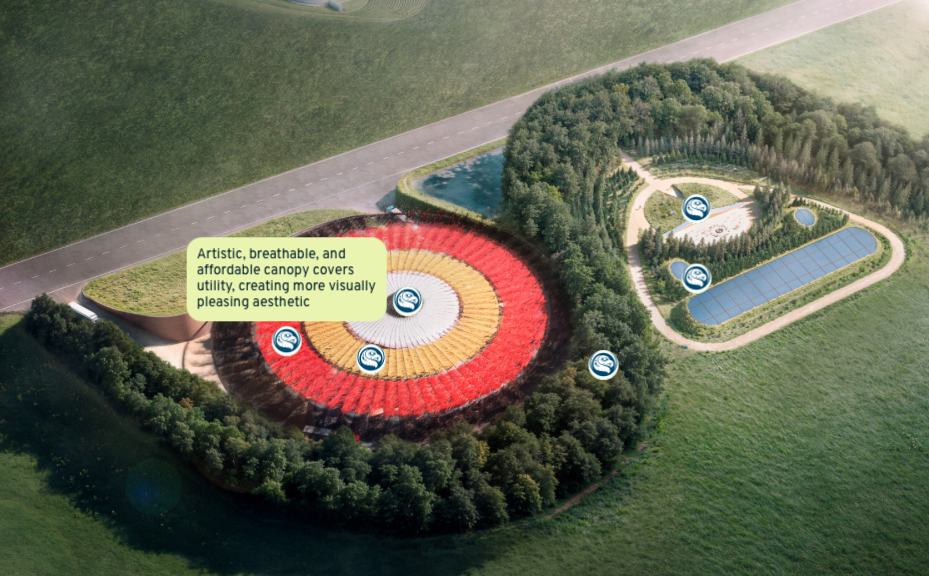
Electrolysis also requires clean water. Rather than upgrading water infrastructure just for the needs of the project, the XSLP will overbuild and upgrade water infrastructure to meet the needs of the community. There is an important need for water for fire suppression in the summer, especially during periods of drought. By augmenting the water capacity of the community, this project will also make the community more resilient.
Another example is the extra heat generated by the electrolyzer, which could be captured and redirected for other needs. The construction of the plant also invites a reflection on what the piece of land may look like and what other infrastructure may synergize with the plant. It is also an opportunity to reimagine what energy infrastructure can and should look like in communities more broadly.
To invite community input, Xaxli’p set up the Xaxli’pmec Advisory Council, which liaises between the company, administration, and community members. Another unique element of the project is the desire to explore the possibility of a Biocultural Innovation Centre — a knowledge-sharing space to share teachings about traditional uses of local plants and animals, as well as community gathering space.
Ultimately, this project encompasses much more than just hydrogen. In an interview with Andrew Mercer, the CEO of Xaxli’p Development Corporation, he shared that his “goal is to obviously create those economic opportunities… but it’s not all about that. It also has to make sense for the community.” It encompasses much more than economic development. My invitation to readers is to understand XSLP as a transformational approach to the energy transition, one that focuses on community development and participation. Such an approach to holistic design and engagement should be more prominent in economic and energy development in B.C. and in the world.
Current challenges
While the potential benefits are enormous, there are also many challenges that create headwinds for the project. The current political landscape is not particularly favourable to climate action and renewable energy. Green developments have taken a major hit since the Trump administration in the United States took office again in 2024. One potential buyer of XSLP’s hydrogen was an American company, and this, paired with the federal government’s scrapping of the carbon tax, makes green hydrogen’s business model even shakier than before. Many green hydrogen projects have been cancelled recently in B.C.
Such instability brings a new layer of uncertainty to the project, as governments, investors, and developers may become wary of committing themselves to the technology and infrastructure. While community questions first revolved around hydrogen’s operations, such as: What is the water usage? What are the safety risks? How will this impact biodiversity and the landscape? Now, the geopolitical and market uncertainties add to the community’s concerns.
Finally, and most importantly, Xaxli’p operates under the Indian Act. For Andrew Mercer, this is:
Working with Indigenous Services Canada is a major roadblock for Xaxli’p administration to build projects. It also comes in direct conflict with desires for self-determination, whether that be for economic purposes, climate action, resource management, health, education, or culture.
the bumpy road of climate
research, action, & collaboration
There are many headwinds facing Xaxli’p with this partnership, but the project continues to move forward. The efforts are worth it, even if nerve-wracking as Xaxli’p’s Chief shared this summer in an announcement. “There’s excitement, there’s nervousness, and me, I can’t stop shaking up here… But it’s okay. It’s all good. We just need to adapt to the environment that was given to us.” (NRCAN announcement).
Following this project and collaborating with Salish Elements and Xaxli’p has been an honour. It allowed me to glimpse the complex and multi-layered systems that Xaxli’p is navigating. When I started my PhD journey, I had hoped to find a positive case study of a green hydrogen project to highlight as a good model of hydrogen development. I had hoped that by the end of my PhD journey, I might see some construction, if not a fully realized project. Of course, we are not there. Building infrastructure takes a lot of time and effort, and so does building relationships.
Research, development, and climate action can only advance at the pace of trust. If my research serves any purpose, it is to demonstrate that the urgency of the climate crisis must never be used as an excuse to bypass Indigenous consent; true climate action is found in the slow, deliberate work of community-led governance that ensures the future is built by—and for—those most rooted in the territory.
Felix Giroux is a PhD candidate at the University of British Columbia, and a recipient of a PICS Uplifting Reciprocal Research Scholarship.

In honour of the Relationship Protocol between the Pacific Institute for Climate Solutions (PICS) and the First Nations Leadership Council (FNLC), this Knowledge Highlight series reflects PICS’ commitment to supporting the priorities of the BC First Nations Climate Strategy and Action Plan and the Action Plan for Disaster Risk Reduction by First Nations in BC through capacity building, research, and education.