By: Dr. Lucy Sdahl Ḵ’awaas Bell
Gin‘wáadluwaan gudahl kwáagidang
(Everything is connected)
Gin ‘waadluwaan gudahl kwaagidang. Everything is connected. Our relationship with the environment, living in balance along Haida rivers, is grounded in this understanding. The return of the tsíin (salmon) has always been tied to ceremony, knowledge, and careful conduct. When salmon runs were low or uncertain, our Kuníisii (Ancestors) did not simply wait for the fish to return. Ceremony, prayer, and respectful behaviour were understood as part of the work of fishing and part of maintaining a relationship with the salmon. This philosophy keeps the environment healthy and able to sustain us. It reminds us to embody yahgudang (respect) in all that we think and do.
Salmon Carvings
And Ceremony
This research is inspired by a set of old salmon carvings I saw at the Pitt Rivers Museum in the United Kingdom in 2009, a museum that holds hundreds of Haida Belongings collected by Reverend Harrison. He lived amongst the Haidas of Old Massett and converted many Haidas to Christianity, shaming them out of their precious Haida Belongings and traditions. The pair of salmon figures were thought to have been made before 1890. On the old handwritten accession note, it states, “Salmon charm used in dances when salmon are scarce.”
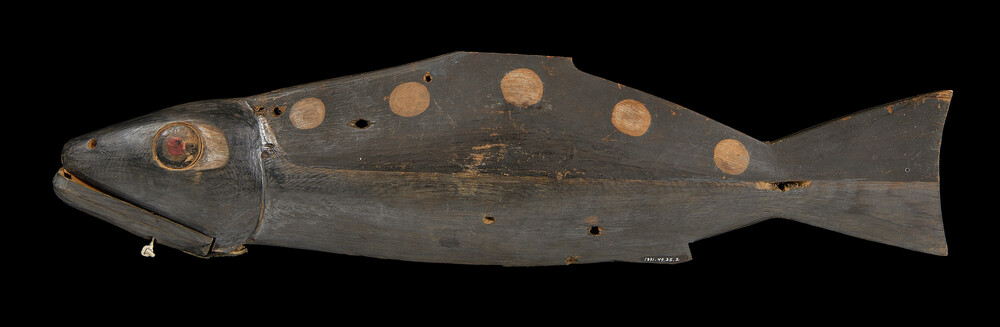
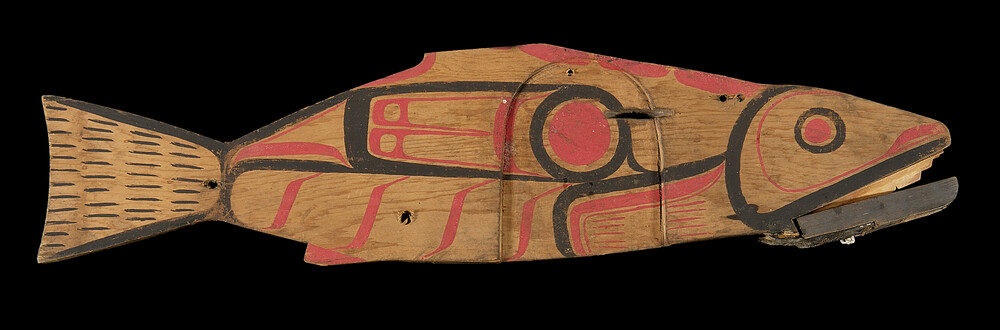
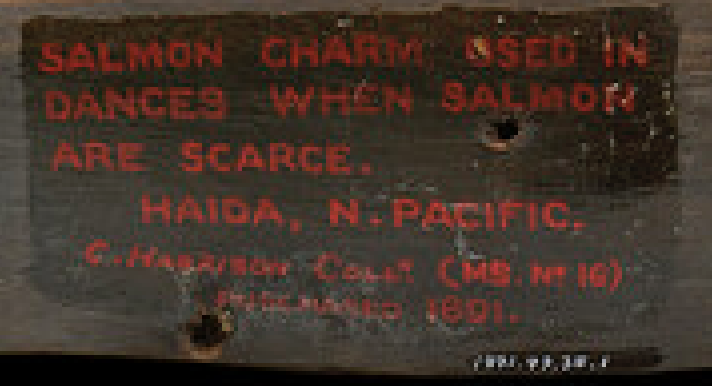
Top: Salmon carvings used in ceremony, Pitt Rivers Museum, Accession #1891.49.35.1. Bottom: Salmon label from carved salmon at Pitt Rivers Museum.
In Ancient Warriors of the North Pacific (1925, p. 88) Reverend Harrison further explains these powerful Belongings:
These carvings were probably used in extreme times when the tsíin stocks were low and people were worried about food for the winter months to come. Although there may not be a detailed ceremony documented to accompany these beautiful carvings, we can still learn from them and our teachings and practices that have been passed on through the generations. I hope to one day find the accompanying mask described by Harrison.
daughters of the river
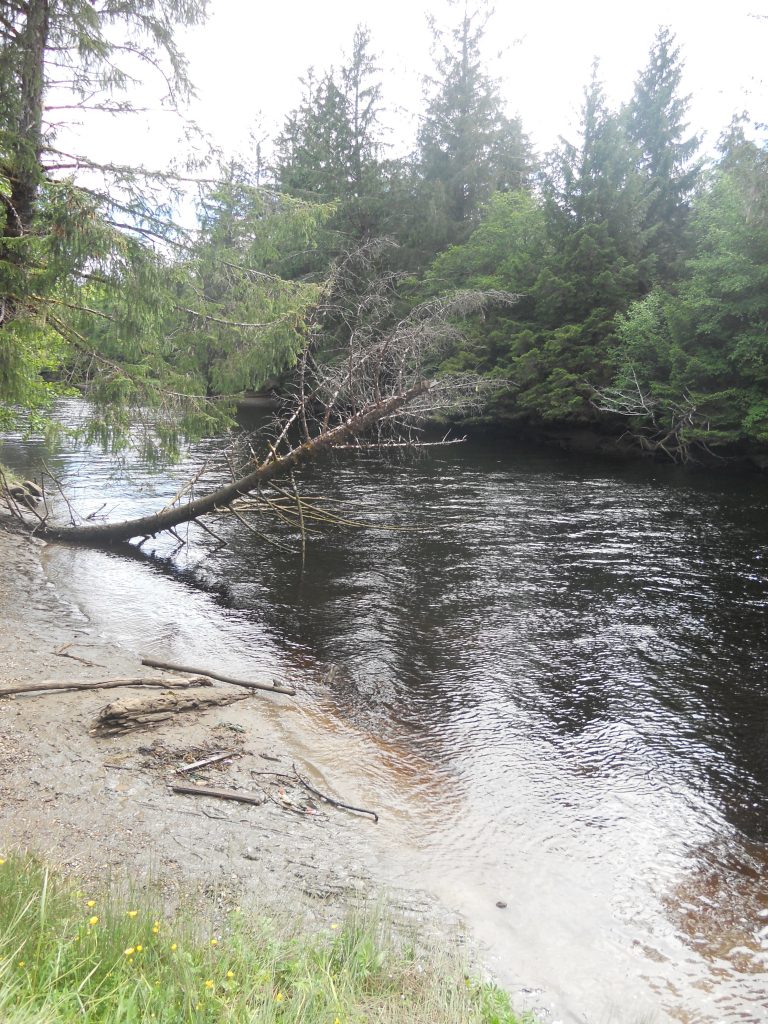
Each salmon creek is overseen by a female sG̱áaniwee (Supernatural) known as Daughter of the River or Creek Woman (Swanton, 1905). These powerful beings live at the headwaters and are understood to own the fish within their creeks. Every year, the salmon run upstream to reach her dwelling.
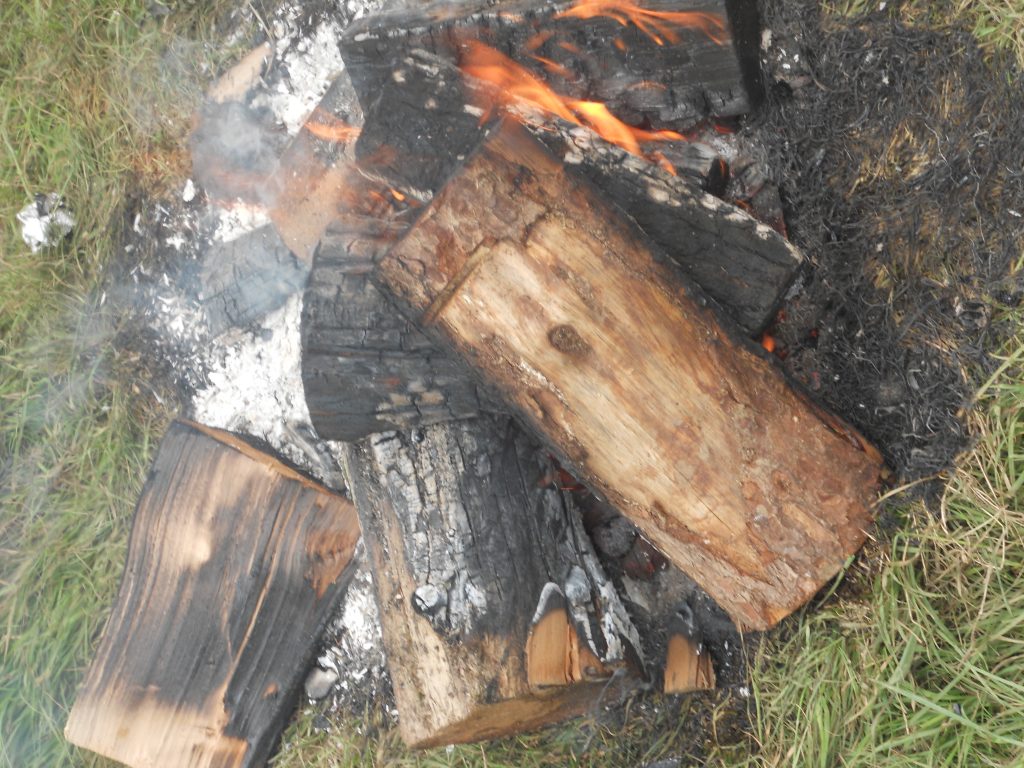
One of these Creek Women is named Jaad ‘La ‘awgad Sḵ’ona (“Djat La’oagut sq!o’na,” Woman-upon-whose-Property-the-Sea-Gulls-lay), who lives at the head of a small stream near Kaisun. Our Kuníisii (Ancestors) would send flicker feathers to her as an offering through the fire, stating “Let salmon abound for me, chief woman!” (Swanton, 1905, p. 24). These acts reflect an ongoing relationship, one that requires attention, care, and a strong belief.
Human behaviour toward the salmon and the environment determines whether they are able to return. Disrespect, and today’s damage to forests and waters, can disrupt this relationship and prevent salmon from making their way home. In earlier times, the sG̱aaga (medicine men) would have called upon the Creek Women during periods of scarcity. Unfortunately, missionaries such as Harrison and Collison spent their careers shaming and converting these healers, and we no longer have the strong presence of sG̱aaga to guide the healing of our lands and waters.
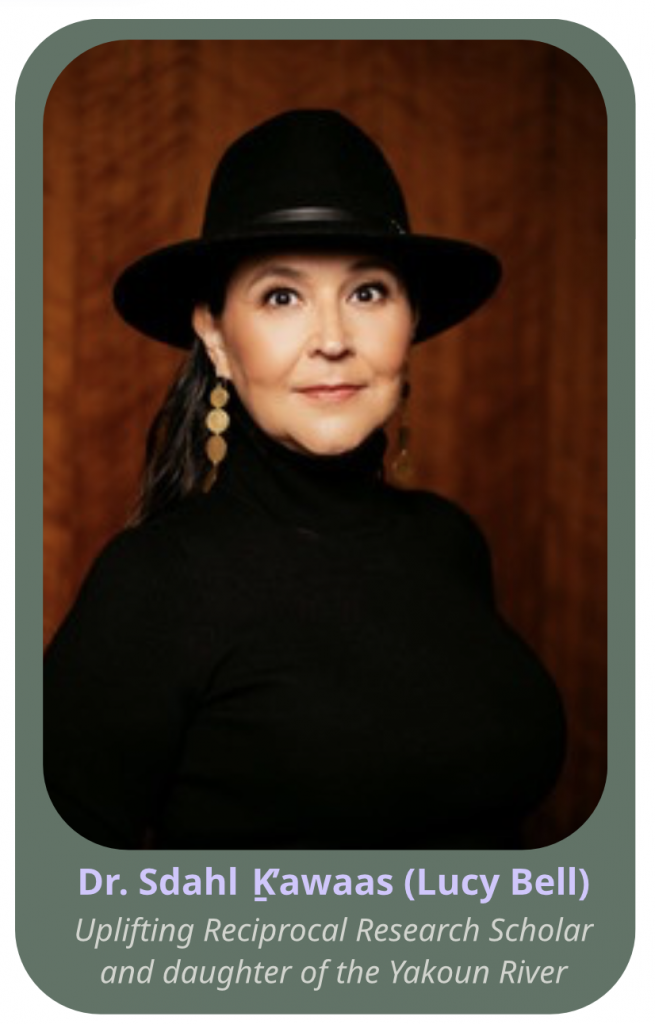
To ensure the salmon continue to return, we must remain connected to these Supernatural protectors of the rivers and protect the rivers. This connection needs to be practiced with yahgudang in how we think, speak, and act toward the rivers, the salmon, and the lands that sustain them.
Chíin Ḵ’iigang
(Ancient salmon stories)
There are lessons in the ancient stories of salmon and the rivers. Many Haida stories teach us how to live respectfully so we do not harm the environment and so that we can continue to live healthily from the resources of Haida Gwaii. From archival documentation and early ethnographic publications to interviews within the last thirty years, these stories continue to teach us if we are willing to listen.
In one story, Raven spoke disrespectfully about salmon, and all the dried fish came back to life and swam away (Swanton, 1905, p. 208). In another, a boy taken to the land of the Salmon People learned that returning the bones of salmon allowed them to live again. To this day, we put the bones of salmon back to the river so that they will return the next year (Swanton, 1905, p. 197). These stories remind us that the salmon respond to how people behave. It is why to this day, we put the bones back to the river through ceremony.

preparation, medicine, & belief

Naanii Adelia’s mother, Lydia Bennett reminds us just how lucky we are to know the taste of fish from the time we are born. Our Kuníisii did not take this for granted.
There were numerous puberty rites that maintained a good relationship with tsíin, grounded in an understanding of the strength and influence of young women during this time. These teachings acknowledged their power and the need to act with care within relationships that sustain life. Fresh fish was not to be eaten, during taguna (first menstruation), as it was believed this could lead to illness, while dried fish was acceptable. Looking at salmon hanging to dry could result in dry eyes later in life. A young woman was not to step over a salmon creek, as the Daughter of the River might leave and take the salmon with her. Hunting and fishing gear was kept away from menstruating women, recognizing the power of their presence.
When travelling by canoe with her family to a salmon creek, a young woman during puberty would step out at the mouth of the creek and approach the smokehouse from behind. If she were to see a salmon jump, it was understood the salmon might leave altogether. These practices reflect an understanding that young women hold a powerful relationship with the salmon and the waters, and that their actions carry consequences for the wellbeing of the community (Bell, 2016; Curtis, 1916, p. 126; Swanton, 1905, pp. 49–50).
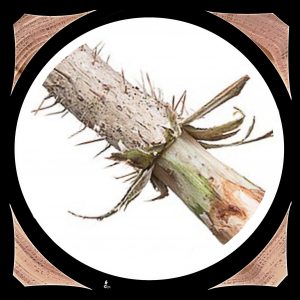
Ceremony also shapes how people prepared themselves and their tools for fishing. The late Tsinii Claude Jones, in his 90s, shared memories from his childhood about the preparations his uncles made before fishing on the Yakoun river (personal communication, 2014). Before entering the river, they cleansed themselves with ts’iihlanjaaw (devil’s club) so they could approach the river properly and become good fishermen. Success depended not only on skill but on proper conduct.
He also described how ts’iihlanjaaw was used in ceremony to bring luck and to help catch a lot of fish. He remembered Adam Bell explaining how he would go far up the inlet, away from others, because if someone saw you, your luck could go to them. He would eat the bark from 40 pieces of ts’iihlanjaaw, pray for what he wanted, and then place the pieces in the ground in a circle around him (personal communication, 2014). This medicine cleanses from the inside and prepares a person for new knowledge and luck.
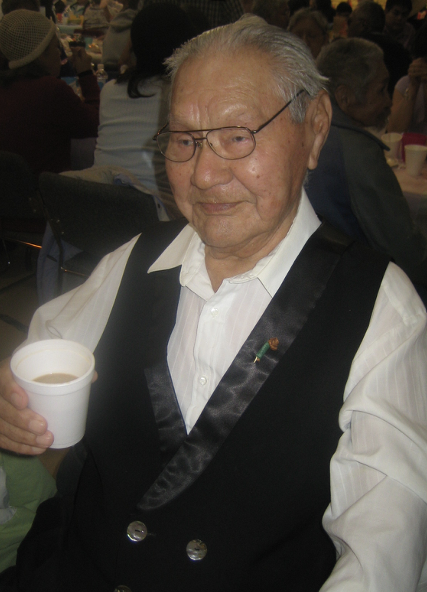
Naanii June Russ shared another story of Adam Bell. Her husband Reynold Russ helping Adam Bell wash his fishing boat with ts’iihlanjaaw to wash away any bad energy. She explained, “you have to believe in it. It doesn’t work if you don’t. That’s what Tsinni T’aak and Ganyaa used to say. If you don’t believe in it, don’t touch it or it will bring you bad luck” (personal communication, 2014).
Another teaching involves tying ta’inaang k’uug (round leaf sundew) to nets to attract good fortune and many fish (Bell, 2016, p.82 ). Chief Weah (Willie Matthews) reminds us that this should be done in secret to maintain the power of the plant (Turner, 2004, p. 152).
Careful examination of older fishing gear in museums may reveal remnants of plants or other materials once used in ceremony. Also, thoughtful prayer, sharing knowledge and practicing what we already know could strengthen our connection to Haida Gwaii and the sG̱áaniwee of our homeland.
Women, Rivers, and
responsibility
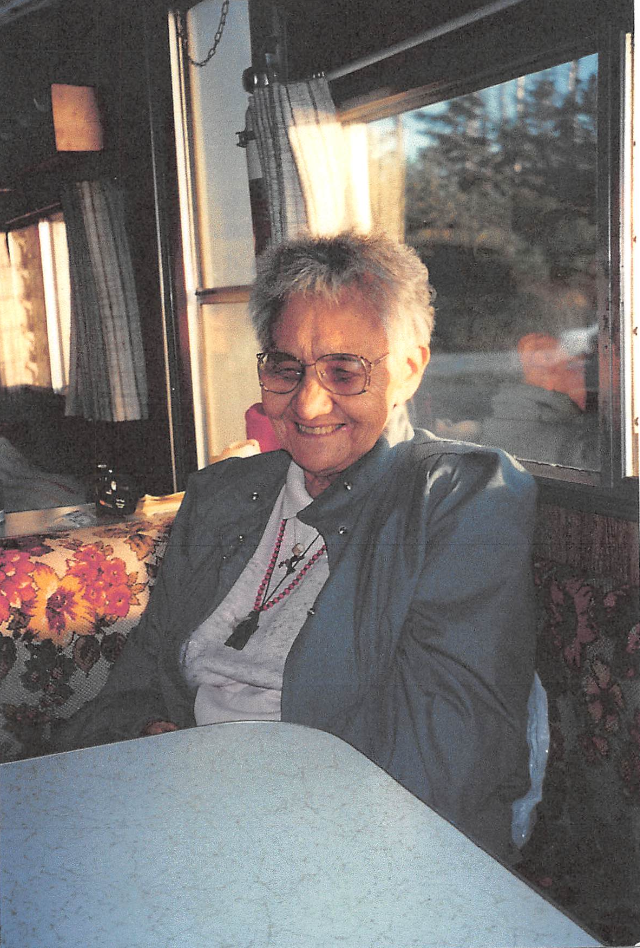
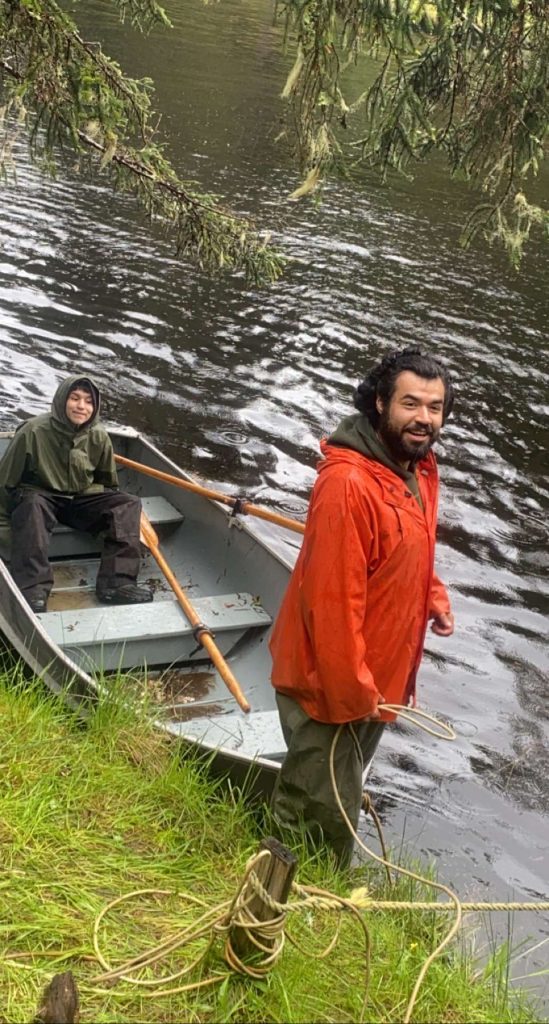
Women have always played a central to these practices and relationships with the river. My Naanii Mamie Jones taught me the importance of following the tides. She scolded me when I was young for thinking “Indian time” meant being late. She told me we come from the Yakoun River and we follow the tides. Nannii Nora Bellis agreed, stating “He must belong to the Yakoun River, he’s so slow. They think it’s the people who were slow. It wasn’t the people. They were waiting for the tide to come in.” (Council of Haida Nation 1990, p. 8). My late aunty Mavis remembered her mom loading the kids into the skiff and rowing from Old Massett to the Yakoun on her own because the net needed to be checked and her husband was unable to (personal communication, 2013). This reflects how closely our families live with the rhythms of the river and the powerful responsibilities of mothers needing to prepare to feed their children through the winter.
Naanii Dorothy Bell remembered rowing up the Yakoun with her grandmother to dry sockeye. Her grandmother owned her own net and rowboat. Women harvested, processed, and cared for salmon of the rivers on a regular basis (Interviewed by Carolyn Kenny, 1999).
Naanii June Russ spoke about Haana Parnell as a strong fisherwoman. June travelled with her from the Jaalen River to K’iis Gwaay (North Island). Haana preferred to set the net herself, wearing a long skirt with warm pants underneath. When a bear came near her net, she spoke to it and offered it the largest sockeye from her catch, promising to leave a fish for it each day on the bank (personal communication, 2014). This reflects a relationship of reciprocity with all beings connected to the river.

Family, memories, and
protection of the land
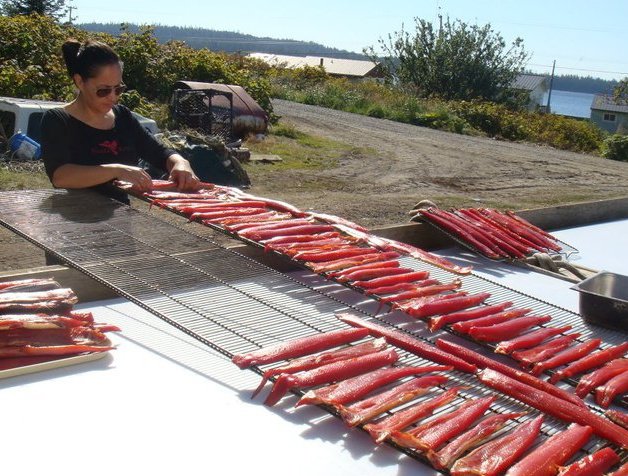
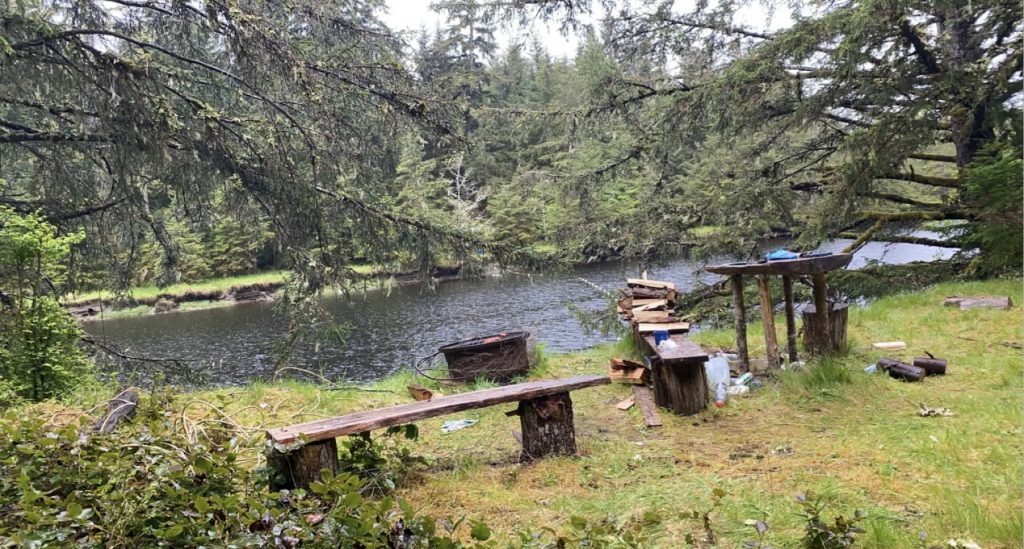
Mavis Bell shared family stories as we sat along the Yakoun river for the return of the salmon ceremony in 2013. She remembered travelling to the Yakoun and Kíis Gwáay (North Island) as a young girl before being sent to residential school. Our family hunted, shared food, and lived from the abundance of the land and sea. There was always a pot of deer stew on the stove from deer her dad and brother Ben hunted. She also enjoyed harvesting sG̱aadana eggs, found on the steep cliffs of North Island, which her mom would scramble. The nesting place is now covered in commercial fishing lodges. Aunty Mavis went on to be a cannery worker for decades, and even though this tough work left her arthritic, she was happiest when she was slicing up salmon, using a spoon to scrape the bones so as to not waste anything. Later in life, she was saddened to see visitors overharvesting and damaging the forest and waters of Haida Gwaii. Her advice was clear. We must protect our rivers, the land and the fish within them.
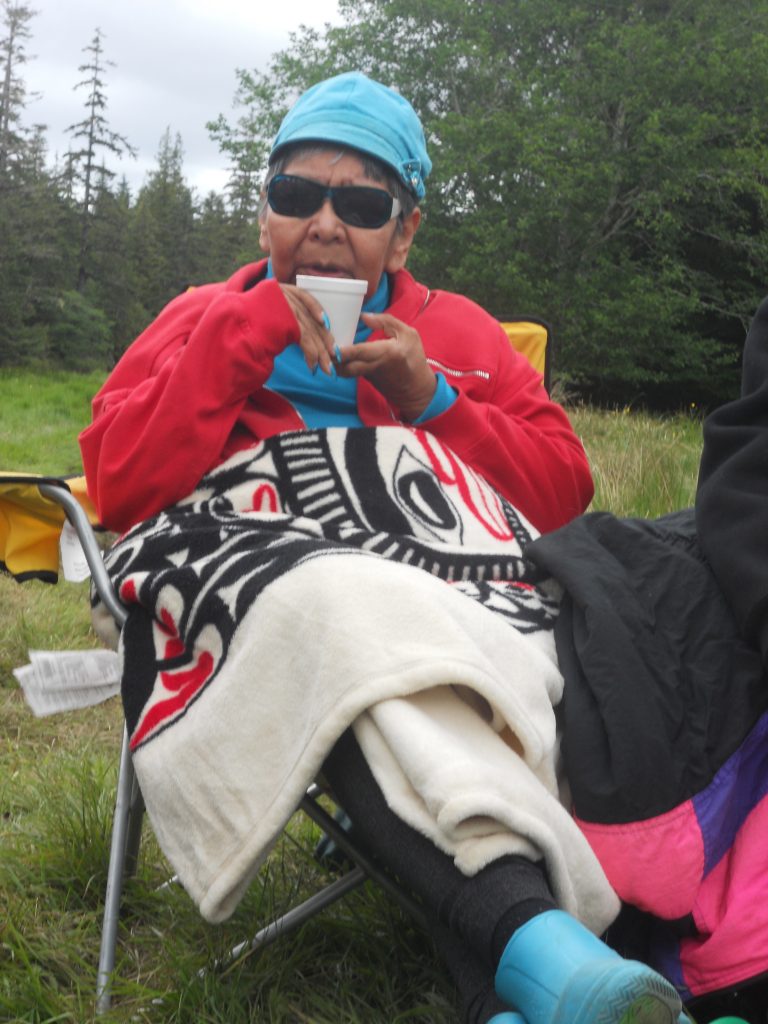

Frank Collison, Chief Sdíihlda, emphasizes the shared responsibility of caring for Haida Gwaii. He told Candace Weir that in his time, after residential school and the Indian Act limited access to resources, people did not claim exclusive ownership over fishing places. Families worked together across the north end of Haida Gwaii, recognizing their shared responsibility to the rivers and to the salmon. He remembered different men watching over different areas of the river (The Indian Act, n.d.; Frank Collison interviewed by Candace Weir, 2013).
Tsinii Claude Jones fondly remembered going out fishing for the first time as a young boy. He proudly brought his first fish back to his naanii. He learned the importance of sharing your first catch and always sharing what you harvest with your loved ones, especially if they are unable to go out on their own.
hole in the net
Colonial disruption created a large hole in the Haida fishing net. It contributed to the loss of knowledge surrounding traditional practices and responsibilities to the land and sea. In Klee Wyck, Emily Carr wrote about a Haida child returning home from the industrial residential school, describing Jimmy and Louisa’s (Clara and William Russ) adopted child as lazy and ashamed of his heritage after his time away (1941, p. 128). This boy and generations of children were taken from their homes, split from their families, removed from the rivers, the seasonal cycles, and the teachings that guided relationships with salmon, medicines, and land.
The older Haida folks told me that everything changed for them when they were sent to residential school and then sent away during the ‘60s Scoop. If they made their way back home, they came home not knowing how to fish and live off the land anymore. Many were drawn to new economies of commercial fishing, cannery work and logging. They were lucky to have a bit of X̱aad kil (Haida language) and spiritual knowledge, but it was not shared openly. Many stuck with the religious beliefs imposed on them, and many turned to unhealthy habits to mask their trauma. Our land and waters did not have the strong protectors it once had. Knowledge of ceremony, proper conduct, and relationships with Supernaturals such as the Creek Women and the salmon was not able to be passed on in the same way. As we strive to protect our waters and lands, we must also face the damage done to our knowledge system and take up the careful work of mending our net.
songs and ceremony continue
Despite the attempts to wipe our memories of our responsibilities to the land and waters, this knowledge is soaked deep into our bones.
Songs also carry this relationship. SG̱aalanglaay Gaamdamaay (Vernon Williams Jr.) composed Haw’aa Tsíin, a thank you salmon song after begrudgingly returning to the Yakoun after many years. He was grumpy and whining because he hadn’t caught any fish. It was then that he came face-to-face with a big bear. After this scary experience, he took his young son back to town. That night a salmon song came to Vern. He woke up singing the Haw’aa Tsíin song. He went back to the river, made an offering and apologized to the river. After singing the song, he caught 110 fish! (personal communication, 2014; Xaad Kihlga Hl Suu.u Society, 2010).
Kihl ‘Yahda (Christian White) recalls his Tsiníi bringing him to the Awun River as a boy. On the first day they caught a single fish. Medicine was placed in a bundle, a chant was sung, and Christian was instructed how to cut the fish just right. The flesh was removed carefully while the entrails remained intact and returned to the river. Their luck improved after this (Christian White interviewed by Candace Weir, 2013).
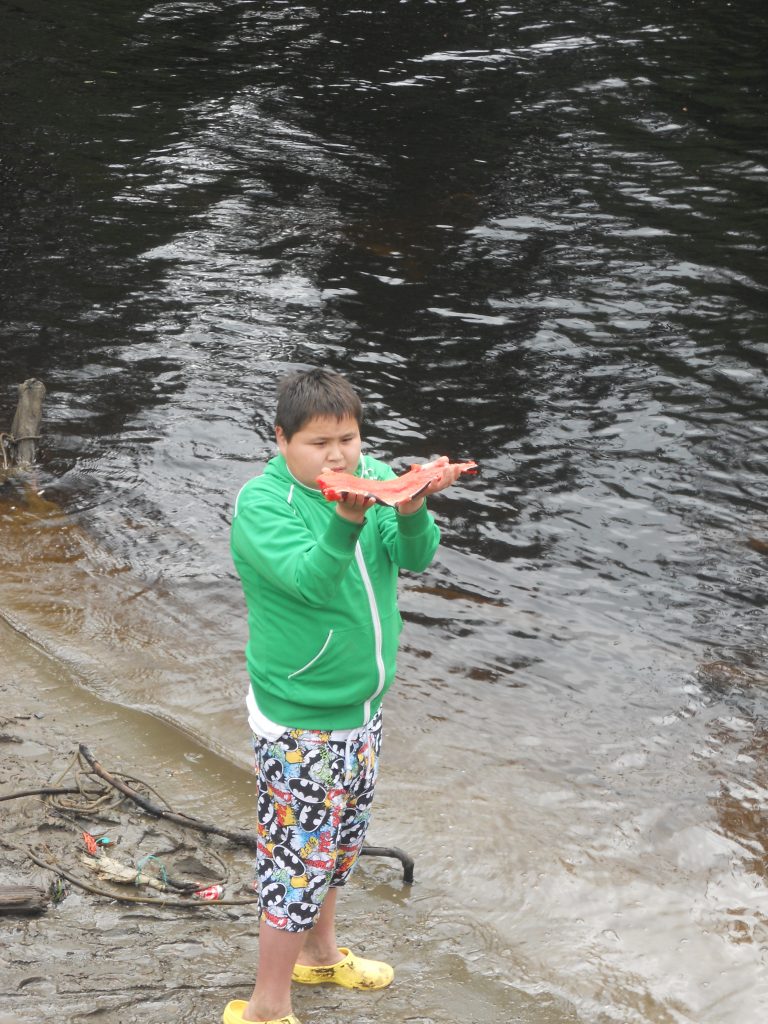
In the 1980s, the Return of the Salmon ceremony was revitalized at the Yakoun River, led by Robert Davidson. The ceremony welcomes the salmon each year and acknowledges the relationship between the river, the salmon, and the Haida. Today, the ceremony may be smaller than the early years but it is still strong with gratitude and intent as Reverend Lily Bell offers prayers and her grandson, Freeman Bell, puts the sockeye bones back to the river. The Yakoun remains the lifeline of the north end of Haida Gwaii because we remembered this ceremony.
Gin Ḵuyáas (BELONGINGS)
In museums
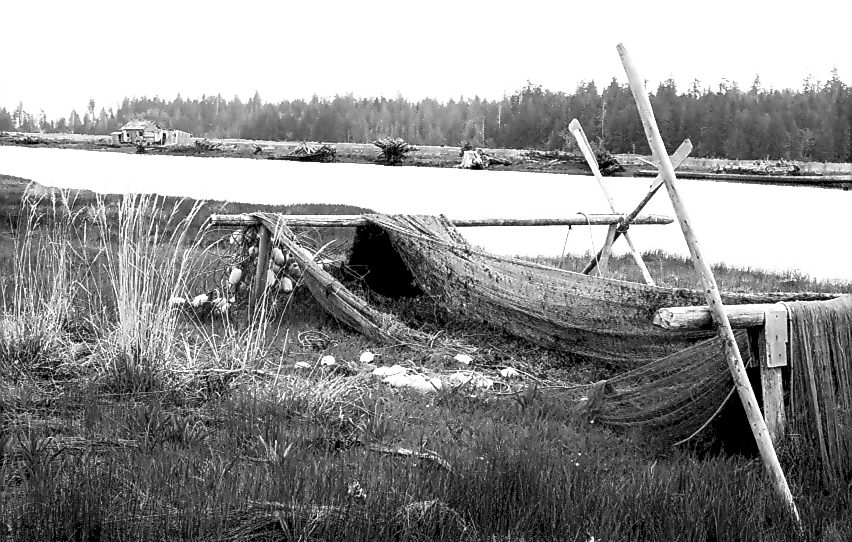
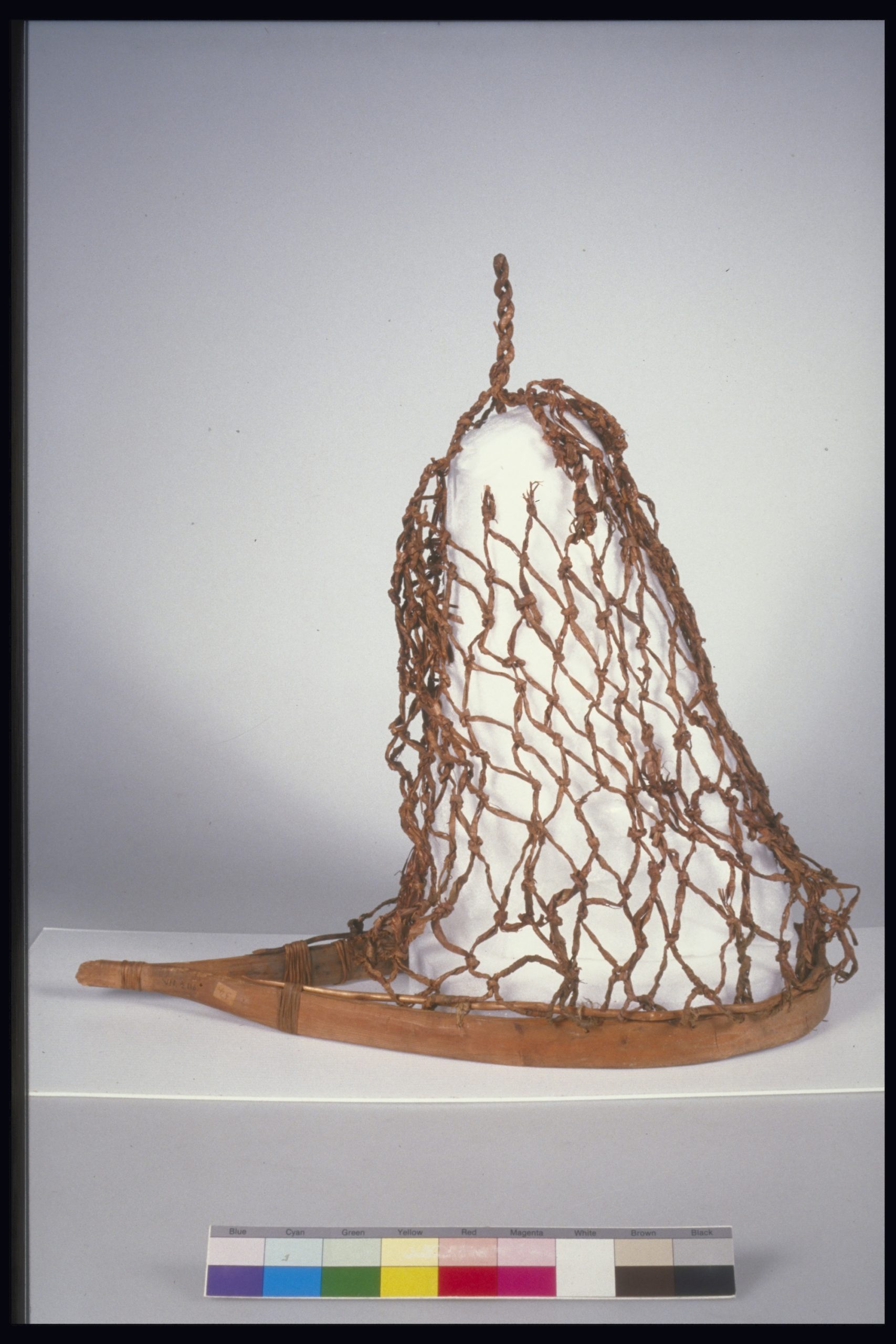
Many gin ḵuyáas (Belongings) in museums today may relate to these practices. Carvings, fishing nets, baskets, other implements, and ceremonial items connected to salmon harvesting may carry these teachings. They remind us that fishing was never only technical knowledge. It was spiritual, social, and guided by yahgudang and the embodiment of the philosophy gin ‘wadluwaan gudahl kwaagidang (everything is connected). As we face climate change, we need to look to the Belongings in museums for the lessons left behind by our Kuníisii.
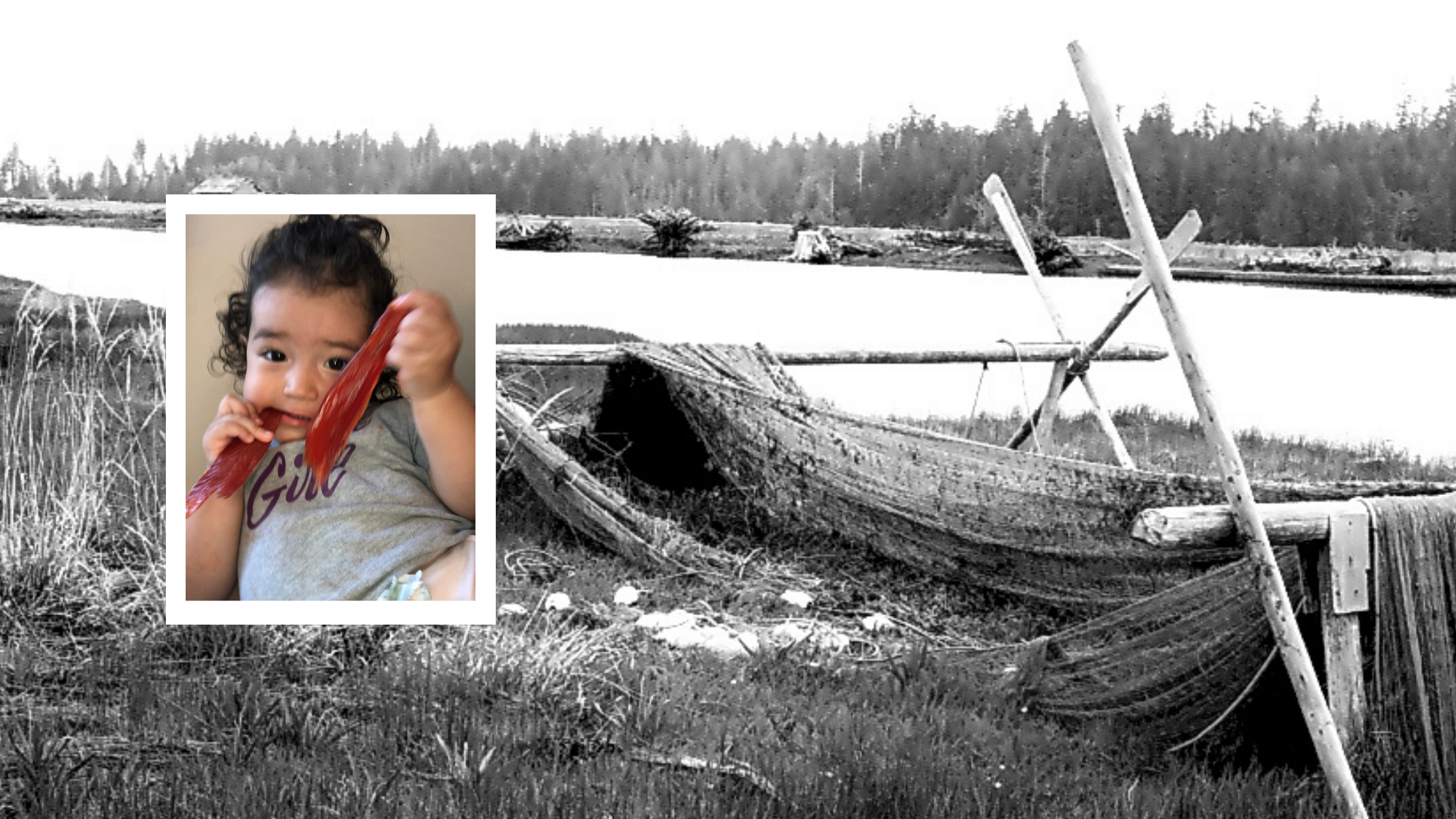
Photo: Fish net at Canadian Museum of History CD1995-0214-028.
conclusion
The teachings shared through stories, ceremony, and lived experience show that the return of the salmon is the result of an ongoing relationship grounded in yahgudang, kángang (responsibility), and damáan (care). From the Creek Women at the headwaters to the practices carried out on the river, from medicines like ts’iihlanjaaw to songs and ceremony, each part reflects a system of knowledge that understands gin ‘waadluwaan gudahl kwáagiidang everything as connected.
These relationships continue today, even as they are challenged by environmental change, colonial disruption, and loss of access to land and medicines. The teachings carried by Knowledge Holders such as my aunty Mavis, Tsiníi Claude Jones and Naaníi June Russ, and others remind us of what is required to maintain balance. They also show the importance of returning to these ways of knowing and practicing.
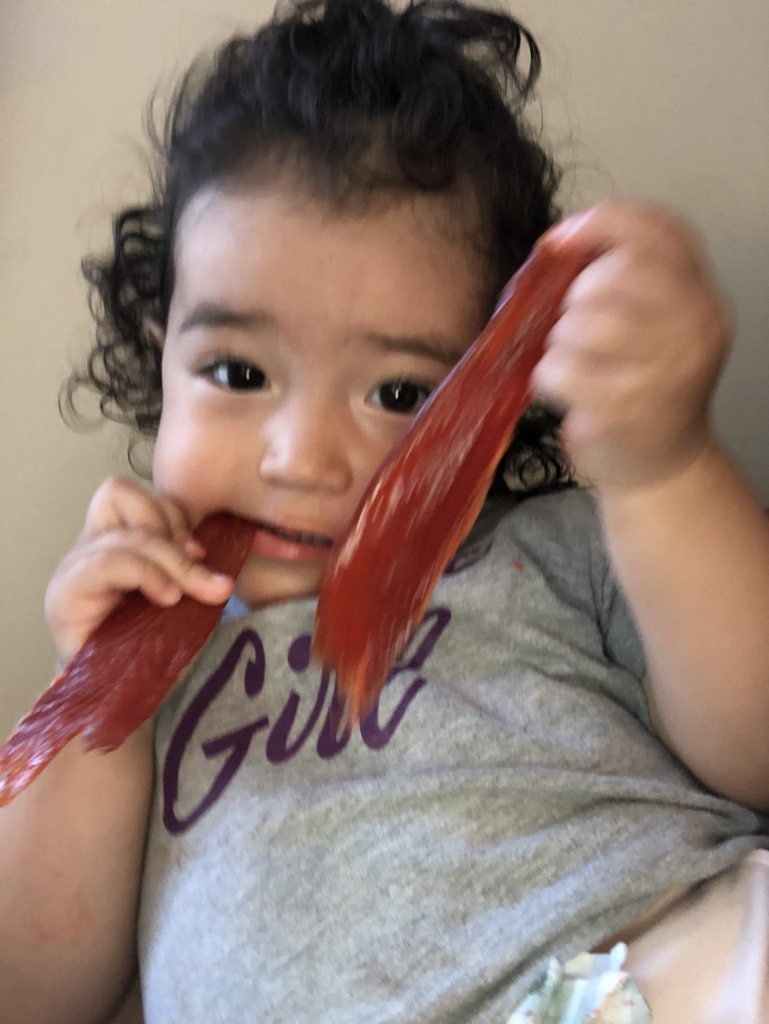
Remembering and continuing these relationships and ceremonies is part of ensuring that the salmon continue to return, and that future generations can live from the land and waters of Haida Gwaii. Returning to old knowledge and ways of being is how we mend our own net, ensuring that our children, and the children yet to be born, continue to be born with a fish in their mouth.
Haw’aa
Haw’aa to the Daughters of the River for caring for the rivers across generations. Haw’aa, tsíin, for sustaining us. Haw’aa to those who shared their stories, songs, and ceremonies. Haw’aa to Dr. Marianne Ignace for reviewing this essay, and to Candace Weir and my late aunty Carolyn for documenting some of the stories shared here. Haw’aa to my own Naanii Mamie for teaching me to move with the rhythm of the river, and to all those who continue to care for our rivers.
Dalang ahl kil ‘laagang.
Dr. Lucy Sdahl Ḵ’awaas Bell is a Postdoctoral Fellow at Simon Fraser University, and a recipient of a PICS Uplifting Reciprocal Research Scholarship.

In honour of the Relationship Protocol between the Pacific Institute for Climate Solutions (PICS) and the First Nations Leadership Council (FNLC), this Knowledge Highlight series reflects PICS’ commitment to supporting the priorities of the BC First Nations Climate Strategy and Action Plan and the Action Plan for Disaster Risk Reduction by First Nations in BC through capacity building, research, and education.