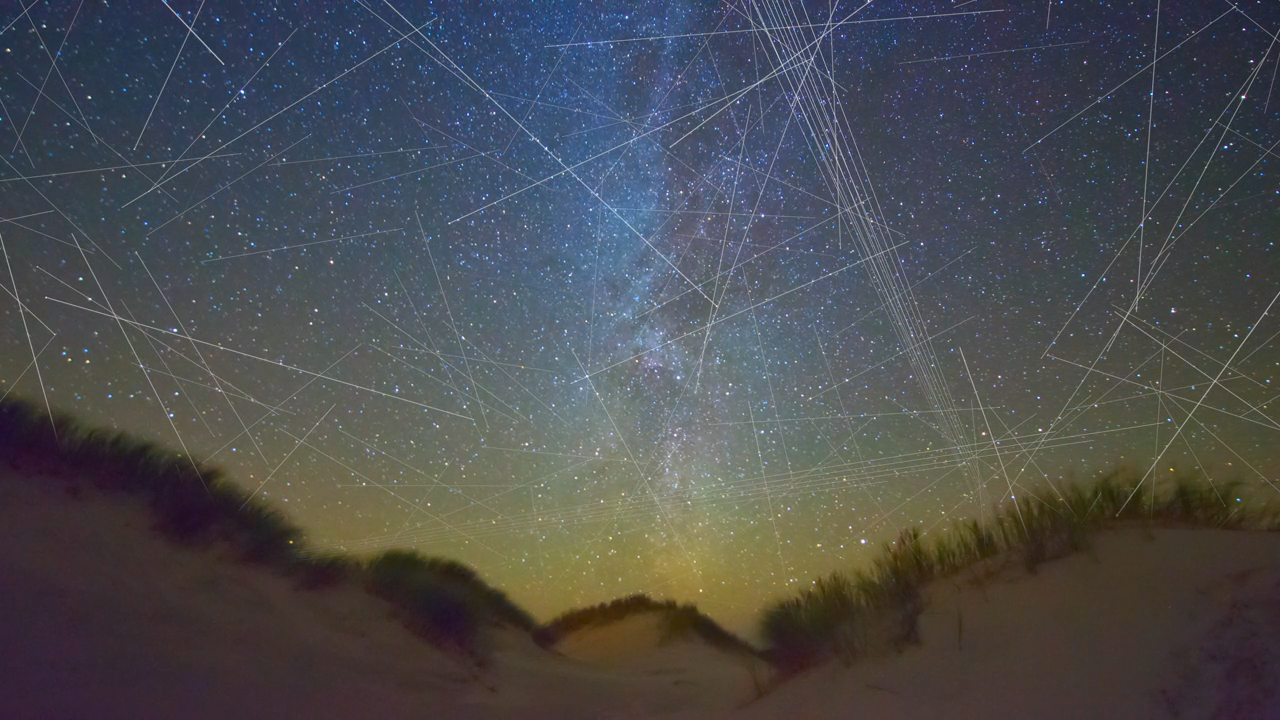
In 2025 more than 4,000 new objects were launched into Earth’s orbit, almost a twentyfold increase since 2015. This proliferation of satellites – now totaling 20,0000 objects in orbit – is expanding communications systems, especially in remote and underserved regions. But it’s also adding material to the upper atmosphere through rocket launches and re-entries, with potential implications for climate change and the long-term sustainability of Earth’s orbital environment.
With seed funding from the Pacific Institute for Climate Solutions, the project The climate-space connection: preventing the next environmental crisis at the University of British Columbia (UBC) is investigating these emerging risks. Led by Dr. Aaron Boley of UBC Physics and Astronomy and Dr. Michael Byers of UBC Political Science, the research is generating science-based policy tools to sustain a healthy orbital environment in the face of climate change.
UBC humanities professor Dr. Astrida Neimanis (Community, Culture, and Global Studies) sat down with Dr. Boley for an interdisciplinary conversation about how space activity poses new challenges that echo old environmental problems, and how Boley’s collaborative research aims to provide policymakers with new tools to address these challenges.
.
Dr. Aaron Boley is Professor in Planetary Astronomy at the Department of Physics and Astronomy at UBC Vancouver. He is co-director (with Dr. Michael Byers) of the Outer Space Institute, a transdisciplinary group of researchers looking at the sustainable use and exploration of outer space.

.
Dr. Astrida Neimanis is Professor and Canada Research Chair in Feminist Environmental Humanities in the departments of English & Cultural Studies and Community, Culture & Global Studies at UBC Okanagan. Neimanis is a cultural theorist whose research focuses on reimagining justice, care, responsibility, and relation in the time of climate catastrophe.
Astrida Neimanis: Your project is called The Climate Space Connection: Preventing the Next Environmental Crisis. Could you say a bit more about what you call the climate-space connection?
Aaron Boley: Earth and space are connected in multiple ways. At a fundamental level, to get to space, you have to go through the Earth environment. You have to source resources on Earth, and even if we source resources from outer space in the future, there’s still the transfer through Earth’s atmosphere to get there.
But it’s way more involved than that. By generating debris around Earth, we have enclosed Earth in an artificial dust cloud. It’s something we can still go through, but there’s a lot of material up there, changing the background sky brightness and complicating operations. Part of the environmental question is: what does maintaining a healthy Earth orbit look like?
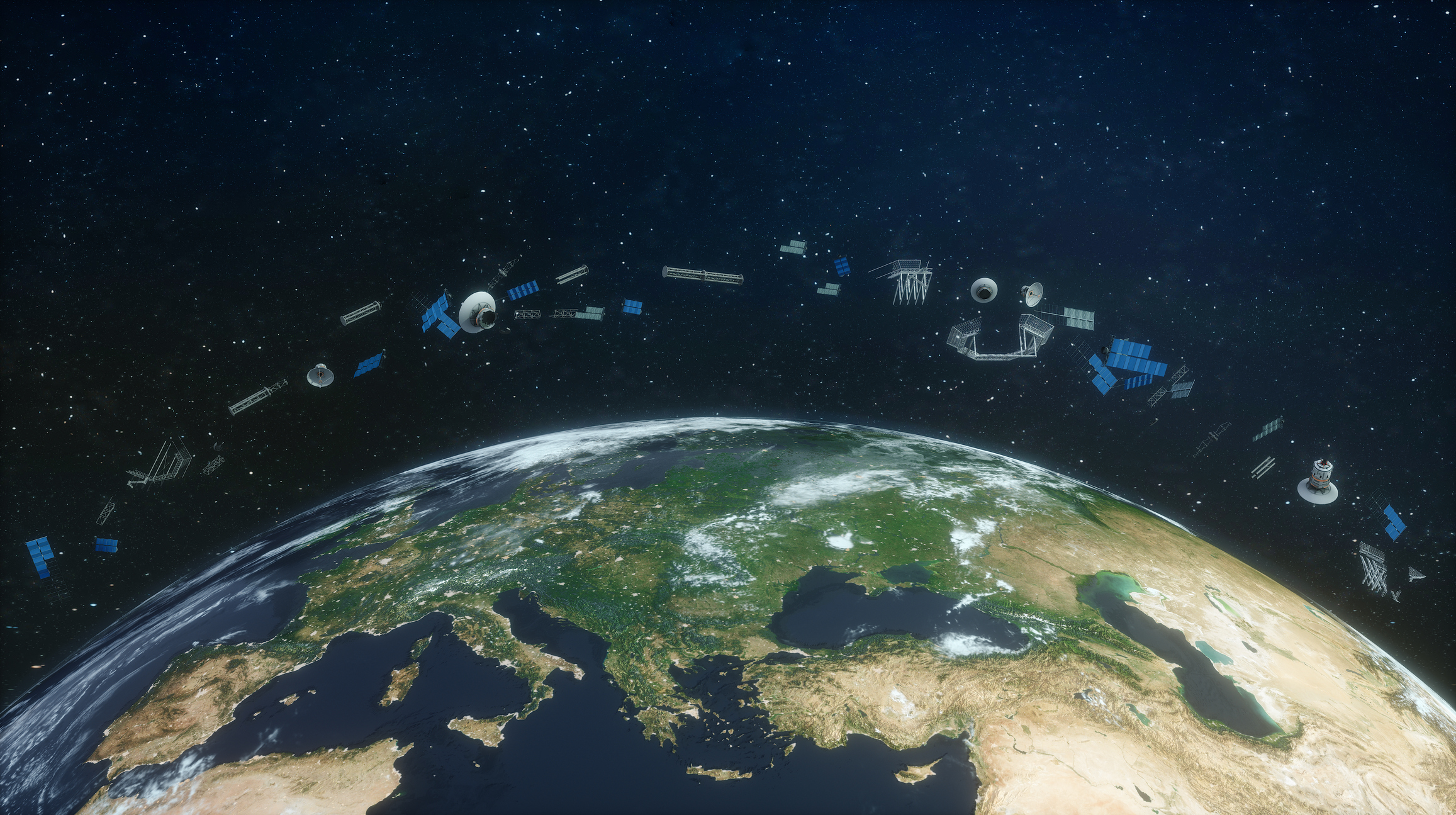
To keep the orbital environment clean, we want to re-enter used satellites and rocket bodies. One option is to steer the object to an open area of ocean, minimizing casualty risk. Of course, that’s dumping material into the ocean, but at the moment that’s the least bad option. Another is to just let it come down wherever it does, which creates a small individual risk that is not small over the entire population.
We want to minimize loss of life in space operations, and that means that another option comes in: to get the object to break apart as much as possible as it comes into the atmosphere. We call that demising; ‘burning up’ is the colloquial term. But that’s treating the upper atmosphere as an incinerator. These choices have direct effects on the Earth environment, and if we try to minimize impact in one area, we can make another part worse.
“if you design [satellite debris] to burn up entirely, you exacerbate the treatment of the atmosphere as an incinerator. And it turns out that really does matter for the climate system.”
— Dr. Aaron Boley
For example, if you want to dump everything into an open area of ocean, you need enough fuel and propulsion capabilities to create the right type of orbit, which drives up the cost. But if you design it to break apart and burn up entirely, you exacerbate the treatment of the atmosphere as an incinerator. And it turns out that the amount of material that we’re putting into the upper atmosphere really does matter for the climate system.
Astrida Neimanis: I’m hearing that space activity is creating a traditional environmental problem by dumping pollution and debris onto Earth, and also an extended environmental problem outside of Earth. It’s replicating the same kinds of thinking that got us into a lot of our problems, like the old adage: the solution to pollution is dilution.
Aaron Boley: Exactly. The idea that the ocean’s so big, how can we possibly affect it?
Astrida Neimanis: We’re doing that to space, and then, recursively, also dumping that pollution into the oceans. The things you’re talking about are both replications and new extensions of more traditional environmental problems.
Aaron Boley: As we look more into it, we find many similarities with our involvement in outer space and in other parts of the environment. We can see analogues in fisheries, and so forth, around the question of how we can use space in a way that’s sustainable.
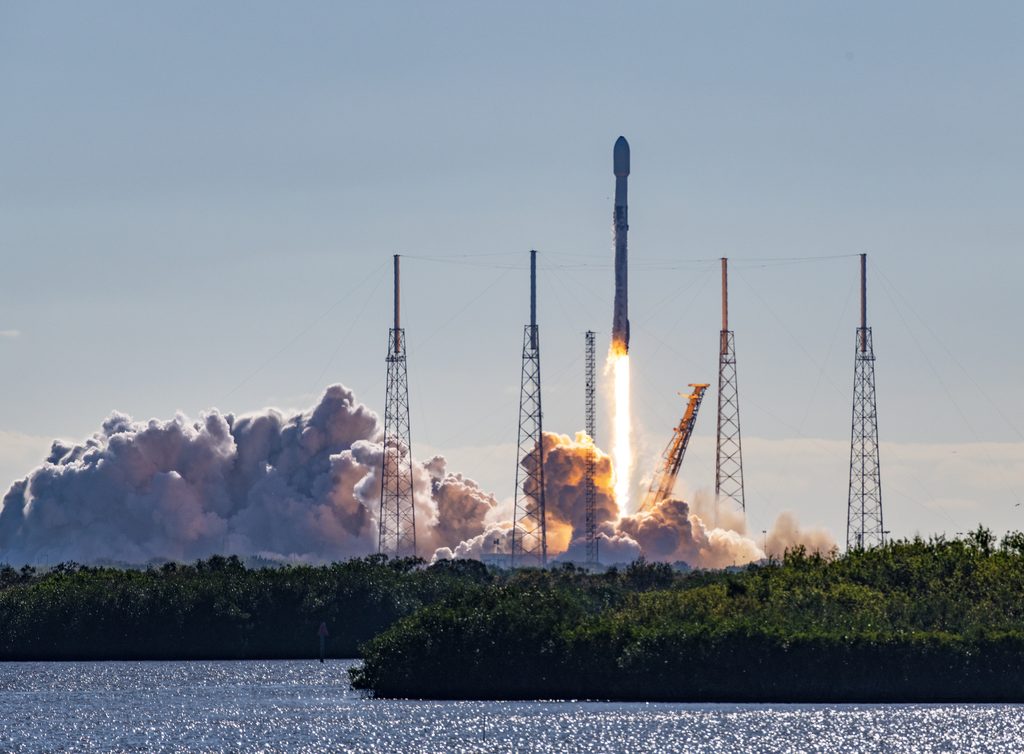
“There’s often
a false choice put forward:
Do you want all the amazing things
satellites bring or not?”
— Dr. Aaron Boley
Credit: Robert Michaud, iStock
And there are other connections. There’s often a false choice put forward: Do you want all the amazing things satellites bring or not? Do you want dark skies and a debris-free orbital environment, or do you want satellites? Those false choices exclude discussion of whether we can do it a different way.
Our lives are connected to space very deeply, and satellites bring tremendous benefits to society. Satellite constellations have given us global positioning systems and life-saving emergency response networks. They support banking transactions, communications, Earth observation, tracking weather, and they help us understand how we’re changing the atmosphere.
We’re not pushing back on using satellites. We’re asking: how many do we need? How do we regulate them and share the orbital environment? Ultimately, it’s not that people want satellites; people want services. Some services may be best provided by satellites and some may not be. We shouldn’t take for granted that the answer is always more satellites.
Astrida Neimanis: Scholars of science and technology often remark that sometimes in the pursuit of understanding a problem, we exacerbate the problem ourselves. How do you feel about that tension: we need satellites for information about weather and climate, and at the same time putting those instruments into our world may contribute to climate change?
“It is a matter of scale. In the past six years, we’ve launched more satellites than in the previous 60.”
— Dr. Aaron Boley
Aaron Boley: It is a matter of scale. In the past six years, we’ve launched more satellites than in the previous 60. That has not been because of better weather satellites. It has been because of communication systems we call mega-constellations to make things like broadband Internet available through satellites.
This runaway increase in scale is what we’re worried about. When one company has done it, other companies want to do it. We’ve also seen through the war in Ukraine the military uses of such a system, and now countries want this for their own sovereign capabilities. In Canada, many remote communities have become dependent on Starlink for broadband internet. But Starlink is run by an erratic character within a country that is changing its relationship with the world, and that creates vulnerabilities: for instance, if this service could be turned off in a trade war. So now there is a scramble to put even more things up there, so everyone has their own system.
While we still have to be mindful of how we launch satellites to look at weather, the problem is not the hundreds of satellites going up for weather. It is the tens of thousands going up for communication purposes.

Astrida Neimanis: I think what you described holds for climate change and environmental degradation more generally. It’s not about the thing; it’s about the scale, the speed, the intensity, and the reasons why.
Aaron Boley: SpaceX has proposed putting a million tonnes worth of data centres into orbit. It’s not clear how practical this is, but the people proposing it are serious. And they use a kind of environmental greenwashing argument to justify it as a way of bypassing environmental obstacles on Earth.
Keeping those running and preventing them from damaging the orbital environment will be hard in itself. But that also comes with lots of launches. For every tonne you put into orbit, you need about 20 or 30 tonnes of fossil fuel. So it causes an escalation in the exhaust we put into the upper atmosphere, which has implications for climate change.
When most people think of climate, they think of carbon dioxide (CO2). CO2 is part of rocket exhaust, but things such as soot are becoming incredibly important. The deposition of soot into the upper atmosphere changes Earth’s climate balance, because aerosols there control temperatures in the troposphere and stratosphere. If you start changing that balance, you start affecting things such as ozone abundance. Even water has an impact. The upper atmosphere is dry; if you put water there, you could have different reactions, including more upper-atmospheric clouds, which could start affecting global circulation.
As re-entry products break apart and form particulates, those get absorbed into the aerosol population, and we don’t know what those particulates will ultimately do. We are having this rapid change and a lot of us are trying to understand what that’s going to do.
“With this grant from PICS, we are identifying metrics that can help us understand how we are changing the Earth-space system.”
— Dr. Aaron Boley
Astrida Neimanis: What potential solutions is your research exploring to counter some of this?
Aaron Boley: With this grant from PICS, we are identifying metrics that can help us understand how we are changing the Earth-space system. We want meaningful metrics that policymakers can use to get a handle on what impacts really matter.
For example, we already know we are getting more of certain elements coming into the atmosphere from human sources than naturally would through meteoroids. But we don’t know how much stays in the upper atmosphere as aerosols versus how much settles.
One answer is to look at the aerosols themselves. If we take these small particles suspended in the upper atmosphere and break them apart, what is their composition? By looking at ratios, for example aluminum to iron, and the presence of elements not usually present in meteoroids but coming in from satellites – such as lithium or niobium – we can understand how we’re changing the naturally occurring abundances of these elements in the atmosphere. One metric, then, would be tied to the cosmoabundances of different elements within aerosols.
Now, that by itself doesn’t tell us whether a certain amount of lithium in an aerosol is good or bad. So we can go a bit further, through what we call atmospheric sounding, to measure the upper atmosphere by looking at how materials are absorbing and scattering light. Ultimately, we’re starting at a very fundamental level to understand what is coming in, what is staying up there, and what that can tell us about how some of these other molecular and atomic species are behaving.
Astrida Neimanis: Cosmoabundance is a very beautiful word, but I take it it’s not always beautiful in its materiality! Against this backdrop of extensive causes for alarm, is there anything in this field that gives you cause for optimism?
Aaron Boley: There is. One is growing recognition that this is an issue. Early on, people said there’s no way satellites coming in or rockets going up can dump enough material into the upper atmosphere to matter. It’s the same thing we saw with the ocean, and with greenhouse gases. But we have seen broader recognition internationally. The United Nations Environment Programme and the United Nations Office for Outer Space Affairs just recently came out with an issue note that references our work and highlights many of the things we’re talking about right now. It’s now a matter of understanding which impacts matter and which don’t, and that’s where a lot of the research is heading.
“How can we do this better? How can we share the orbital environment as a resource and avoid a major environmental catastrophe while still using satellites?”
— Dr. Aaron Boley
That said, things are moving very fast, pushed forward by the idea that increasing satellite coverage is a necessary trade-off for the economy. If we look at throughout history, we could find many examples of this type of situation. One worry is that people will tolerate a lot of environmental damage, particularly if it’s abstract to them and they don’t see it, instead of asking: How can we do this better? How can we share this as a resource and avoid a major environmental catastrophe while still using satellites?
Astrida Neimanis: You’ve touched on something really salient here. When we look at some of those histories, from nuclear testing in the Pacific and the deserts of the U.S. to deep sea mining now, the question is how we bring these things that seem so far away into a public consciousness. I see a strong potential for alliance between the space sciences and humanities, communications, social sciences, and the arts on this question.
Is there anything about the research you haven’t mentioned yet that you really want to share?
Aaron Boley: I just want to stress that the research we’re doing with this PICS grant is very transdisciplinary. It can’t be set in any one discipline. It involves space sciences and engineering, but also policy and international law. We need to bring all these people together to understand what’s feasible. It’s not just one group informing another; it’s moving together in a way that is complementary and synergistic.