Thirteen scholars from across PICS’s four partner universities have been selected for the second cohort of the Uplifting Reciprocal Research Scholarship program. The cohort includes ten PhD candidates and three master’s students, whose research aligns with the BC First Nations Climate Strategy and Action Plan and the Action Plan for Disaster Risk Reduction by First Nations in BC.
The scholarship provides $20,000 for doctoral students and $10,000 for master’s students. Four scholars from the program’s inaugural 2025 cohort will also receive $5,000 in renewal funding to support their continued research. The program honours the Relationship Protocol between the First Nations Leadership Council (FNLC) and PICS, which sets out a shared commitment to advancing First Nations climate leadership, research, and capacity building in B.C.
The 13 new scholars will produce Knowledge Highlights that share the innovative research and insights emerging from their work. These highlights will be published on the PICS website to provide valuable insights for decision makers working on climate solutions.
The program is dedicated to the late Leona and Valerie Humchitt, two matriarchs from the Heiltsuk Nation who championed Indigenous-led education and climate leadership. Their legacy of vision, passion, and commitment to community resilience lives on through the work of this new generation of scholars.
2026 Uplifting Reciprocal Research Scholars
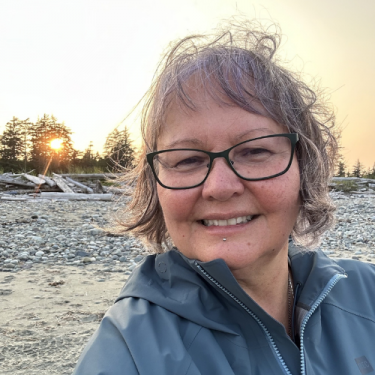
Sandra Harris
PhD Candidate, University of Northern British Columbia
Sandra Harris
Hadïh, I am from the Witsuwit’en Nation of the Likhsilyu – (Little Frog) Clan, and from C’inegh Lhay Yikh – House of Many Eyes. I am also a member of the Witset First Nation with maternal connections to Tse Kya First Nation. I am honored to hold the Witsuwit’en name, Wii Estes.
I am an indigenous community developer, watershed and community planner. I am also an Indigenous Focusing Complex Trauma (IFOT) and master level Reiki practitioner. I offer cultural supports to and with elders, MMIP impacted youth, families and communities. I continue to offer holistic wellness and grief supports, land-based wellbeing, crisis and culturally based responses.
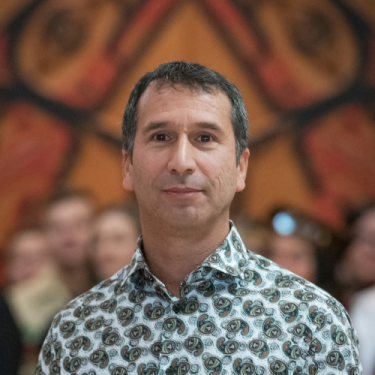
Danilo Caron
PhD Candidate, University of British Columbia
Danilo Caron
Danilo Caron is a PhD candidate and sessional instructor at UBC, and an engineer-in-training with Urban Systems. Danilo has familial ties to Castelfranco Veneto, Italy and Sagamok Anishnawbek First Nation. He was born and raised in Tk̓emlúps te Secwépemcw territory (Kamloops, B.C.) and currently resides with his wife and daughter in the traditional, ancestral, and unceded territories of the Musqueam people (University of British Columbia Point Grey).
Danilo is pursuing a PhD in project and construction management at UBC where his research explores how the architecture, engineering, and construction industry can incorporate Indigenous Knowledge and values in infrastructure design and project delivery, advancing communities’ priorities and creating space for Indigenous resurgence and self-determination. An important aspect of Danilo’s research are the partnerships between industry, Indigenous communities, and academia. Co-developing research objectives, methodologies, and creating deliverables that serve each party is critical to building relationships through research.
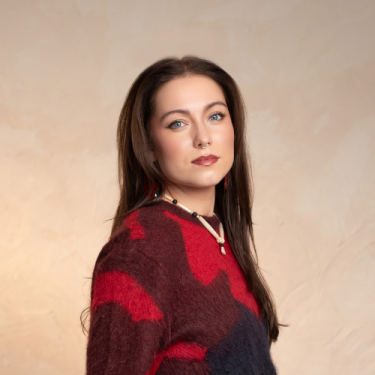
Chelsey Perry
PhD Candidate, University of British Columbia
Chelsey Perry
Amaa sa chelseyhlway Nisga’a niiy gingolx wil wit gwii Laxsgiik Niiy.
Chelsey Perry, PhD (c), MSc (she/they), is Nisg̱a’a First Nation from the Village of Gingolx, Scottish, and Hungarian. She belongs to the Laxsgiik (Eagle) house of Sganism Sim-oogit. Chelsey is a BC First Nations queer woman and PhD candidate in the School of Population and Public Health at UBC. Her work focuses on First Nations health and rematriation, climate justice, Indigenous self-determination, environmental stewardship, and health policy and systems transformation. Her work centres Indigenous knowledge systems, Matriarchal leadership, and relationships with lands and waters as foundations for the health of present and future generations.
Chelsey serves on the National Steering Committee for Indigenous Climate Action and is a member of the BC Assembly of First Nations Youth Climate Working Group and the UN Global Indigenous Youth Caucus. She is also an executive committee member of the Nisg̱a’a Vancouver Dancers, a Nisg̱a’a dancer, language learner and teacher, and artist.
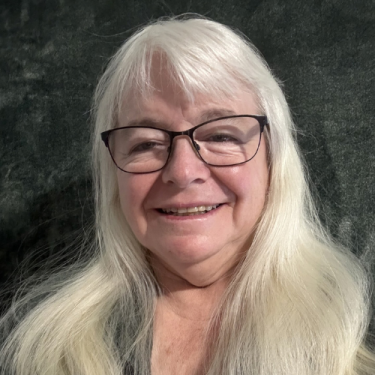
Brenda Walkem
PhD Candidate, University of British Columbia
Brenda Walkem
Brenda Walkem is a member of the Cook’s Ferry Indian Band of the Nlaka’pamux Nation in the Southern Interior of B.C. She is currently working part-time as the Food Sovereignty Advisor at Citxw Nlaka’pamux Assembly (CNA), and part-time for her community as a Lands Coordinator on specific projects that her Band is involved in.
Brenda is doing her PhD full-time in the Faculty of Forestry and Environmental Stewardship through the University of British Columbia. Her research project will be focusing on reclaiming and revitalizing Nlaka’pamux fire governance and stewardship. She will be doing archival and ethnographic research to reconstruct precolonial fire regimes and culturally significant food and medicine species’ distributions. She will also be interviewing Nlaka’pamux Elders, governance knowledge keepers, cultural fire practitioners, and land managers to document Nlaka’pamux fire governance and stewardship principles and identify institutional barriers to implementing these principles. Her goal is the help reincorporate fire into land management in order to reduce the threat of out of control wildfires.
Zoe Konanz
PhD Candidate, University of British Columbia
Zoe Konanz
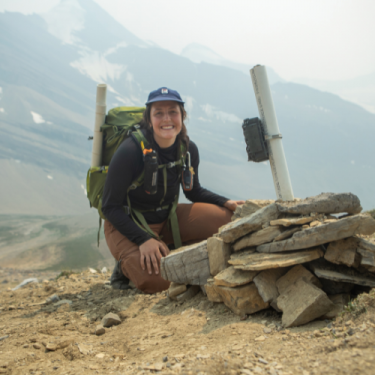
Zoe Konanz is a settler ecologist, raised in Syilx (Okanagan) territory in Penticton, B.C., and PhD student in the Wildlife Coexistence Lab in the Faculty of Forestry and Environmental Stewardship at the University of British Columbia. Since 2024, Zoe has worked in partnership with the Yunesit’in Qwen (fire) stewardship program to support wildlife monitoring within their traditional territory along the Chilcotin Plateau.
Her PhD research is focused on examining how Yunesit’in fire stewards are restoring mule deer forage and wildlife habitat more broadly. To do this, Zoe is employing a mix of non-invasive wildlife monitoring techniques including camera traps, forage nutritional assays, and plant phenological monitoring. Through this work, she hopes to support Yunesit’in by providing empirical evidence of how cultural burning shapes forage and habitat, and more generally to contribute to removing systemic barriers facing Indigenous land stewards in B.C. wishing to return beneficial fire to their territories.
Kim-Ly Thompson
PhD Candidate, Simon Fraser University
Kim-Ly Thompson
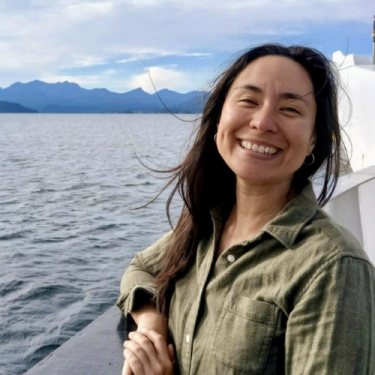
Kim-Ly Thompson is an eldest sister and PhD candidate of Viet and European descent who recently moved from Ts’msyen to Haida homelands. For over a decade she has worked for and with the Gitga’at Nation to support Nation-directed research and monitoring projects. In her current position as a PhD researcher within the Ocean Relations Collaborative at SFU, she is working under the guidance of Gitka’ata Elders and Knowledge Holders and alongside Youth to collectively learn how to care for clams in changing ocean conditions. On Haida Gwaii, her research looks at the nutritional implications of imposed changes to seafood access and upholds community-led reclamation of seafood abundance and diversity. She aspires for the processes and outcomes of her research to give back to the lands, waters, and peoples who have offered her gifts of inspiration and sense of place, among many others. Her commitment to the Gitga’at Nation is lifelong, and she strives to be humble, accountable, and responsive to the dynamic relationships that span the Hecate Strait and beyond in her research and community life.
Ghazeleh Mozafari
PhD Candidate, University of British Columbia
Ghazeleh Mozafari
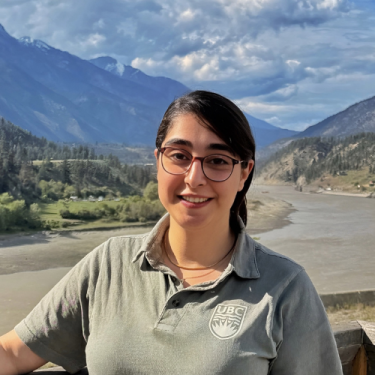
Ghazaleh is a PhD student in Chemical and Biological Engineering at the University of British Columbia. She integrates complex hydrological data and AI predictive algorithms to assess climate change impacts and predict risks to water security for remote and Indigenous communities.
Working in partnership with Lytton First Nation (Tl’kemtsín), her research focuses on weaving Nlaka’pamux Knowledge with data-driven science to develop a place-based, data-informed decision support framework. This work includes building early warning systems for extreme events like floods and droughts. Through this collaboration, she also supports Nation-led streamflow monitoring to advance self-sufficient water governance and co-develop culturally grounded climate adaptation strategies.
Laurel Thomas
PhD Candidate, University of British Columbia
Laurel Thomas
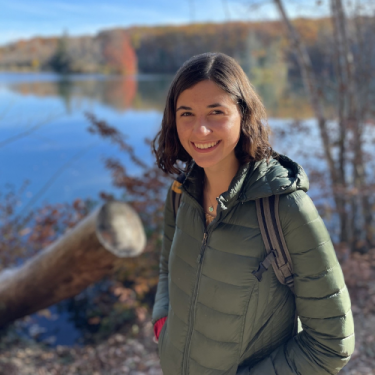
Fittingly named after the California Bay Laurel tree, Laurel (she/her) is pursuing a PhD in Forestry and Environmental Stewardship at the University of British Columbia in the Indigenous Ecology Lab supervised by Dr. Jennifer Grenz. Working alongside Kwiakah First Nation, she is studying cultural restoration of Kwiakah’s territory using different knowledge such as seed bank analysis, seed source mapping, and community values to inform restoration decisions. She has a BS in Environmental Science from the University of California Los Angeles. During her degree, she studied climate adaptation of the native California plant toyon, and has worked with various habitat restoration nonprofits giving Laurel a background in community-led conservation and climate research that she is now applying to her work in British Columbia. She is passionate about conserving culturally important native plants and their respective ecosystems for current and future generations, and values seeds as a critical part of facilitating ecocultural restoration in a changing climate.
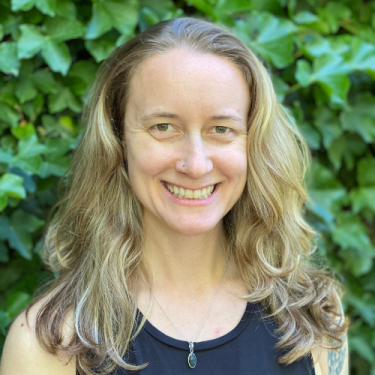
Natasha Cowie
PhD Candidate, University of Northern British Columbia
Natasha Cowie
Natasha Cowie is a PhD student at the University of Northern British Columbia. Descended from European settlers, she is originally from the ancestral homelands of the Cherokee Nation in the southern Appalachians and now resides on the unceded traditional territory of the Lheidli T’enneh First Nation.
Her research centers around one overarching question: what is left behind as glaciers recede? Specifically, she focuses on the emergence and evolution of glacial lakes, which are central to a myriad of physical, biological, and social processes and effects. Her work will encompass a large scale assessment of lakes across western Canada and a watershed scale study of Place Glacier, where repeated outburst floods are impacting communities of the Lil’wat and N’Quatqua nations. Inspired by her family’s land ethic and her own experiences in the mountains, her goal is to help societies and governments adapt to changes induced by glacier loss.
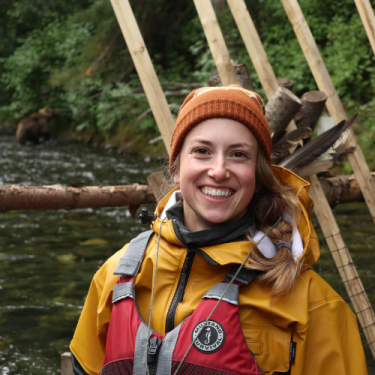
Brittany Milner
PhD Candidate, Simon Fraser University
Brittany Milner
Brittany is a settler of English and Irish descent and grew up on the territory of Kwanlin Dün First Nation and Ta’an Kwäch’än Council, in Whitehorse, Yukon. She is a PhD candidate at Simon Fraser University and a member of the Salmon Watersheds Lab. Her work is part of the Salmon Resiliency Initiative, which is led by Taku River Tlingit First Nation. The initiative’s research priorities are guided by the overarching goal of understanding climate change effects on salmon and their habitat within the Taku and using this information to inform land use planning and policy. Her research takes a whole-landscape approach, focusing on how salmon ecosystems are changing due to glacier retreat across lakes, rivers, and floodplains. Brittany’s work is inspired by salmon, who have been amazing teachers and have shown her the beautiful web of connectedness between humans and their more-than-human kin.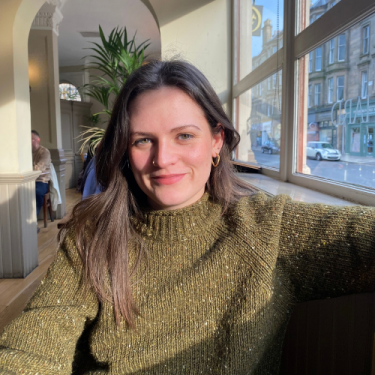
Keira McIntyre
Masters student, University of Victoria
Keira McIntyre
Keira McIntyre (Nlakaʼpamux) is a master’s student in Indigenous Governance at the University of Victoria and a graduate of the University of British Columbia Okanagan, where she completed a Bachelor of Arts in Psychology with a focus on Gender and Sexuality Studies. Her research interests sit at the intersections of Indigenous governance, health and wellbeing, Indigenous feminisms, and land-based resurgence. Keira is particularly interested in how relationships to land, food systems, culture, and community contribute to individual and collective wellness, and how Indigenous Knowledge systems can inform more holistic approaches to health. Her current work supports the restoration and rematriation of traditional food systems (TFS) and governance. Through her academic and community-engaged work, she is committed to supporting research that advances Indigenous sovereignty, strengthens community resilience, and contributes to more just and sustainable futures.
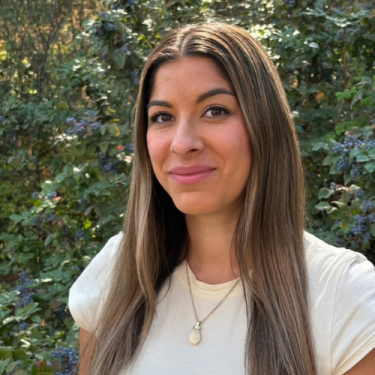
Reba Ladron De Guevara
Masters student, Simon Fraser University
Reba Ladron De Guevara
Reba is a Syilx woman from Westbank First Nation. She comes from stqaʔtkʷɬniwt, Windy Bay, the pine side of the Okanagan; from wild rose, sagebrush, arrowleaf balsamroot, salmon, and the stories of senk’lip, the trickster. Guided by captikʷł as living law, her work begins with the responsibility of being fed: receiving from the land and water means answering with care. She is a Pastry Chef, a student in Simon Fraser University’s Indigenous Business Leadership Executive MBA program, and, most importantly, mother to her son, Jackson (3), whose future makes this work immediate and alive. Her research explores Syilx-led culinary infrastructure in the Okanagan, asking what kinds of spaces can hold food as memory, as law, as climate responsibility, and as care for those still coming. In a valley learning the cost of drought and fire, she is asking how food, infrastructure, and Syilx law can help carry life forward.
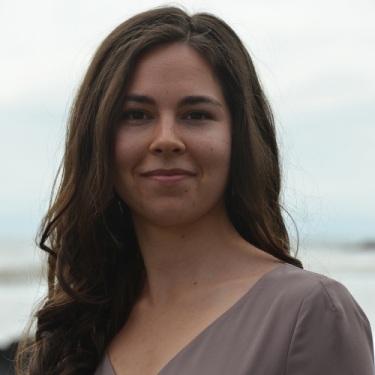
Rachel Stewart-Dziama
Masters student, Simon Fraser University
Rachel Stewart-Dziama
Rachel Stewart-Dziama was born and raised on the west coast of Vancouver Island, in the traditional territory of the Yuułuʔiłʔatḥ. Her Master’s research at Simon Fraser University explores how forests are understood and managed, and what that reveals about relationships between people and place.
Working in partnership with West Moberly First Nation in Treaty 8 territory, Rachel examines salvage logging — logging after disturbances such as wildfires or beetle outbreaks — and its effects on caribou, wadziih or wah tzee in Dunne-za. As climate change brings more frequent and intense disturbances to forests across Turtle Island, how these events are managed will shape what future generations inherit. Combining policy and spatial analysis, her work centres Indigenous knowledge and stewardship, community wellbeing, and reciprocal relationships with the land, contributing to collaborative efforts to foster forests that support local communities and a return to caribou abundance.
2025 URR Scholars receiving renewal funding
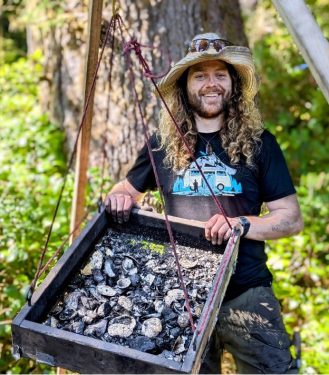
Dylan Hillis
PhD candidate, University of Victoria
Dylan Hillis
Dylan Hillis is of British and Icelandic settler ancestry and grew up in the Southern Gulf Islands – the lands and waters of Coast Salish peoples. As a fourth-generation descendant of a fishing family, his family’s direct involvement in the commercial fishing industry in B.C. has been a driving force and has shaped his research approach.
Since 2017, Hillis has had the privilege of witnessing and working as an archaeologist and researcher in Nuu-chah-nulth Territories alongside the contemporary rights holders and descendants of the original, deep-time leaders responsible for managing the relationships between people, lands, and waters. Weaving archaeological and ecological evidence with Nuu-chah-nulth governance principles and knowledge, his PICS-funded research considers how archaeological approaches are supporting cultural renewal and community well-being through the extension of shellfish harvest information. By comparing archaeological clamshell information against contemporary ecological conditions, his research contributes much-needed baseline data to inform community harvests and management objectives that support Nuu-chah-nulth-led food sovereignty initiatives.
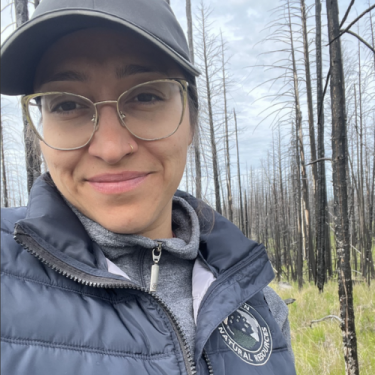
Elizabeth (Lizzy) Ignace
PhD candidate, University of British Columbia
Elizabeth (Lizzy) Ignace
Elizabeth (Lizzy) Ignace is Secwépemc from Skeetchestn Indian Band and is currently working as a Cultural Heritage Agrologist in her community while also attending school full time.
Her research project, Revitalising Saskatoon in Skeetchestn, brings Secwépemc Knowledge together with western science using a “Walking on Two Legs” approach. She interviews Elders and Knowledge Keepers and studies berry and plant traits, then weaves that knowledge with genetic and ploidy analyses to guide restoration and strengthen food systems.
Lizzy’s daughter is her inspiration in this work. As a single mother, she wants her daughter to inherit language, land, and foodways that are living and loved, and she hopes her work will help make that possible for her community.
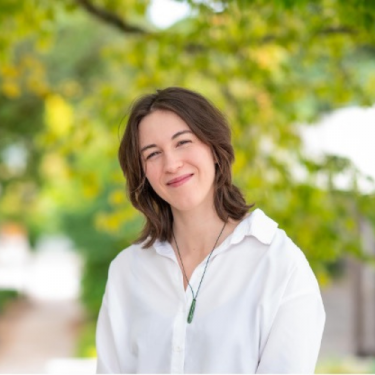
Charlotte Milne
PhD candidate, University of British Columbia
Charlotte Milne
Charlotte Milne is from Aotearoa (NZ) and whakapapa (holds ancestry) to Te Rarawa (a Māori iwi/tribe from the upper North Island) and to Pākehā (white settlers). She now lives, works, and learns in British Columbia, primarily on the unceded traditional territories of the Musqueam, Squamish, and Tsleil-Waututh peoples.
Charlotte’s background is in river and geospatial sciences, and she has been working on disaster-related projects for a decade. Since 2020, her research has expanded to include social science methods, with a focus on collaborating with Indigenous communities to increase disaster resilience. Her PhD research is centered on flood risk reduction in Canada, particularly how floods are mapped and managed. She is especially interested in how flood mapping systems can be improved to better serve the rights and interests of First Nations, and she collaborates with Sumas First Nation and other partners on this work.
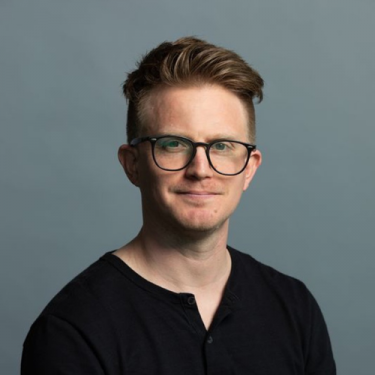
Brian Timmer
PhD candidate, University of Victoria
Brian Timmer
Brian Timmer is a Stó:lō researcher of mixed ancestry living in lək̓ʷəŋən Traditional Territory. As a former SCUBA instructor who fell in love with the kelp forests of Vancouver Island, Timmer’s research path was solidified as an undergraduate student when the largest marine heatwave ever recorded hit the west coast of North America, killing all the bull kelp forests along the shores of Nanoose where he taught SCUBA. These losses led to his research on climate change impacts in kelp forests and the nearshore ecosystems they support.
Brian is now doing his PhD in the Baum Lab at the University of Victoria, working closely with First Nations communities in B.C. to lower barriers to kelp forest monitoring and restoration. Outside of his thesis, Brian is working on a National Geographic funded project that uses 360 cameras and virtual reality headsets to create immersive SCUBA experiences of kelp forests for First Nations youth.